Busan Eel Dishes Guide: How to Tell Hagfish (곰장어), Conger Eel (붕장어) and Freshwater Eel (민물장어) Apart and Order
Even when a menu says "eel" (장어), hagfish (곰장어), conger eel (붕장어) and freshwater eel (민물장어) are completely different. This guide starts with the fact that hagfish is not an eel, then covers how to eat it in Jagalchi (자갈치) and Gijang (기장).
As of October 23, 2026 — Opening days and menus may change. Check before you go.
1. The Three "Eels" on the Menu Are Completely Different
If you want to eat eel in Busan, the menu often lists hagfish (곰장어), conger eel (붕장어, also written 아나고, anago) and freshwater eel (민물장어) side by side. In Busan, many menus write conger eel as 아나고 (anago). All three names contain "jangeo" (장어, eel), but they differ in looks, taste and how you eat them.
Above all, hagfish (곰장어) is actually not an eel. According to the Encyclopedia of Busan History and Culture (부산역사문화대전), hagfish (곰장어, also called 먹장어, meokjangeo) is not an ordinary fish. It is a vertebrate that belongs to the jawless fishes (원구류). Conger eel (붕장어) and freshwater eel (뱀장어) are fish.
Menu name
Other names
In plain words
Hagfish (곰장어)
꼼장어 (kkomjangeo), 먹장어 (meokjangeo)
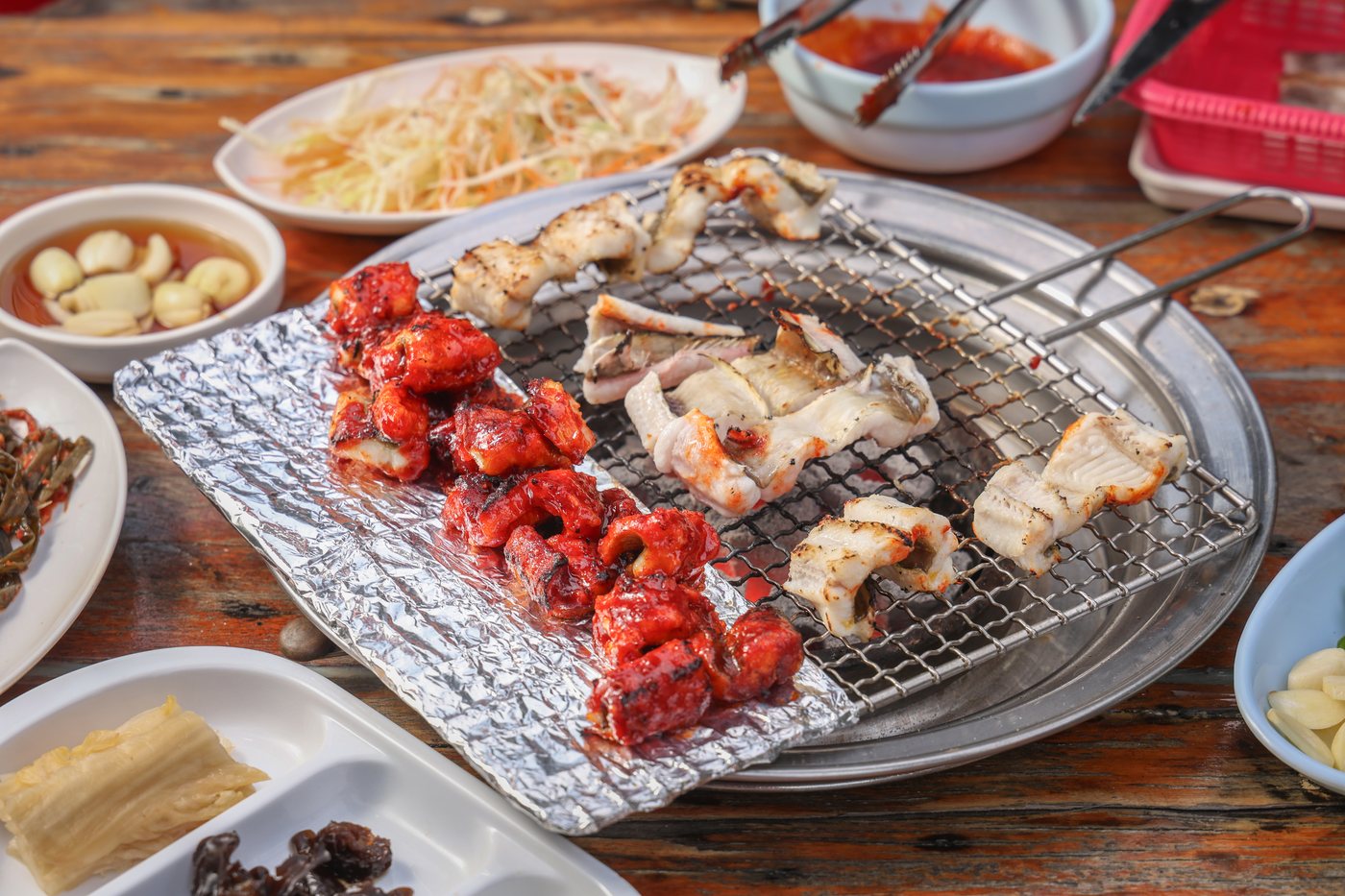
Skinned, cut into small pieces and grilled
Conger eel (붕장어)
아나고 (anago), 바다장어 (sea eel)
Split open, spread flat and grilled; also eaten as raw fish (hoe, 회)
Freshwater eel (민물장어)
뱀장어 (baemjangeo)
Split open, spread flat and grilled; not a Busan local food
You can tell them apart by looks. Once they are grilled, the shapes are different, so you can tell at a glance.
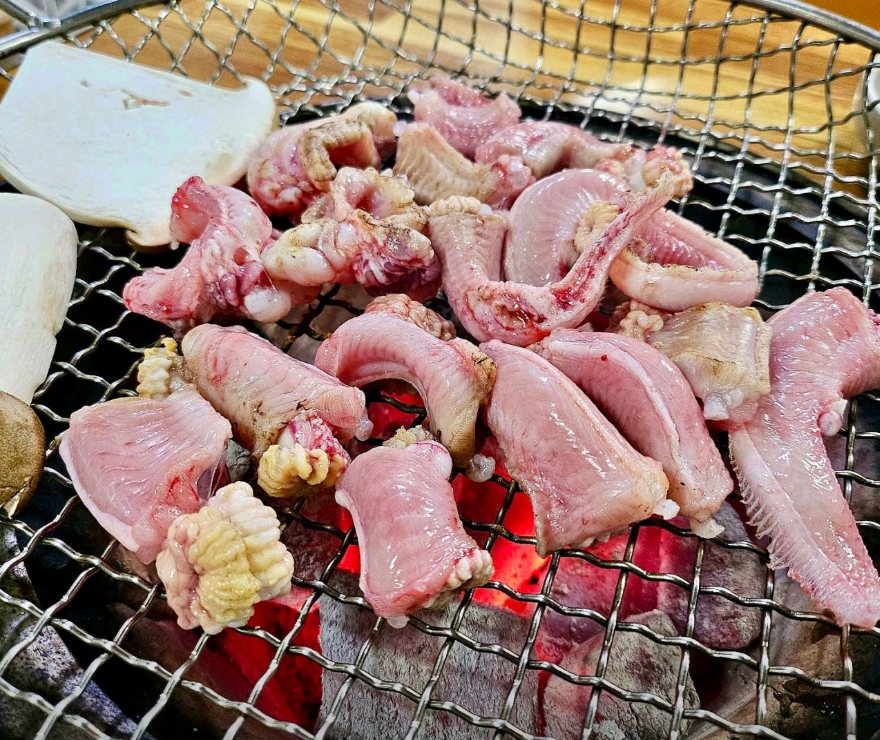
Hagfish is skinned, cut into pieces of about 3cm and grilled. It comes out as a heap of small pieces.
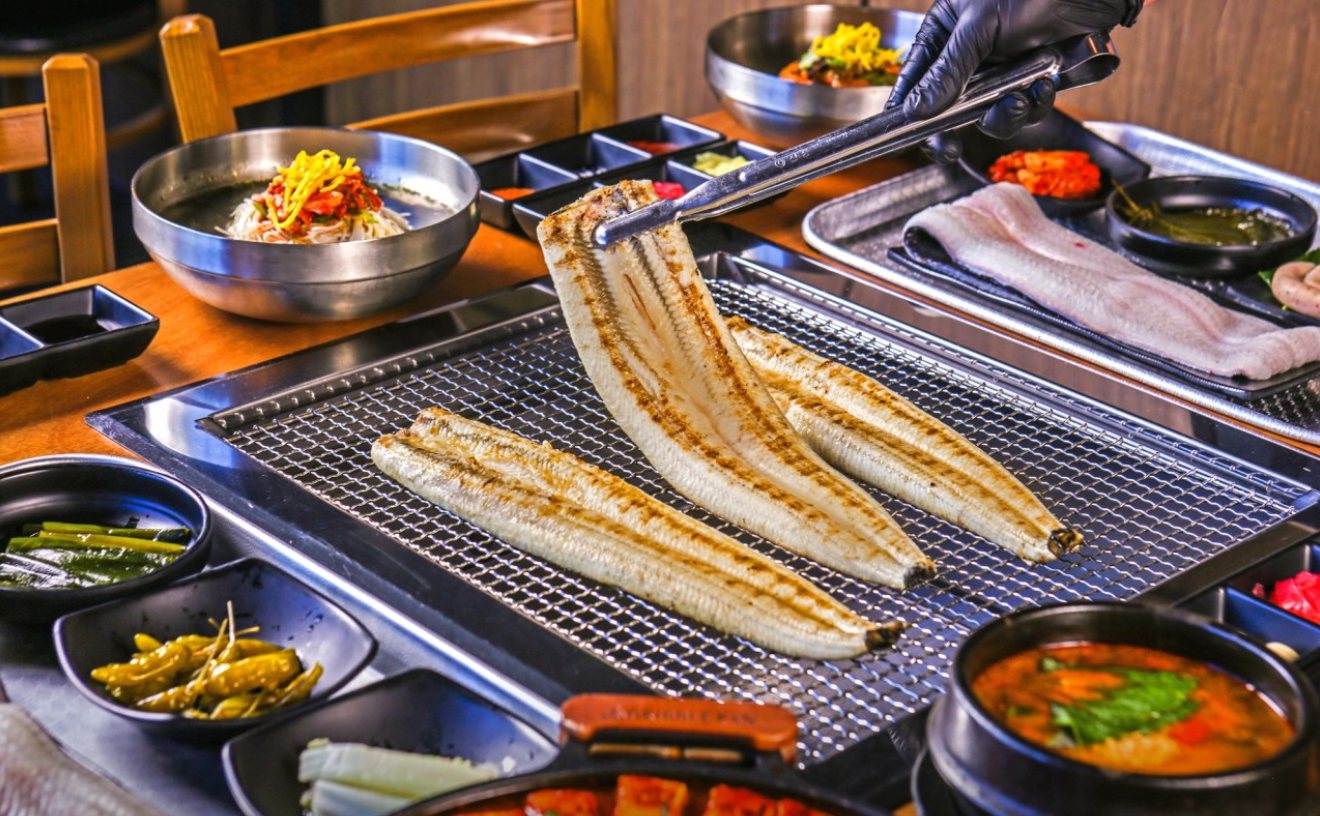
Conger eel and freshwater eel are split open, boned and grilled spread out flat. Long strips of flesh come out spread over the grill.
Conger eel and freshwater eel look alike, so it is hard to tell them apart by the grilled dish alone. Check the name when you order.
The texture is different too.
Hagfish is chewy and bouncy. It is not like fish flesh that flakes apart softly.
Conger eel and freshwater eel are soft, like fish flesh. Conger eel has a chewy bite as raw fish, and is soft and nutty (gosohan, 고소한) when grilled. Freshwater eel is oily, so it tends to taste richer.
If you are traveling alone, check ahead. Many places only take orders for hagfish and grilled eel for 2 servings or more. It may be hard to eat there alone, so ask before you order whether a single serving is possible.
This guide focuses on hagfish and conger eel, which Busan is especially known for. Freshwater eel gets only a short section, so you do not mix it up when ordering.
Hagfish (곰장어) is also called 꼼장어 (kkomjangeo) in the Busan dialect. The standard Korean name is 먹장어 (meokjangeo), and menus use both 곰장어 and 꼼장어.
How did it become a Busan food? According to Visit Busan (비짓부산), the official tourism portal of the city of Busan, hagfish was originally a creature people threw away after using only the skin for leather, because of its looks. After the Korean War, refugees who settled in Busan grilled hagfish over briquette (yeontan, 연탄) fires at Jagalchi Market (자갈치시장) and sold it to make a living. That is said to be how today's grilled hagfish began.
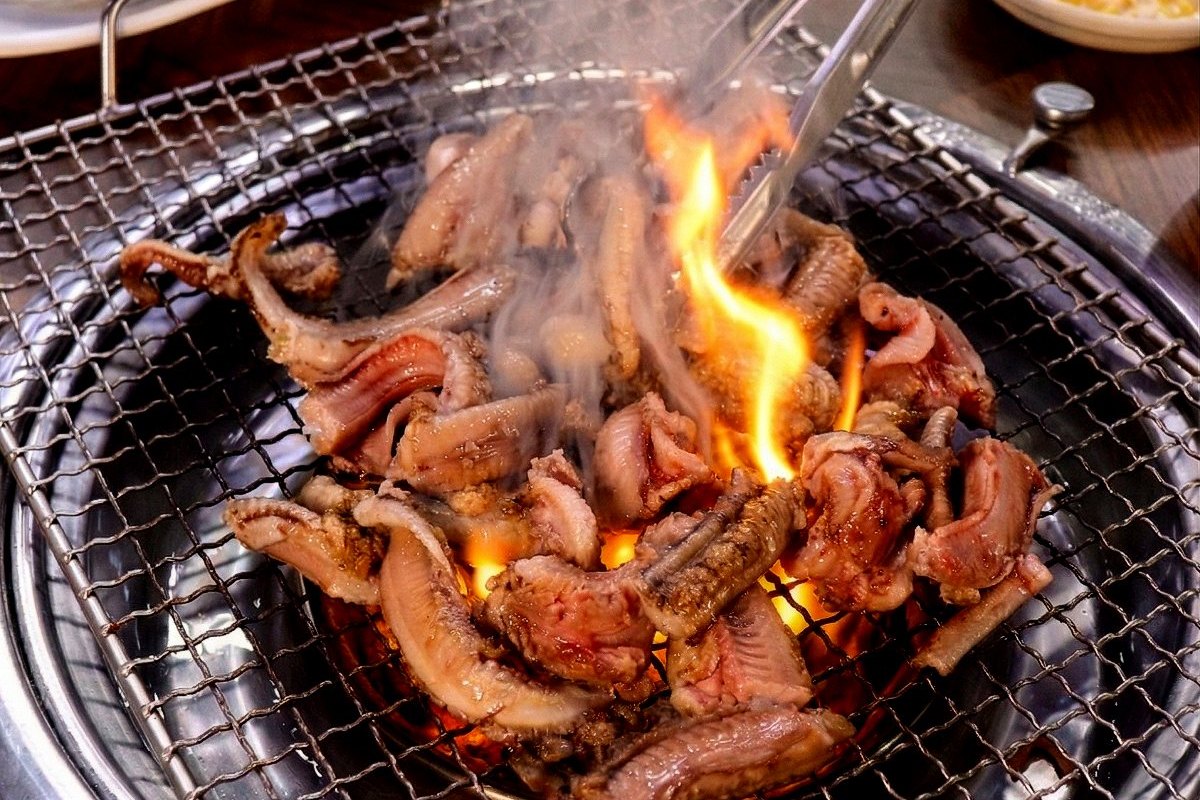
Hagfish is grilled alive. It goes onto the grill still alive, and the wriggling may look strange to you. Visit Busan (비짓부산) says that watching the hagfish being pressed down as it grills so that it does not "dance" is one of the sights of a hagfish restaurant.
Photo: Busan Tourism Archive (부산관광아카이브)
It looks startling before grilling. Skinned hagfish shows pinkish flesh and looks unfamiliar, so you may be startled the first time. Still, as a visitor it is worth trying once, with a sense of adventure. Once grilled, its shape changes, and it has a chewy, bouncy texture and a nutty flavor.
Photo: Busan Tourism Archive (부산관광아카이브)
Choose between two styles. Grilled hagfish comes in two basic styles, salt-grilled and seasoned.
Salt-grilled (소금구이, sogeum-gui): Cut into bite-size pieces, lightly seasoned with salt and grilled. It is not spicy, and you can taste the hagfish itself. You dip it in sesame oil sauce (참기름장) or red pepper vinegar sauce (초고추장).
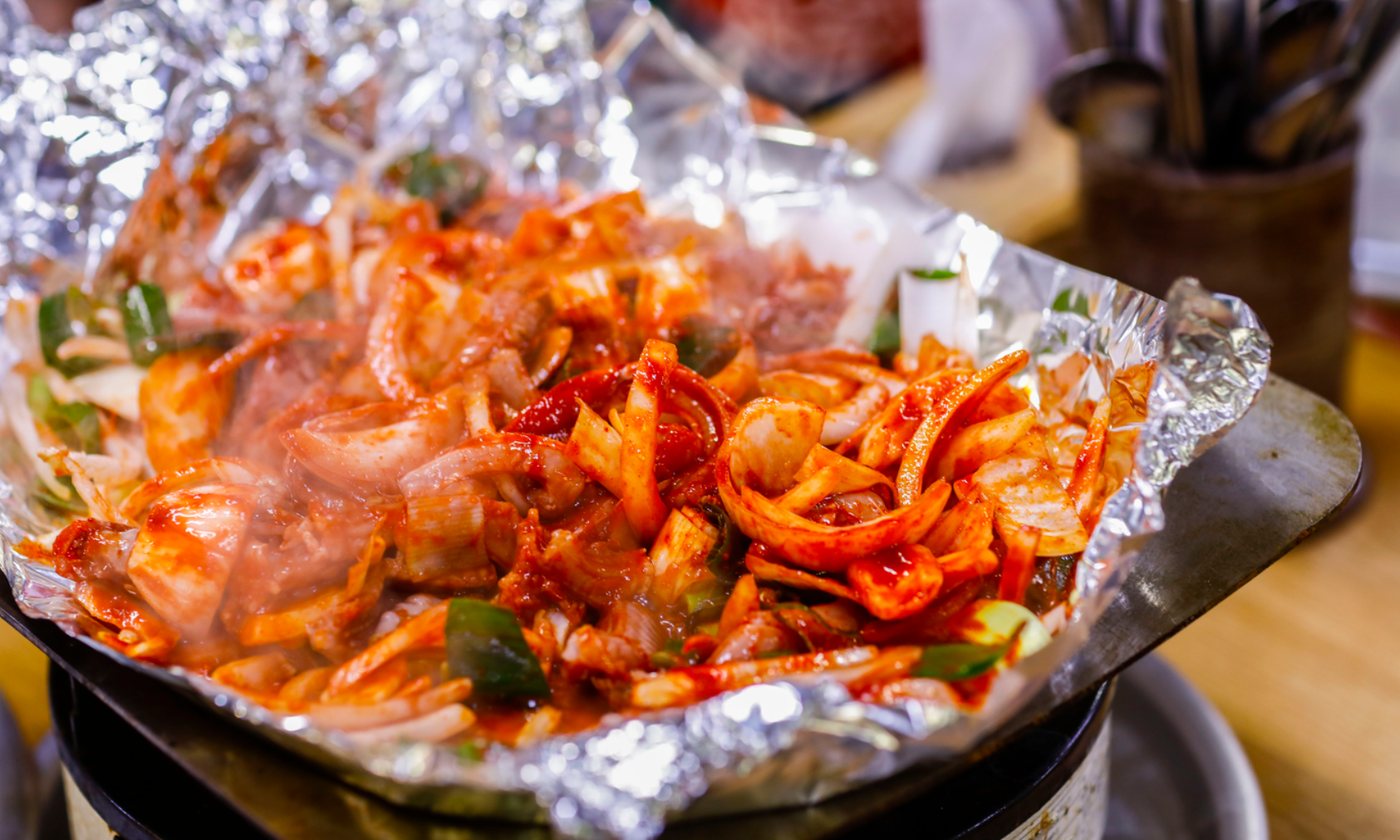
Seasoned (양념구이, yangnyeom-gui): Mixed with a sauce of onion, green onion, minced garlic, sesame oil and red pepper powder, then grilled on an iron plate. It is sweet and spicy, and comes with vegetables. Fried rice (볶음밥, bokkeumbap), made by stir-frying rice in the leftover sauce, is also popular.
Photo: Busan Tourism Archive (부산관광아카이브)
If it is your first time, order half and half and compare. If you do not handle spicy food well, choose the salt-grilled one.
Here is how to wrap it. Put a perilla leaf (깻잎) on a lettuce leaf, add hagfish, garlic and chili pepper, and eat it as a wrap (ssam, 쌈).
Where can I eat it? On the seaside of Jagalchi Market (자갈치시장), there is a hagfish alley (곰장어골목, gomjangeo golmok) lined with grilled hagfish shops. According to the Busan Jung-gu Office newsletter (부산 중구청 소식지), each shop is a narrow one-bay unit with a water tank and a briquette stove (연탄화덕) where the hagfish is grilled. Visit Busan (비짓부산) lists Jagalchi Market, Oncheonjang (온천장), Haeundae Market (해운대시장) and Gijang (기장) as Busan's hagfish alleys. Jagalchi Market is close to the old downtown of Nampo-dong (남포동), so it is easy to drop by on a sightseeing day.
Allergies and diet: Hagfish is seafood, so be careful if you have a fish or seafood allergy. The seasoned style contains red pepper powder and vegetables.
3. Gijang (기장) Straw-Fire Hagfish (짚불곰장어), Burned and Peeled Before Eating
Gijang (기장) is a neighborhood in Busan famous for hagfish. The official website of Gijang-gun (기장군 공식 누리집) describes the feature of Gijang hagfish as being caught right in the sea off Gijang, grilled on the spot over a fire and dipped in plain coarse salt (생소금).
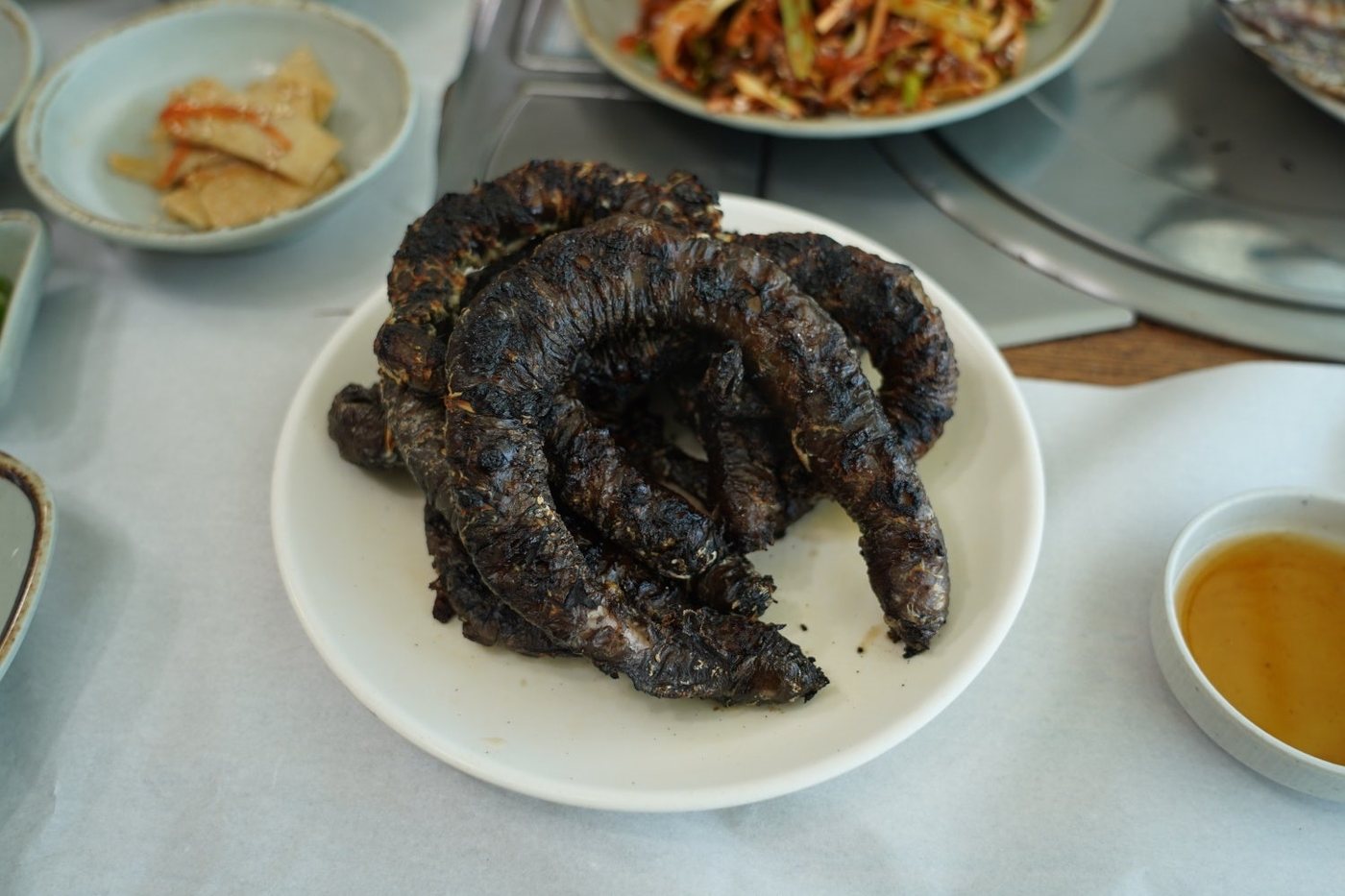
How is straw-fire hagfish (짚불곰장어, jipbul gomjangeo) made? According to the Encyclopedia of Busan History and Culture (부산역사문화대전), a fire is lit with rice straw, a wire mesh is placed on top, and live hagfish is grilled on it. It is grilled until the skin turns black, the burnt skin is peeled off, and the meat is cut into bite-size pieces and dipped in a salt dip.
Photo: Busan Tourism Archive (부산관광아카이브)
You do not eat the blackened skin. Peel off the burnt outer skin and eat only the white flesh inside. The first time, ask the staff how to peel off the skin.
Besides straw-fire grilling, Gijang-gun (기장군) says hagfish can also be eaten seasoned-grilled (양념구이), salt-grilled (소금구이), whole-grilled (통구이), in spicy stew (곰장어 매운탕), stir-fried (곰장어볶음), boiled (삶은 곰장어), as grilled skin (껍질구이), or as raw fish (회). Many shops serve several of these styles.
Where can I eat it? Several shops in the Gijang-gun (기장군) area serve straw-fire hagfish. Search on the map and choose one with many reviews.
Opening hours and closing days differ from shop to shop, so it is best to check before you go.
4. Conger Eel (붕장어), Eaten Raw or Grilled in Gijang (기장)
Conger eel (붕장어) is often written as 아나고 (anago) on menus. The official website of the city of Busan (부산시 공식 누리집) introduces it as a famous food of Gijang (기장), where a lot of it is caught all year round.
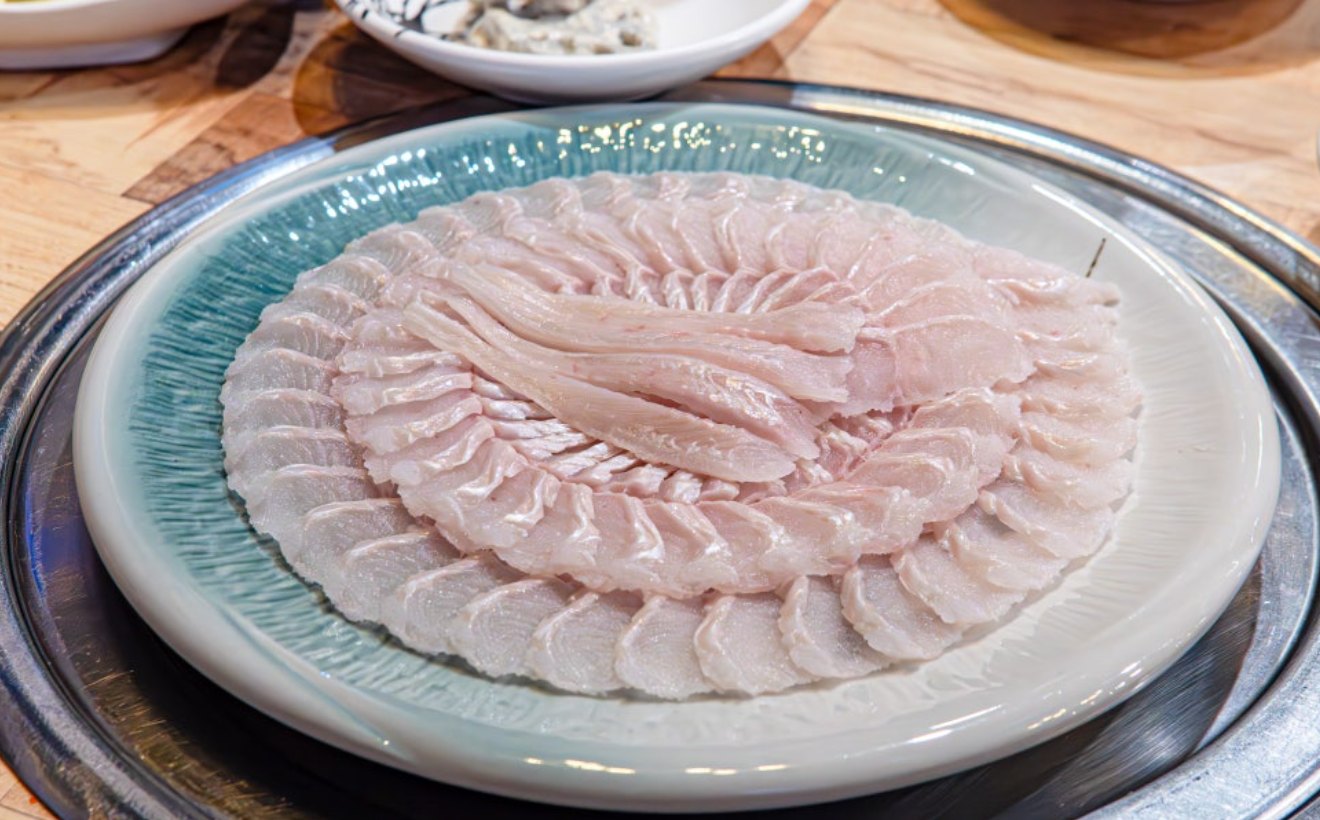
How is the raw fish (hoe, 회) eaten? In Gijang, conger eel hoe (붕장어회) is lightly blanched in hot water and spun in a dehydrator to remove oil and blood before it is eaten. Its chewy bite is said to be its feature. Besides hoe, you can eat it as eel soup (장어탕), salt-grilled (소금구이), seasoned-grilled (양념구이) or braised (조림).
Eat it with cabbage. Conger eel hoe usually comes with shredded cabbage and chojang (초장, red pepper vinegar sauce). Put the hoe on the cabbage and dip it in the chojang.
Photo: Busan Tourism Archive (부산관광아카이브)
Where can I eat it? There are also many places in central Busan where you can eat conger eel. Search the map for 아나고 (anago).
Chilam-ri (칠암리) in Ilgwang-eup (일광읍) and Yeonhwa-ri (연화리) in Gijang-eup (기장읍), both in Gijang-gun (기장군), are neighborhoods famous for conger eel. According to the official website of the city of Busan (부산시 공식 누리집), the two places take turns hosting a conger eel festival.
Allergies and diet: Conger eel hoe is raw fish. If you do not eat raw food, choose the grilled dish or the soup.
Opening hours and closing days differ from shop to shop, so it is best to check before you go.
5. Freshwater Eel (민물장어): What to Know So You Do Not Mix It Up
Photo: Busan Tourism Archive (부산관광아카이브)
Freshwater eel (민물장어) means 뱀장어 (baemjangeo). Unlike hagfish and conger eel, it is not a Busan local food, but some shops in Busan do sell grilled freshwater eel. Visit Busan (비짓부산) introduces a grilled eel restaurant that serves both grilled freshwater eel and grilled sea eel.
Like conger eel, it is split open and grilled spread flat. The texture is soft like fish flesh rather than chewy like hagfish. Anywhere in central Busan, you can find it by searching the map for 민물장어.
If the menu only says "grilled eel" (장어구이), ask which eel it is. The taste and price differ depending on whether it is freshwater eel or sea eel (conger eel, 붕장어).
"민물장어예요, 바다장어예요?" (Is it freshwater eel or sea eel?): Use this to ask which eel it is.
"곰장어 소금구이 하나, 양념구이 하나 주세요" (One salt-grilled hagfish and one seasoned, please): Use this to order half and half.