Busan Octopus Guide: Nakji and Jjukkumi Dishes, from Stir-Fried Octopus to Live Octopus (Sannakji) and Nakji-tangtangi
From the difference between nakji and jjukkumi to nakji-bokkeum (낙지볶음), yeonpotang (연포탕), jjukkumi-bokkeum (주꾸미볶음) and sannakji (산낙지), the dish foreigners find most unfamiliar.
As of October 24, 2026 — Opening days and menus may change. Check before you go.
1. Nakji (낙지) and Jjukkumi (주꾸미) - Similar Looking, Different Seafood
Nakji (낙지) and jjukkumi (주꾸미) are both small octopuses with eight legs. In Korea they are stir-fried, boiled, grilled and even eaten raw, so there are many ways to cook them.
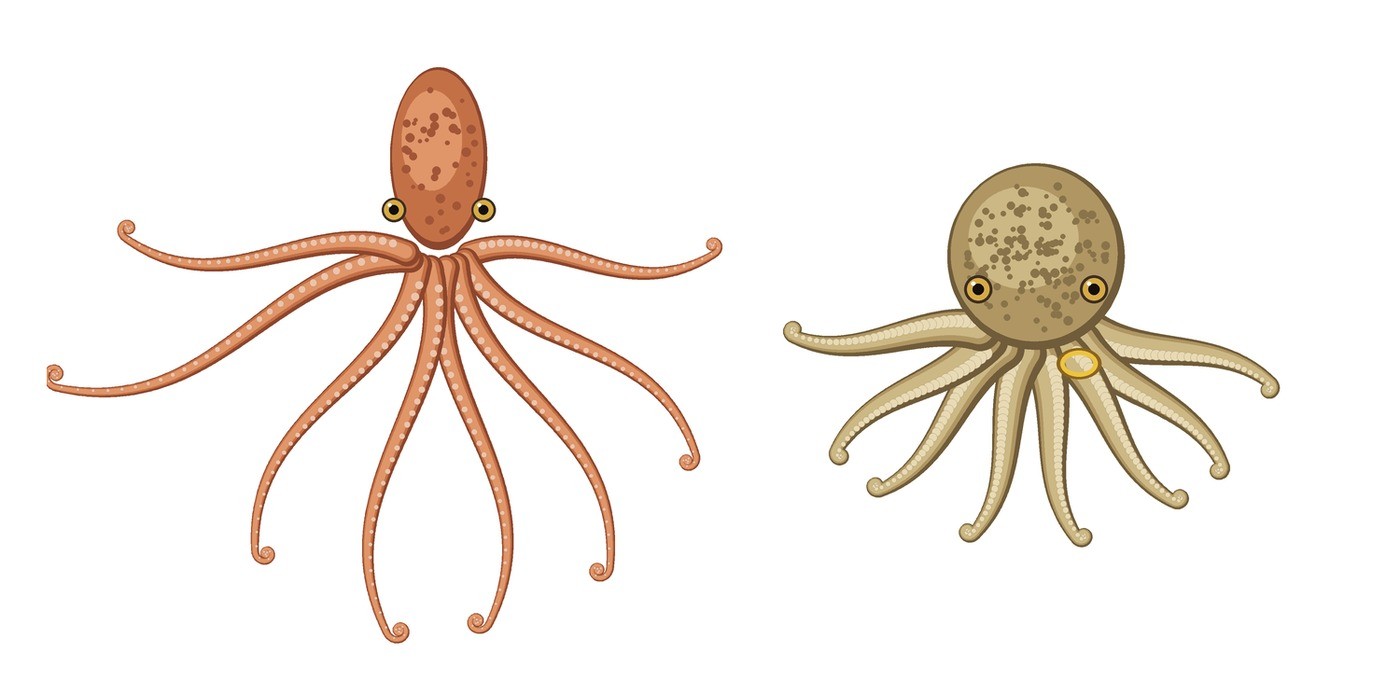
On menus the two often appear together. The one on the left is nakji and the one on the right is jjukkumi. Nakji has a long body and long legs. Jjukkumi has a round body and short legs.
The table below sums up the differences.
Item
Nakji (낙지)
Jjukkumi (주꾸미)
Size
Body length about 70cm
Body length about 20cm
Legs
One of the eight is longer
All eight are about the same length
Texture
Soft and chewy
Said to be firmer than nakji
Season
Autumn, September to November
Spring, when the eggs fill the body
There is a Korean saying, "spring jjukkumi, autumn nakji." Spring jjukkumi has a body full of eggs, and when cooked they look like grains of rice, so they are called jjukkumi-bap (주꾸미밥, jjukkumi rice).
Many menus spell jjukkumi as 쭈꾸미. The standard spelling is 주꾸미. Squid (오징어, ojingeo) and kkoltugi (꼴뚜기) have ten legs, so they are a different kind.
Nakji-bokkeum (낙지볶음) is one of the 13 local foods designated by the city of Busan.
2. Nakji and Jjukkumi Dishes at a Glance
Dish
How it is eaten
Cooked or raw
Nakji-bokkeum (낙지볶음)
Stir-fried in a spicy sauce. Eaten mixed into rice or as a snack with drinks
Cooked
Nakgopsae (낙곱새)
Nakji, gopchang (곱창, intestines) and shrimp stir-fried together in a spicy sauce
Cooked
Yeonpotang (연포탕)
Live nakji (sannakji, 산낙지) lightly blanched in a clear broth and eaten
Cooked
Nakji-horonggui (낙지호롱구이)
Young nakji (sebal-nakji, 세발낙지) wrapped around a skewer, brushed with sauce and grilled
Cooked
Gallaktang (갈낙탕)
Nakji added to galbitang (갈비탕, beef rib soup)
Cooked
Nakji-gui (낙지구이)
Nakji grilled over a flame
Cooked
Naksam (낙삼)
Nakji and samgyeopsal (삼겹살, pork belly) stir-fried together in a spicy sauce
Cooked
Jjukkumi-bokkeum (주꾸미볶음)
Stir-fried in a spicy gochujang (고추장, red pepper paste) sauce. The most common jjukkumi dish
Cooked
Jjusam (쭈삼)
Jjukkumi and samgyeopsal (삼겹살, pork belly) stir-fried together in a spicy sauce
Cooked
Jjukkumi shabu-shabu (주꾸미 샤브샤브)
Jjukkumi lightly blanched in boiling broth and eaten
Cooked
Nakji-tangtangi (낙지탕탕이)
Live nakji (sannakji, 산낙지) chopped small and dipped in sesame oil mixed with salt
Raw
Even with the same name, the way of cooking differs a little from shop to shop.
3. Nakji-bokkeum (낙지볶음) - Busan Local Food, Jobang-nakji (조방낙지)
It is said that from the 1960s a nakji-bokkeum alley grew up around the Chosun Textile mill (조선방직, shortened to 조방, Jobang) that used to stand in Beomil-dong, Dong-gu, Busan (부산 동구 범일동). It was food that workers ate as a snack with drinks after finishing work. That is why nakji-bokkeum is sometimes called Jobang-nakji (조방낙지).
These days many shops in Busan leave a little broth in the pan and boil it at the table like a jeongol (전골). With gopchang and shrimp added, it becomes nakgopsae (낙곱새). Some shops sell naksam (낙삼), with samgyeopsal instead of gopchang, and naksamsae (낙삼새), with samgyeopsal and shrimp.
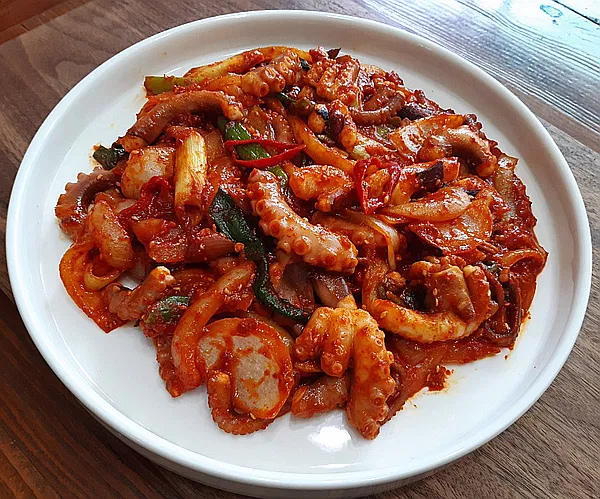
The photo below shows nakji-bokkeum. Nakji is stir-fried in a spicy sauce and served.
How spicy is it? It is stir-fried in a spicy sauce, so if you cannot handle spicy food, ask when you order whether it can be made less spicy.
4. Yeonpotang (연포탕) - If You Are Curious About Cooked Nakji
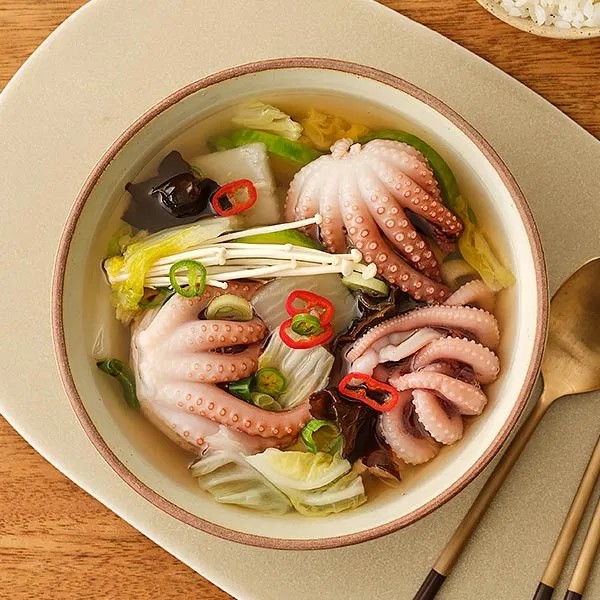
Yeonpotang is a soup in which live nakji (sannakji, 산낙지) is lightly blanched in a clear broth. The broth is made with anchovies and kelp, and simply seasoned with green onion, garlic and sesame oil. In some regions, water dropwort (미나리, minari) and chili pepper are added and it is boiled red.
The photo below shows yeonpotang boiled clear. The nakji turns pink as it cooks.
If raw is too much but you want to try nakji, yeonpotang is a good choice. The nakji turns chewy as it cooks, and the broth is light.
5. Nakji-gui (낙지구이) and Nakji-horonggui (낙지호롱구이) - Grilled Nakji
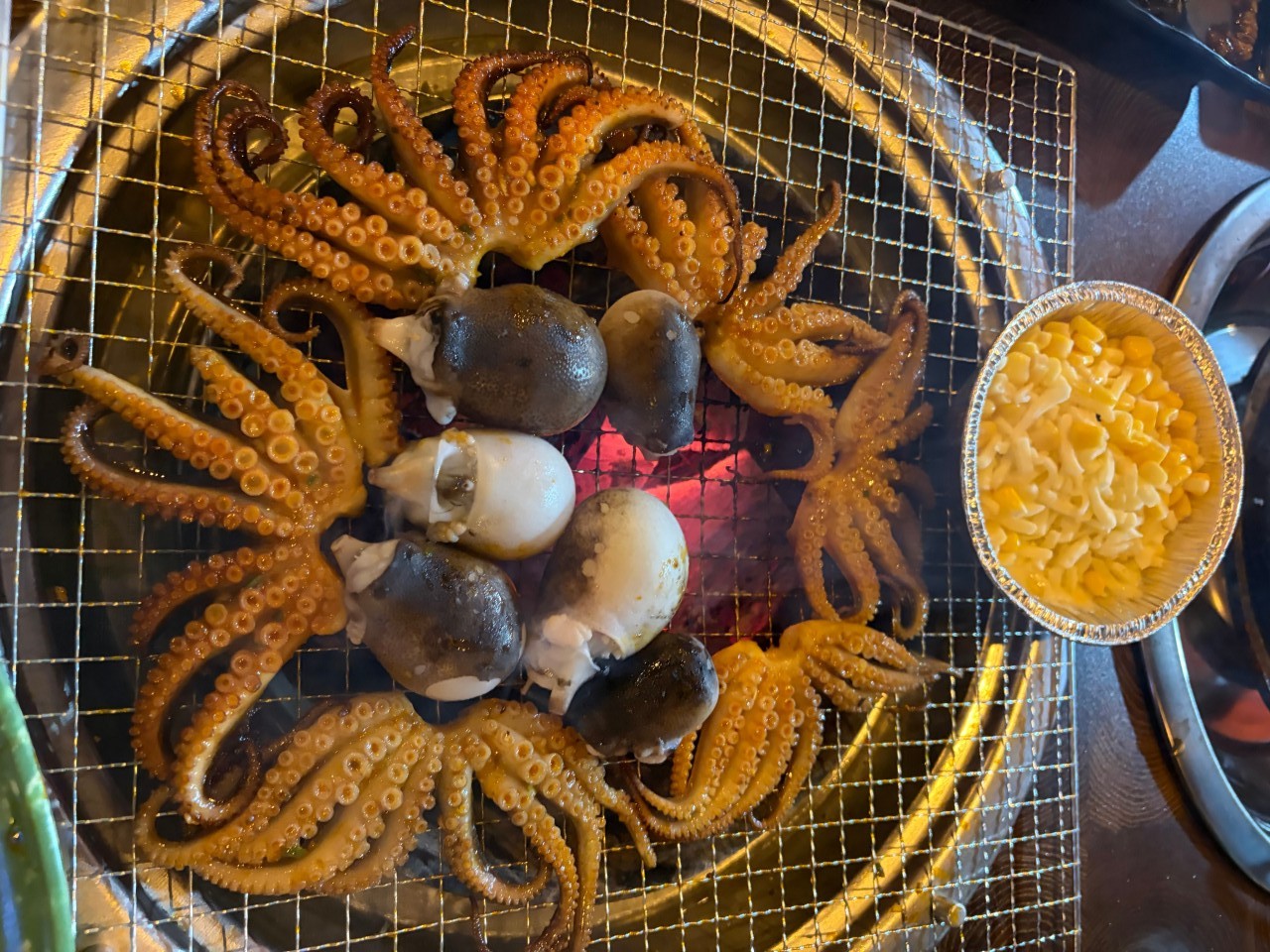
If raw is too much, grilled nakji is easier. There are two grilled dishes: nakji-gui (낙지구이), where the nakji is grilled whole, and nakji-horonggui (낙지호롱구이), where it is wrapped around a skewer and grilled.
The photo below shows nakji-gui. The nakji is grilled on a wire grill over charcoal. Some places serve it with corn cheese (옥수수치즈, oksusu-chijeu).
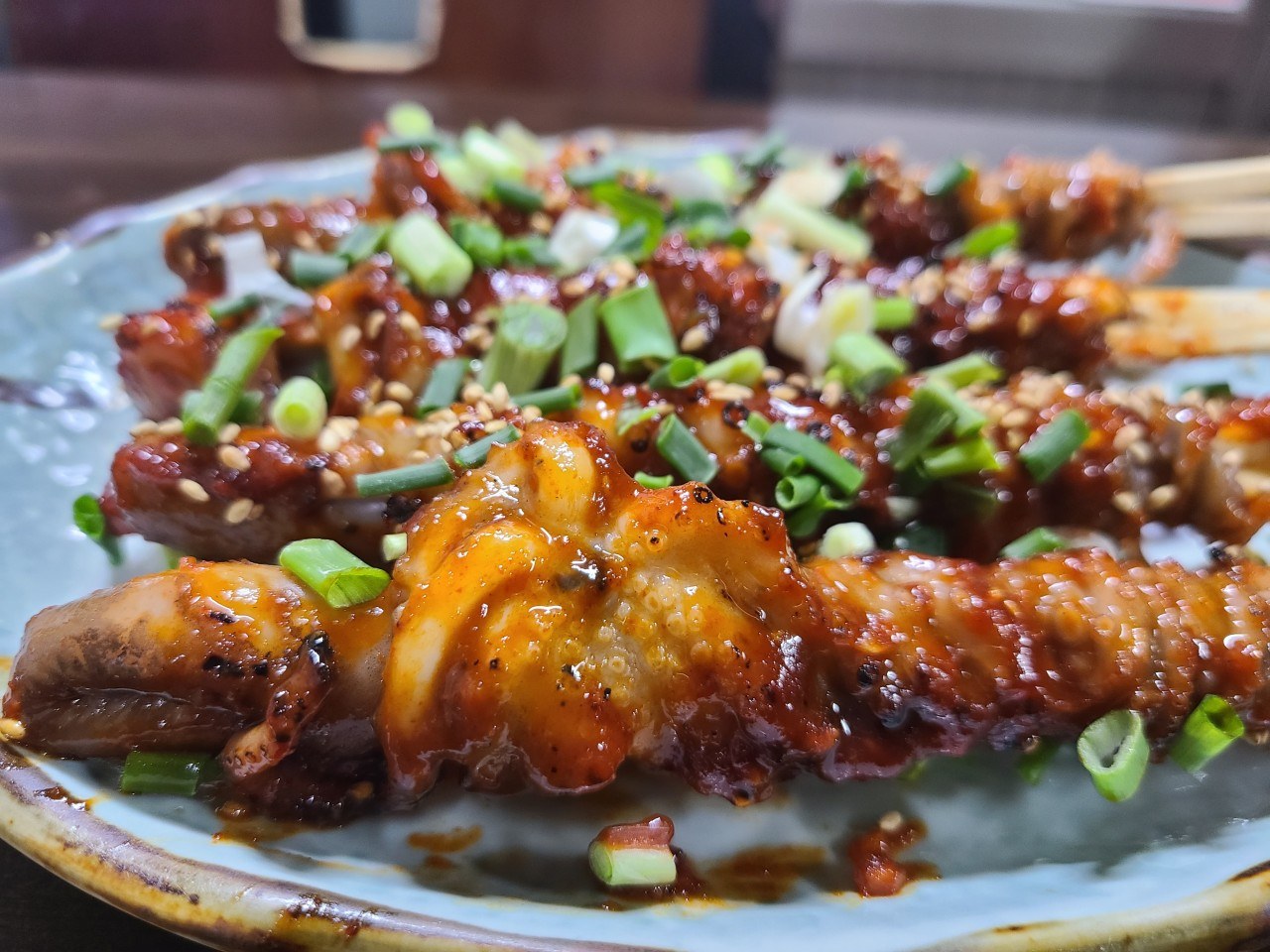
Nakji-horonggui is a dish where young nakji (sebal-nakji, 세발낙지) is wrapped round and round a skewer or chopsticks, starting from the head, brushed with sauce and grilled. It is famous in nakji-producing areas such as Yeongam, Jeollanam-do (전남 영암).
The photo below shows nakji-horonggui on a skewer, grilled in sauce. A sweet and spicy sauce coats it with a glossy shine, and it is served sprinkled with green onion and sesame seeds.
6. Jjukkumi-bokkeum (주꾸미볶음) and Shabu-Shabu - Jjukkumi Dishes
Jjukkumi-bokkeum is jjukkumi stir-fried in a spicy gochujang (고추장) sauce, and it is the most common jjukkumi dish. Some places serve it on an iron plate, and some add water dropwort (미나리, minari).
Jjukkumi shabu-shabu (주꾸미 샤브샤브) is a dish where jjukkumi is lightly blanched in boiling broth and eaten. It is said to suit people who find raw food hard to handle.
The west coast of Chungcheongnam-do (충남) is the main producing area for jjukkumi. In Busan too, you can find jjukkumi-bokkeum specialty shops in places such as Seomyeon (서면) and Sasang (사상).
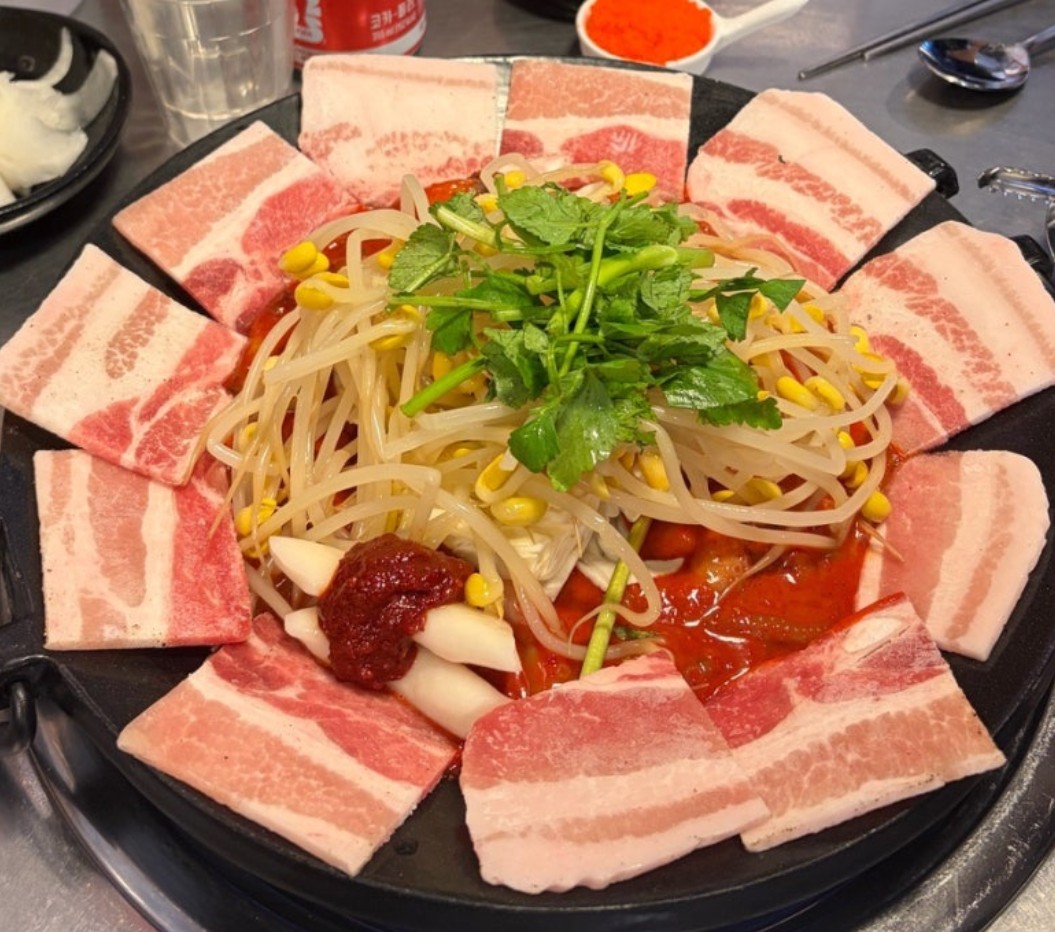
Stir-fried with pork belly. Jjusam (쭈삼), jjukkumi with samgyeopsal added, is also popular. The photo below shows jjusam before it is stir-fried at the table. Jjukkumi and sauce are under the pork belly, bean sprouts and water dropwort.
Depending on the shop, you can choose jjusam, jjugop (쭈곱), which adds gopchang to jjukkumi, or jjugopsae (쭈곱새), which adds gopchang and shrimp. Toppings differ from shop to shop, so check the menu before you order.
Where can I eat it? Search the map for 주꾸미볶음, 주꾸미 삼겹살.
Allergies and diet: Nakji and jjukkumi are mollusks. If you have a seafood allergy, be careful.
7. Nakji-tangtangi (낙지탕탕이) and Sannakji (산낙지) - Food That Moves
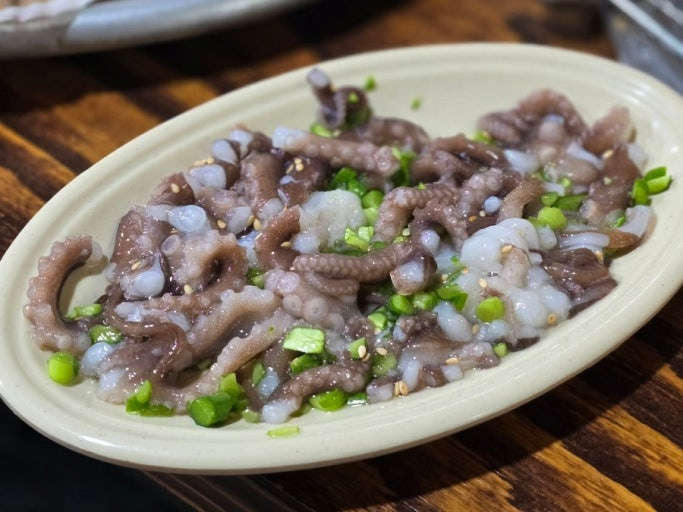
Sannakji (산낙지) means live nakji. In Korean, 산 means alive. Nakji-tangtangi (낙지탕탕이) is sannakji chopped small with a knife on a cutting board so that it is easy to eat. The name comes from 탕탕 (tang-tang), the sound of a knife chopping on the board. It is the most common way to eat sannakji.
How do I eat it? It is usually dipped in sesame oil mixed with salt (gireumjang, 기름장). Some places toss it with sesame oil and sesame seeds, and some sell yukhoe-nakji-tangtangi (육회낙지탕탕이), served with raw beef (yukhoe, 육회). Slippery nakji is easier to pick up with wooden chopsticks.
In producing areas such as Mokpo (목포), young nakji (sebal-nakji, 세발낙지) is sometimes wrapped around chopsticks and eaten whole, but this is rare even in Korea and dangerous, so we do not recommend it.
Even after it is served on the plate, the pieces of nakji keep wriggling for a while. When you put it in your mouth, you may feel the suckers sticking inside your mouth.
How to eat it safely
Eat it in small chopped pieces. A size of 1cm to 3cm is said to be the safest.
Chew well before you swallow. If the suckers stick in your throat, they can block your airway.
Avoid eating it whole. Choking accidents are reported every year.
Do not eat it if you have been drinking heavily. Older adults and children should also be careful.
Where can I eat it? It is sold at raw fish restaurants (hoetjip, 횟집) and fish markets (susan-sijang, 수산시장). Search the map for 낙지탕탕이, 산낙지.
A merchant at Noryangjin Fish Market (노량진수산시장) said most foreign customers are curious about sannakji. At first they are startled by the wriggling, but recently more foreigners seek it out on purpose.
Among Koreans, too, opinions are split between those who enjoy sannakji and those who do not. A person in their 20s living in Seoul said they enjoy it now and then with family and friends, and a person in their 40s said they do not eat it, not because it is dangerous but because it feels a little unfamiliar.
An American student visiting Korea wrote that they tried it for the first time at a market with Korean friends and were surprised that it tasted better than expected.
Meanwhile, animal welfare groups oppose sannakji dishes, saying nakji can feel pain.
Still, the most common view is that sannakji should not be judged differently from other animal foods, since every animal food was once alive, and that it should be seen as one part of a food culture.