Busan Seafood Hot Pot (Haemultang) and Freshwater Clam Soup (Jaecheopguk): How to Order and Eat
Seafood hot pot (haemultang, 해물탕) and freshwater clam soup (jaecheopguk, 재첩국) are hard to understand from the menu names alone. This guide covers the differences between haemultang, maeuntang (매운탕) and haemuljjim (해물찜), and how to eat jaecheopguk.
As of October 24, 2026 — Opening days and menus may change. Check before you go.
1. Two Soup Dishes Whose Names Do Not Tell You What They Are
Haemultang (해물탕) and jaecheopguk (재첩국) are among the 13 local foods designated by the city of Busan. Both are hot soups with a clean, refreshing broth that is not heavy, so people turn to them to settle the stomach. But it is hard to tell what they are from the menu names alone.
If you are dining alone, check ahead. Haemultang is a big pot dish meant to be shared, so many places only take orders for 2 servings or more. It may be difficult to order alone, so ask before you order whether a single serving is possible.
Korean menus have several names for soup dishes. This summary follows the explanations in the Standard Korean Language Dictionary (표준국어대사전) of the National Institute of Korean Language (국립국어원).
Term
Broth and how it is made
Examples
Guk (국)
Boiled with a lot of water
Jaecheopguk (재첩국), miyeokguk (미역국, seaweed soup)
Tang (탕)
The honorific word for guk (국). Simmered longer, so the broth is richer
How do the main ingredients differ? For both tang and jjim, the main ingredient is seafood, fish or meat. Tang has vegetables such as radish and green onion, and jjim has a lot of vegetables such as bean sprouts.
The amount of broth is only a rough guide. Actual names differ a little by region and by shop.
3. Haemultang (해물탕) - A Soup Boiled With Seafood
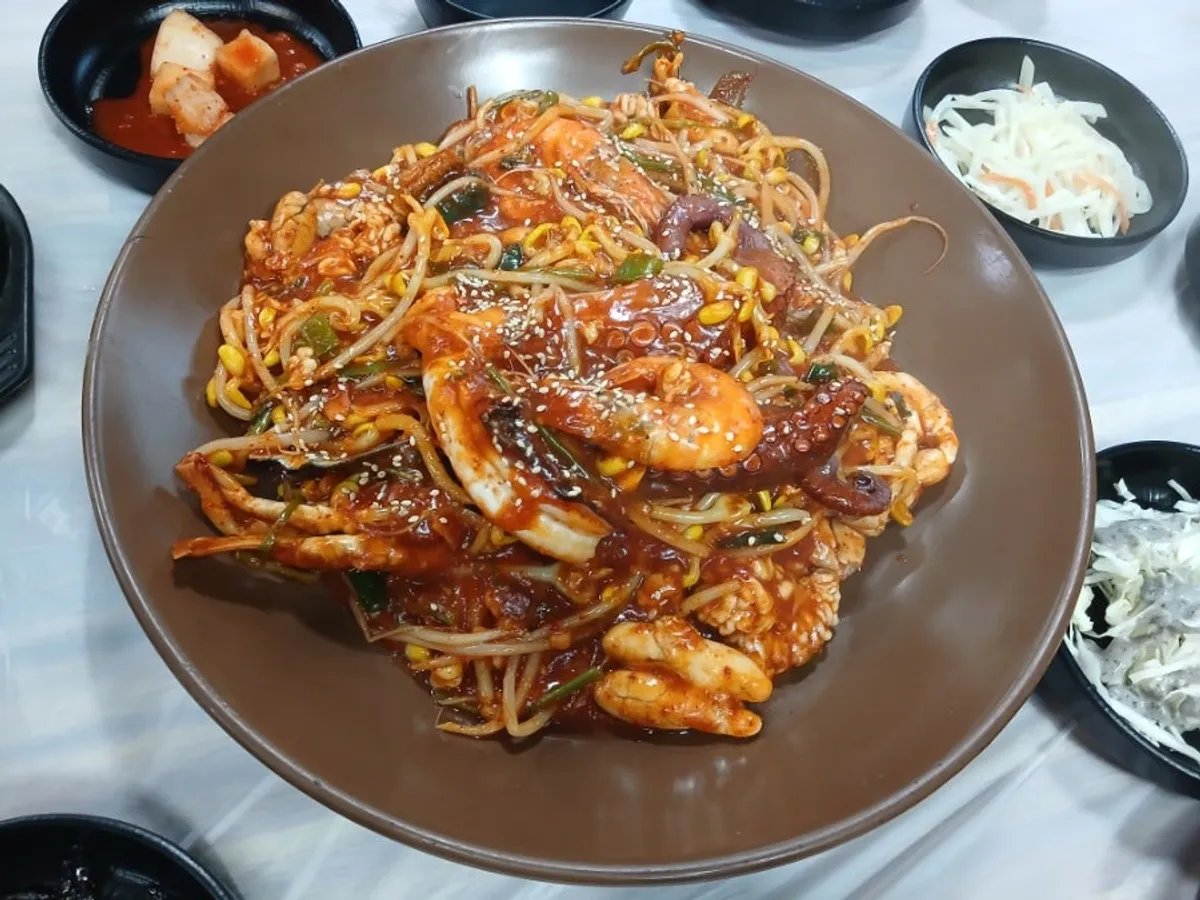
Haemultang is a spicy, steaming-hot soup (eolkeunhan, 얼큰한) boiled with seafood such as clams and other bivalves, crustaceans, and cephalopods such as small octopus (nakji, 낙지), along with vegetables such as bean sprouts, radish, green onion and mushrooms.
How is it different from maeuntang and haemuljjim? Menus have several similar-sounding names.
Menu name
What is different
Haemultang (해물탕)
Seafood is the main ingredient. Some versions have a clear broth, but it is more often served spicy
Maeuntang (매운탕)
Fish is the main ingredient. The broth is spicy
Haemuljjim (해물찜)
Seafood is the main ingredient. There is almost no broth, and it is often braised in seasoning
Haemuljeongol (해물전골)
Seafood is the main ingredient. A little broth is poured in, and it is boiled at the table as you eat
Haemultang sometimes has a clear broth, but it is more often served spicy with red pepper powder. If you cannot handle spicy food, ask when you order whether it can be made not spicy.
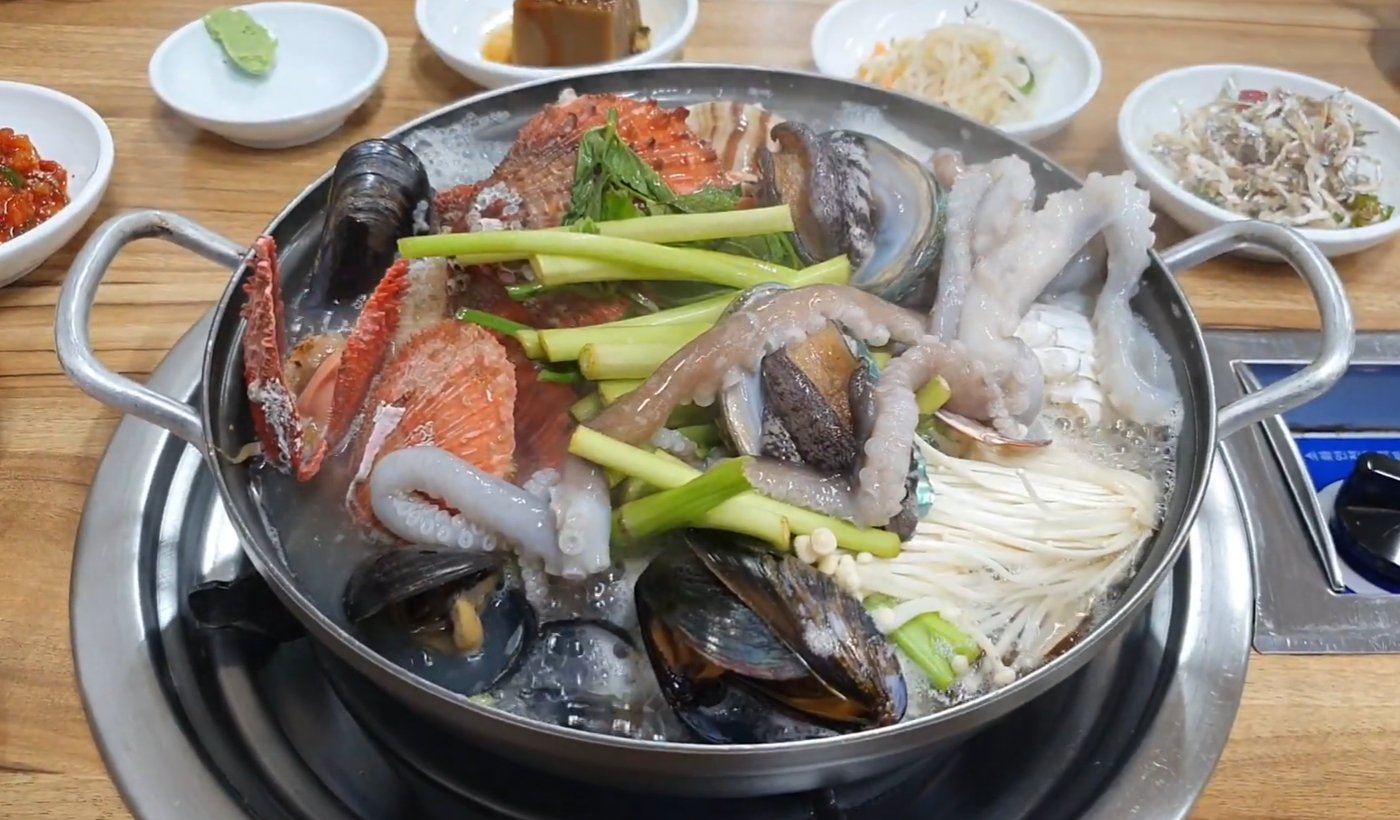
The photo below shows haemultang boiled clear, without red pepper paste or red pepper powder.
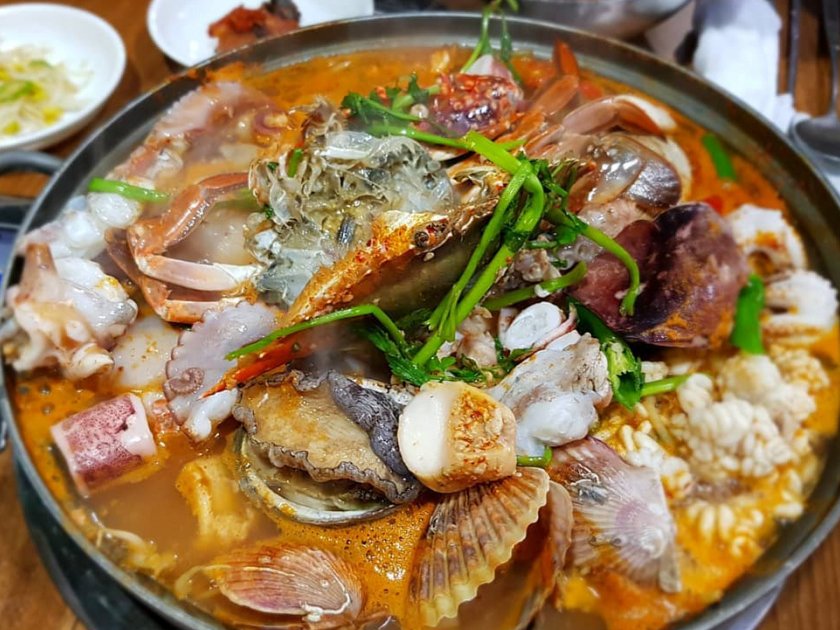
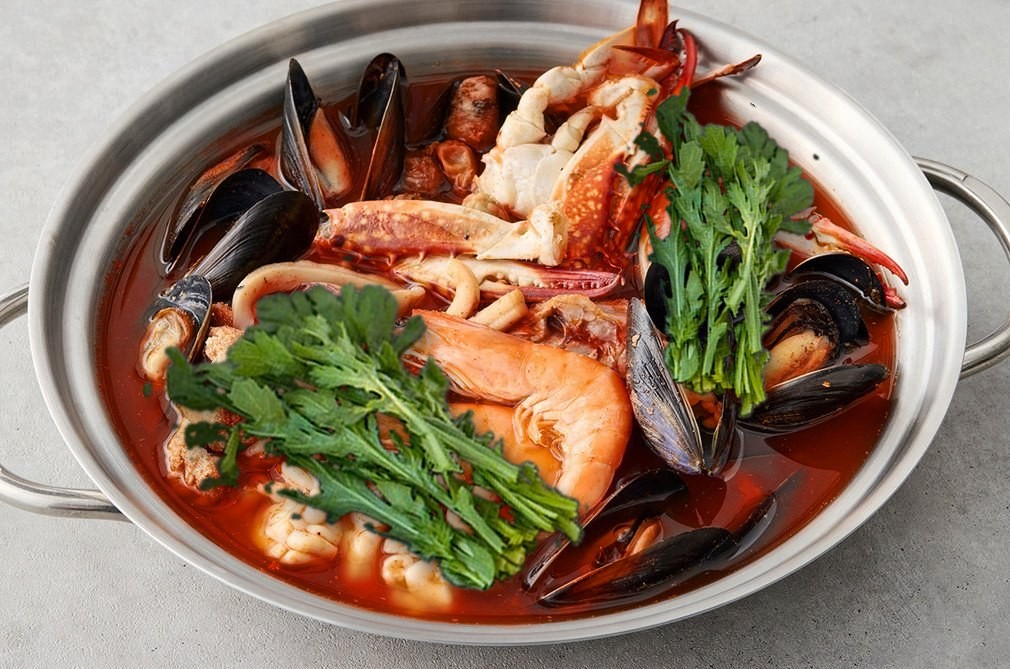
Red pepper powder is often added to haemultang. As in the photo below, the broth is red, and crown daisy (쑥갓, ssukgat) is sometimes put on top for aroma.
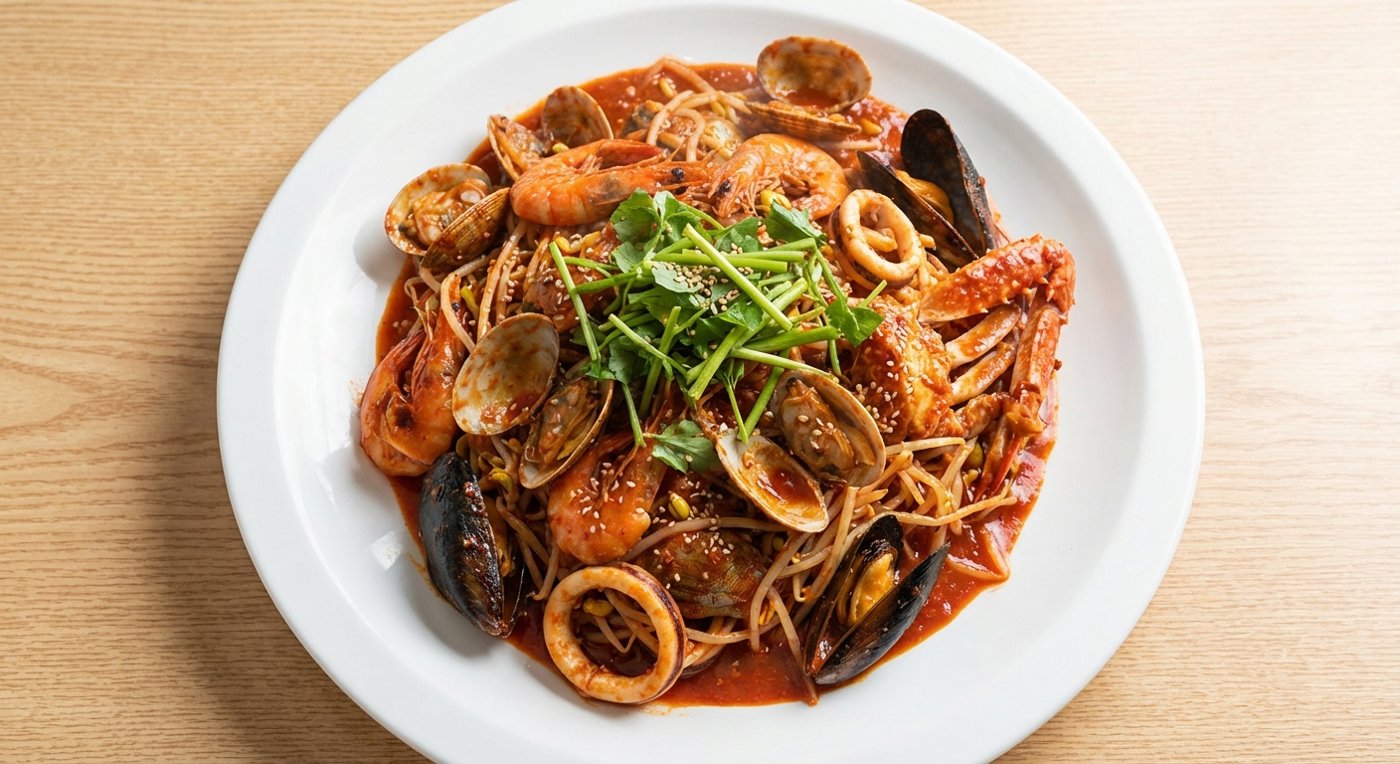
This is how haemuljjim is served. There is also a style where the seafood is steamed plain, without seasoning, and dipped in a seasoned sauce. But simmering it down in a spicy seasoning until the broth reduces is more common. Many shops sell haemultang and haemuljjim together.
The two photos below show haemuljjim. Seafood and bean sprouts are braised in a spicy seasoning.
Busan haemultang tends to have a clean, refreshing hot broth. It is said that plenty of vegetables such as radish and bean sprouts go in, so the broth is not thick.
There is an order for eating. In Busan, people are said to scoop out and eat the seafood first, as soon as the broth boils. It is not boiled long, so the seafood stays tender.
When the broth reduces and gets thick, people mix rice with the cooked vegetables and broth, or add noodles to the broth.
What seafood goes in? These days, many shops are said to put in plenty of live seafood such as live abalone (활전복), live small octopus (산낙지), large octopus (문어), pen shell (키조개), scallops (가리비), hard clams (백합), Japanese swimming crab (꽃게) and large prawns (대하). If live small octopus goes in, it may still move in the pot.
Allergies and diet: It contains clams and other bivalves, crustaceans such as shrimp and crab, and small octopus. If you have a seafood allergy, be careful.
Where can I eat it? There are many places in central Busan that sell haemultang (해물탕). Search the map for 해물탕, 해물찜 and 해물전골.
4. Jaecheopguk (재첩국) - Clear Soup Made With Small Clams
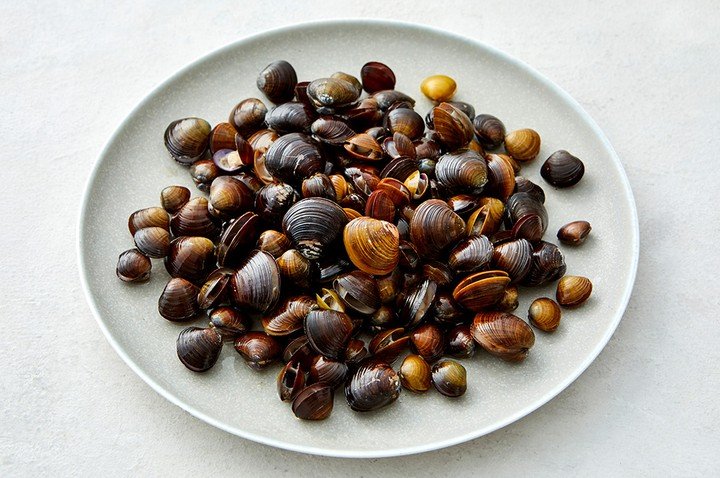
Jaecheop (재첩) are small freshwater clams (corbicula) that live where a river meets the sea. They are so small that many go into one bowl.
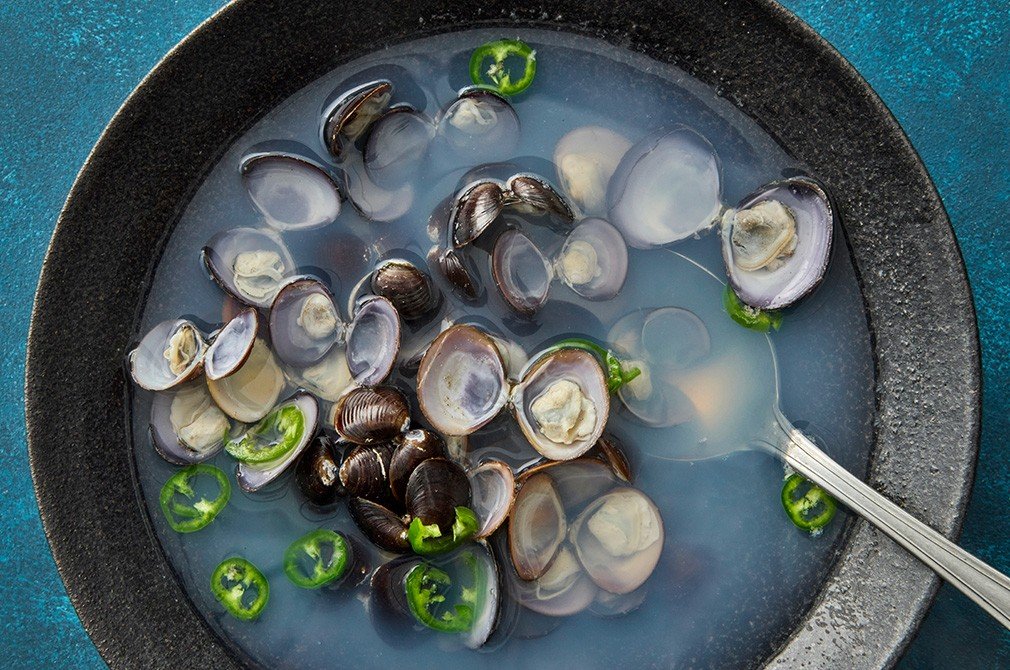
Jaecheopguk is a soup made by boiling these clams thoroughly to bring out their flavor. The broth is milky white yet clear. In the Gyeongsang (경상도) dialect, it is also called jaechipguk (재칩국) or jaechiguk (재치국).
What is the connection to Busan? According to the Busan City newsletter (부산시보), jaecheopguk was a favorite of the refugees who came to Busan during the Japanese colonial period and the Korean War. It is said to have been a food that could fill the stomach cheaply.
Samnak-dong, Sasang-gu (사상구 삼락동) and Gupo-dong, Buk-gu (북구 구포동), at the mouth of the Nakdong River (낙동강), were famous as jaecheop production areas.
There are almost no Nakdong River clams now. After the Nakdong River estuary barrage (하굿둑) was built in 1987, wild Nakdong River jaecheop almost disappeared. Today, shops are said to use clams brought from elsewhere, such as jaecheop from the Seomjin River (섬진강).
Still, jaecheopguk is a local food designated by the city of Busan, and for people in Busan it is a hangover soup (haejangguk, 해장국) with many memories attached.
How do I eat it? Jaecheop are very tiny, so sometimes the shells are removed and only the meat is served. If the shells are still on, you can easily pick out the meat with chopsticks. Collect the shells in a separate bowl.
It is a clear soup seasoned with salt, so the taste is light and plain. Some people find it bland. In that case, you can add a little red pepper powder or salt. It is also good with rice added to the soup.
When do people eat it? Many people look for it as a hangover soup (haejangguk) to settle the stomach the day after drinking.
Where can I eat it? It is sold in many places in central Busan. Search the map for 재첩국.