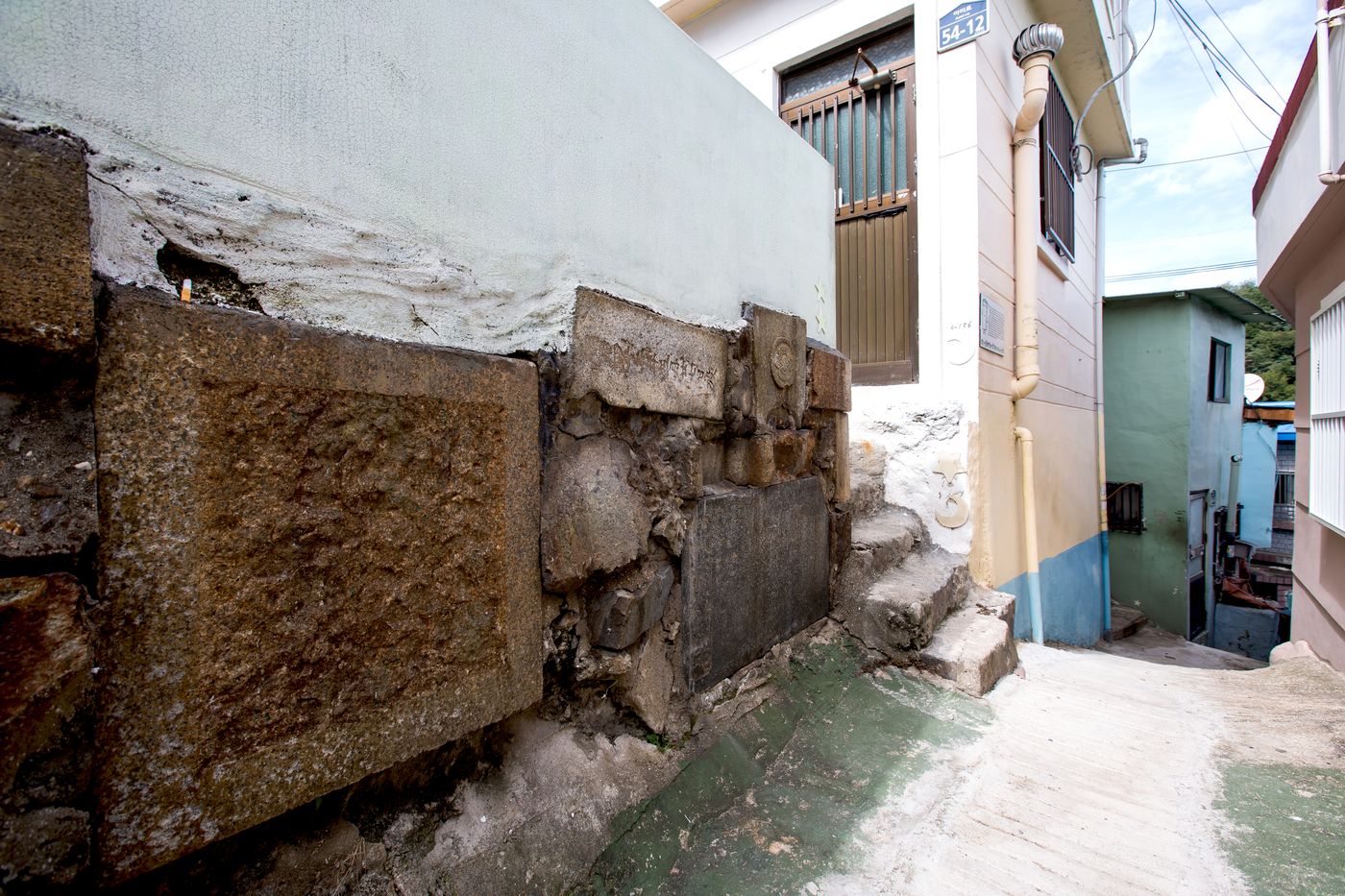
Steps and a wall built from old tombstones and altar stones — right next to it is a house people still live in. Photo: Busan Tourism Archive (Busan Tourism Organization / Busan Metropolitan City), KOGL Type 1.
Right next door to Gamcheon, with tombstones still built into its stairs and walls. People actually live here, so it calls for a different kind of visit.
Last checked September 5, 2026 — visiting details can change, so treat older information with caution.
Steps and a wall built from old tombstones and altar stones — right next to it is a house people still live in. Photo: Busan Tourism Archive (Busan Tourism Organization / Busan Metropolitan City), KOGL Type 1.
The area around San 19, Amidong was a Japanese cemetery during the colonial period. After liberation, it sat abandoned for about five years — until the Korean War changed everything.
Refugees poured into Busan faster than the city could ever house them, and there was no building material to be had. People who needed a roof that same day laid planks over the abandoned graves and started building homes, using the tombstones and altar stones as steps, walls, and foundations. Remains that turned up in the process weren't simply discarded — they were given a proper rite, then moved to a nearby temple, according to local accounts.
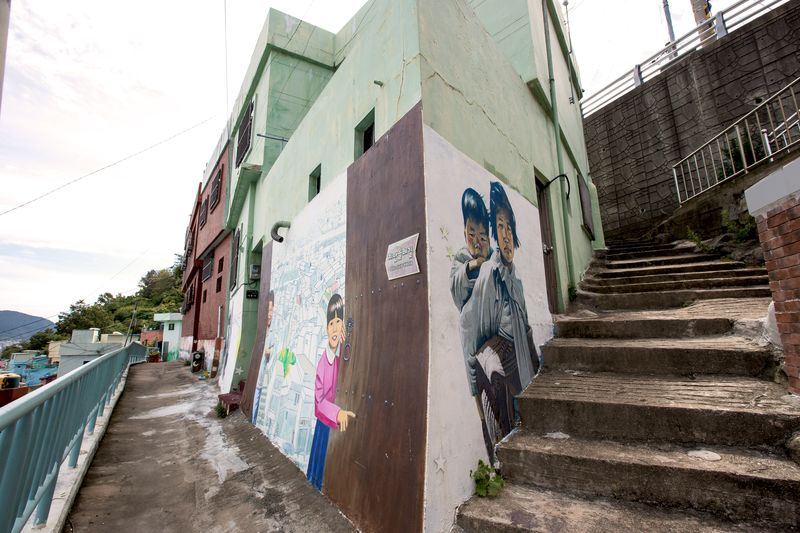
A mural, not a historical photo — painted in the village to commemorate the refugee-settlement era. Photo: Busan Tourism Archive, KOGL Type 1.
It's separated from Gamcheon Culture Village by a single road. Both neighborhoods trace back to Korean War refugees settling the hillside, but Amidong isn't on Gamcheon's official stamp-tour ("passport") route — it's a separate stop you have to seek out on your own.
Confirmed via Visit Busan (official Busan tourism information), as of September 5, 2026.
Steps, walls, and house foundations throughout the village still have the original tombstones and altar stones set into them. Some carry the crest of a Japanese family, still legible if you look closely.
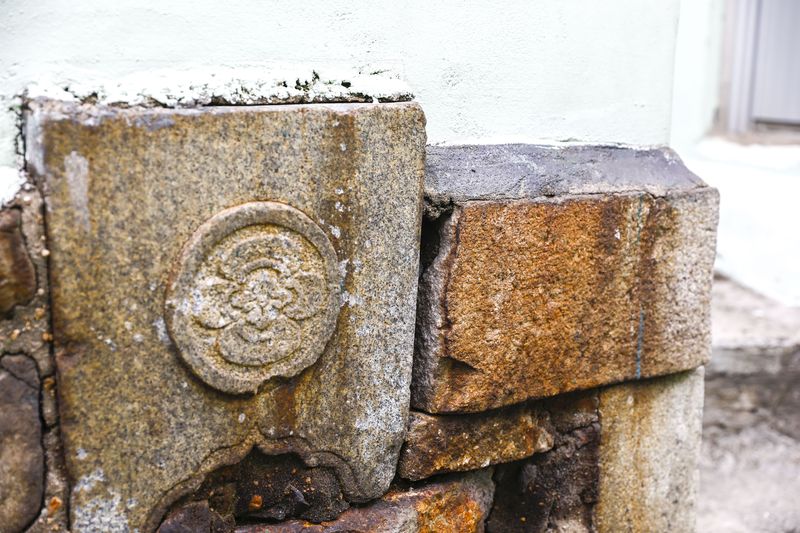
A tombstone carved with a Japanese family crest, still set into the corner of a wall. Photo: Busan Tourism Archive, KOGL Type 1.
Climb to the observation deck above the village and the hillside houses and the old downtown skyline beyond come into view together. There are murals here and there too, but unlike Gamcheon, the whole village wasn't dressed up for tourists.
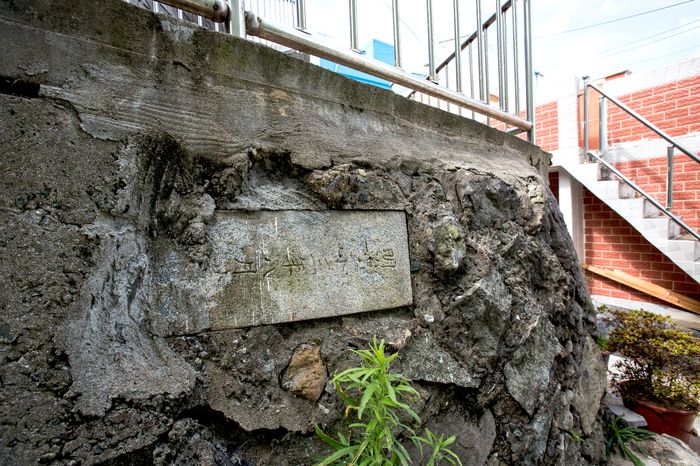

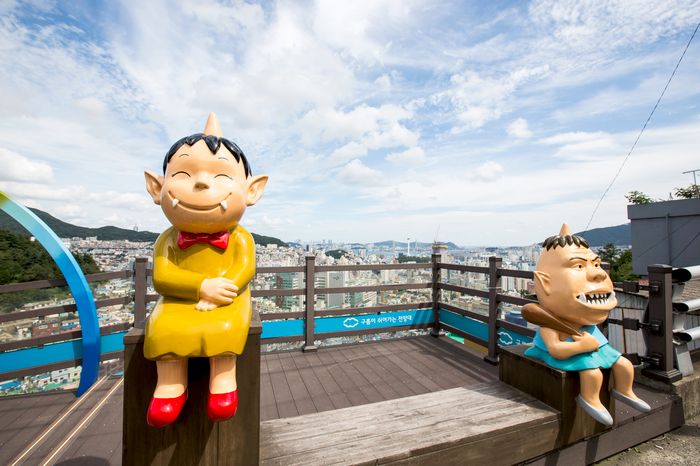
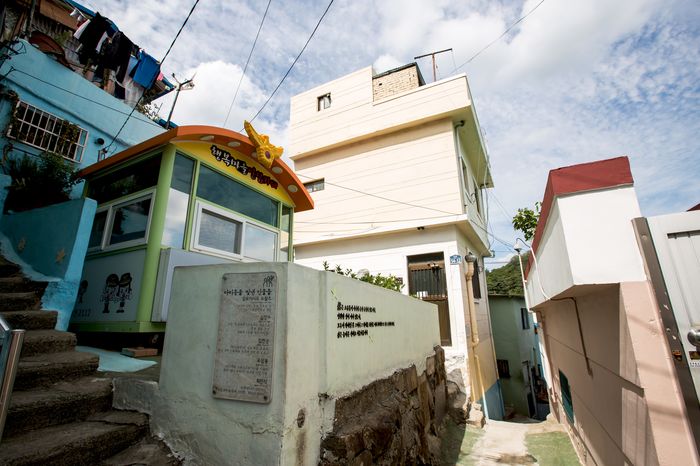
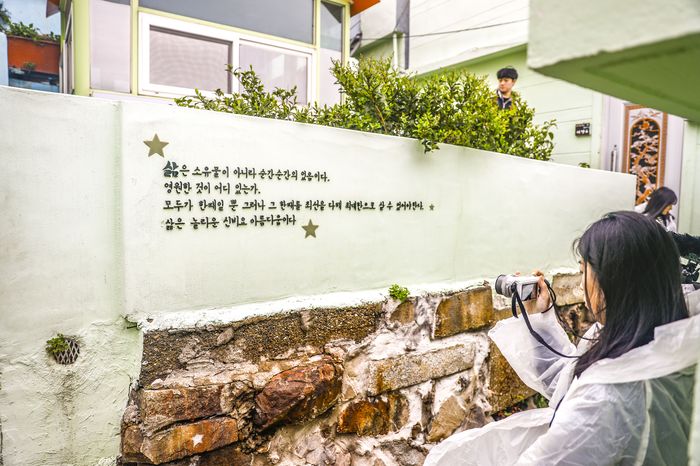
Photos: Busan Tourism Archive (Busan Tourism Organization / Busan Metropolitan City), KOGL Type 1.
This is where Amidong differs most from Gamcheon. Gamcheon has cafes, gift shops, and an information center — it was built to welcome tourists from day one. Amidong isn't like that. It's an ordinary residential neighborhood where people still actually live, and tourism was never the reason it exists.
The neighborhood's future hasn't been a quiet topic either. In 2021, residents pushed back against the Seo-gu district office's plan to build a monorail parking lot, demanding that their right to stay be guaranteed. This isn't just a backdrop for photos — it's a place where real lives are still at stake.
Money Today and Nocut News, June 2021.
If you want a deeper, no-pressure look at the village's history, stop by the Ami Culture Learning Center first. It's a place where you can take in Amidong's history through photos and materials, without having to walk into the alleys where people actually live.
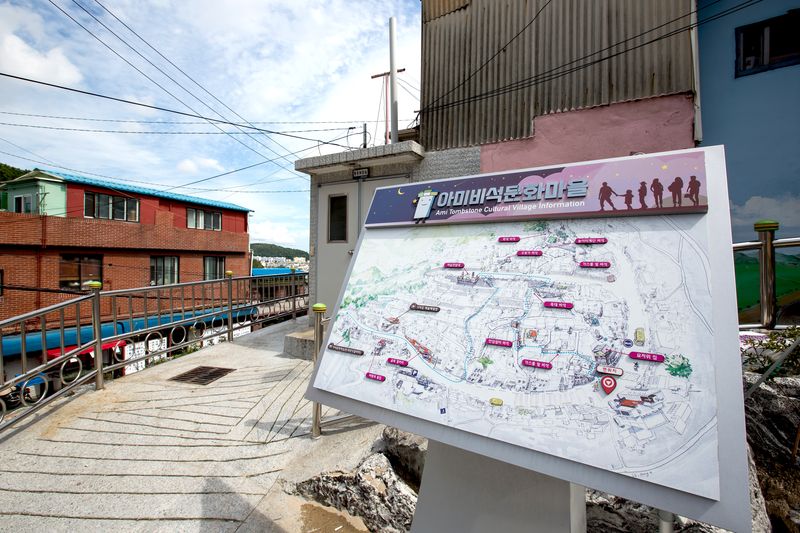
The information board at the village entrance, marking spots like the retaining-wall tombstone, the tap-side tombstone, and the playground-steps tombstone. Photo: Busan Tourism Archive, KOGL Type 1.
Inquiries 051-240-4496
Hours Open year-round, free admission
Confirmed via Visit Busan (official Busan tourism information), as of September 5, 2026.
There are two ways in — walk the whole way, or ride the village bus for one stop.
Take Metro Line 1 to Toseong Station Exit 8 and just walk up from there.
About a 20-minute walk
Come out of Toseong Station Exit 6, turn right, and walk about 120m to the Pusan National University Hospital stop. Take village bus Saha-gu 1-1 or Seo-gu 2 (사하구1-1, 서구2) and get off at the Sansang Church (Tombstone Cultural Village) stop.
Fare about ₩1,600
Parking — the Amigol public parking lot is available.
Confirmed via Visit Busan (official Busan tourism information) + Naver Map route check, as of September 5, 2026. Admission is free.