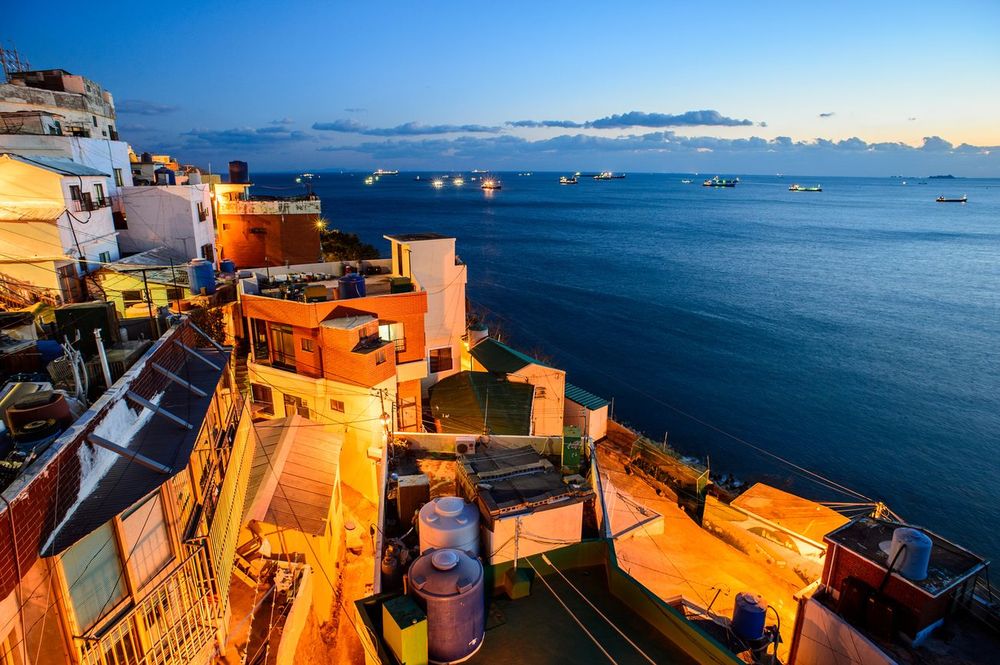
A narrow cliffside village stacked house on house — nicknamed "Korea's Santorini," and true to that name, the sea never leaves your sight as you walk. Along with Gamcheon, it's one of Busan's two flagship culture villages.
Last checked September 6, 2026 — visiting details can change, so treat older information with caution.
Photo: Appleysj (Lee jung hoon), CC BY-SA 4.0, via Wikimedia Commons
The Yeongseon-dong area of Yeongdo-gu, where Huinnyeoul Culture Village sits, was originally a small fishing village. When refugees flooded in during the Korean War, it turned into a village of shanty houses packed onto a steep cliffside. The name "Huinnyeoul" itself comes from the white foam ("huin" means white, "nyeoul" means rapids) formed where a stream flowing down from Mt. Bongnae meets the sea.
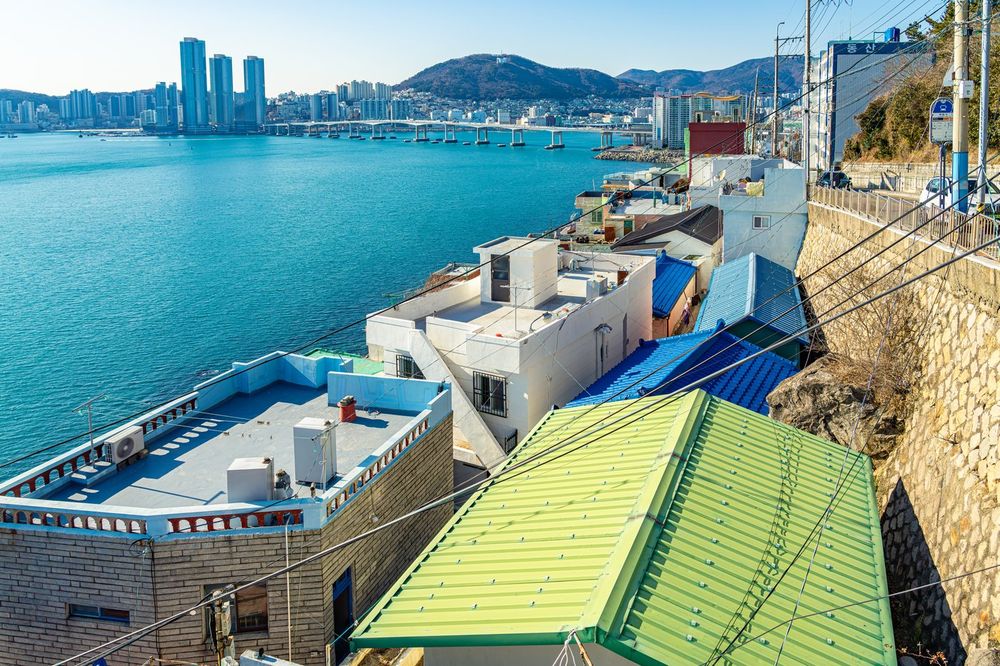
The houses packed onto the steep cliff are visible at a glance. Photo: Busan Tourism Organization, KOGL Type 1.
Around 2011, residents and local artists began painting murals and fixing up empty houses on their own initiative, kicking off the village's makeover. From there, an official regeneration project led by Yeongdo-gu (2015–2020, roughly ₩3.75 billion in total) added renovated stairways, a sea observatory, and a "village school" (training resident guides, woodworking and craft programs), shaping the village into what it is today. It was also around this time that word spread it had been a filming location for the movie The Attorney (2013), and it took off as a tourist spot.
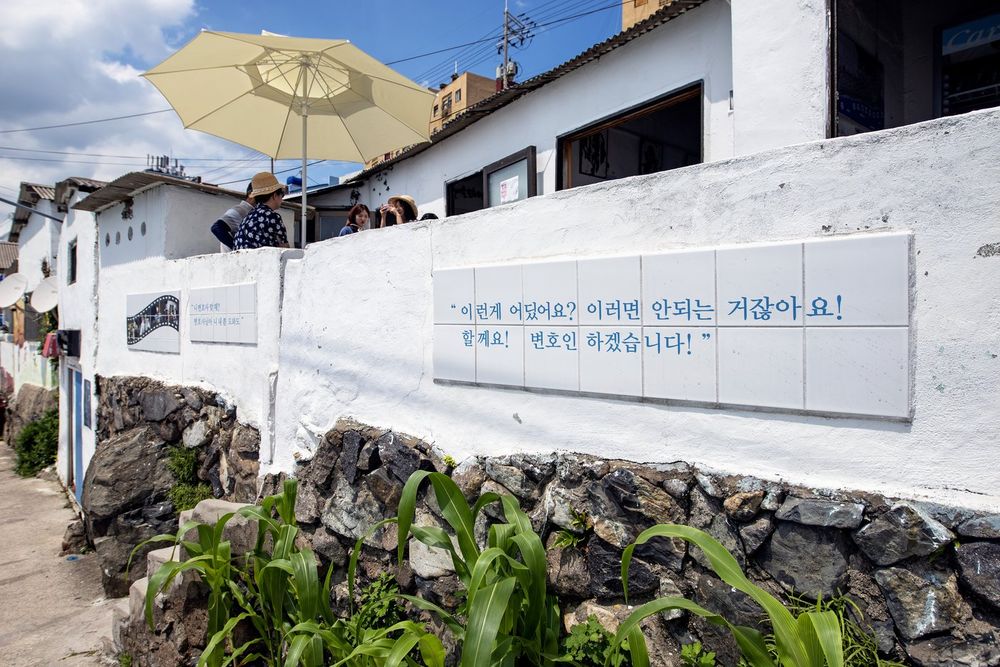
A wall marking The Attorney's filming location, with a line of dialogue engraved on it. Photo: Busan Tourism Organization, KOGL Type 1.
If Gamcheon is a village you "look at" — an entire hillside painted in color — Huinnyeoul is centered on a narrow coastal alley facing the sea head-on. It's smaller than Gamcheon, but the biggest difference is that the sea never leaves your sight as you walk.
Annual visitors more than tripled, from roughly 270,000 in 2016 to about 820,000 in 2019. One survey found that 27 of the 33 shops along the village's main alley had turned into cafés, and that roughly 30% of original residents had left. No updated annual official figures exist past 2019, but according to Yeongdo-gu's smart-sensor data from February 2024, Huinnyeoul Culture Village drew an average of 3,039 visitors a day and 88,114 for the month — up 37% from January. Simply multiplying that one month by 12 would suggest roughly 1.06 million visitors a year, but the smart sensors count any phone signal within a 50–100m radius, so the figure can include people just passing through or the same person counted more than once, and February — an off-season month — may undercount compared to peak season. Take this only as a rough estimate.
E&TourPick (2019 statistics, as reported) · Yeongdo-gu smart-sensor foot-traffic analysis (February 2024) · Yeongdo-gu official materials (regeneration project overview), as of September 6, 2026.
Cafés and photo spots have multiplied, but Huinnyeoul is still a residential neighborhood where people actually live. Most of the friction mentioned above starts from that fact.
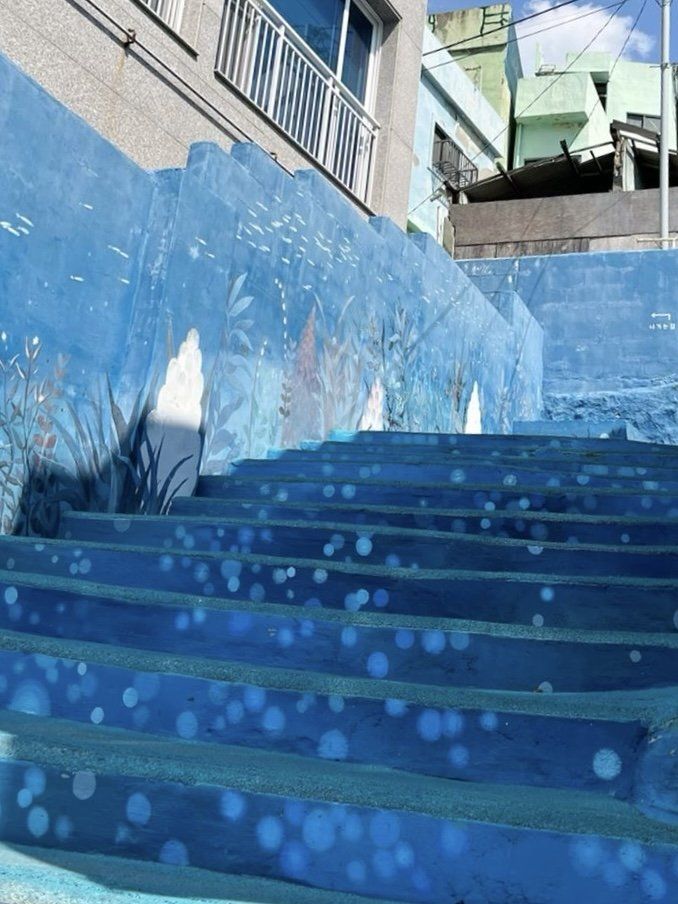
Narrow, steep stairways like this are everywhere in the village — try not to block them while taking photos. Photo: VN.NguyenDucDuy, CC BY-SA 4.0, via Wikimedia Commons
These are the spots worth making time for inside the village. If you have time to spare, it's worth continuing down to Jeolyeong Coastal Walkway at the bottom of the village.
The sea in front of Huinnyeoul connects directly to Songdo Beach — Songdo Marine Cable Car is close enough that it's clearly visible even on overcast days. But look closely at the boats out on the water and you'll notice something unusual: most of them aren't fishing boats or yachts, but large bulk carriers. Rounding Amnam Park from Songdo Beach leads to a bulk-cargo pier, where bulk carriers loaded with frozen seafood come and go. That's why the sea view from Huinnyeoul, unlike other coastal villages, is dotted with large anchored cargo ships. It's a slightly unusual sight. These ships also light up at night, which is part of why the night view of the sea looks even more dramatic from here.
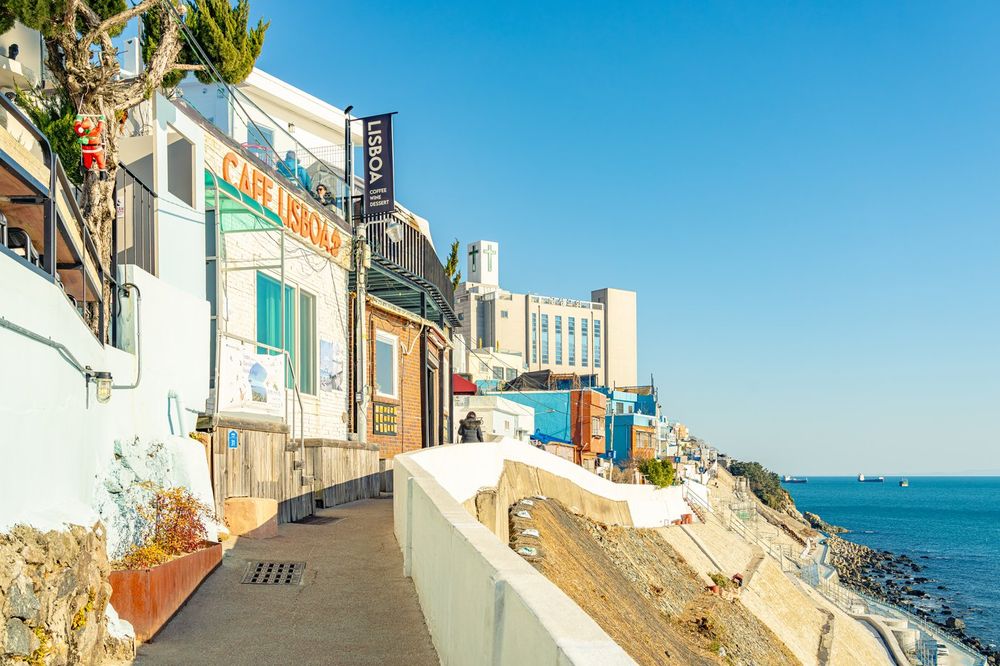
Walk the village alleys and this sea view keeps unfolding — most of the boats in the distance are bulk carriers. Photo: Busan Tourism Organization, KOGL Type 1.
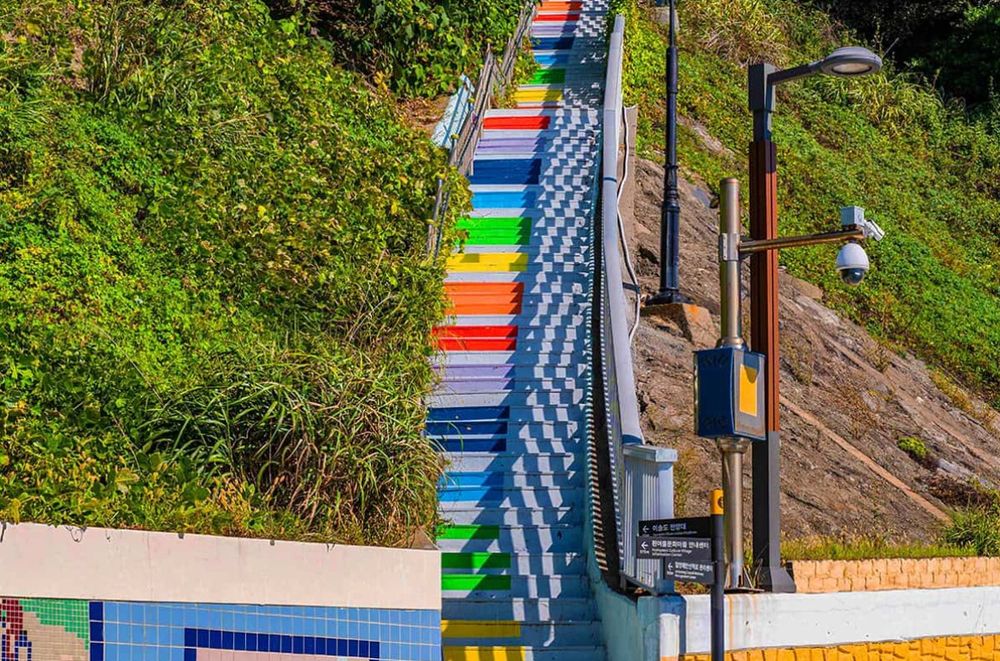 Rainbow Stairs
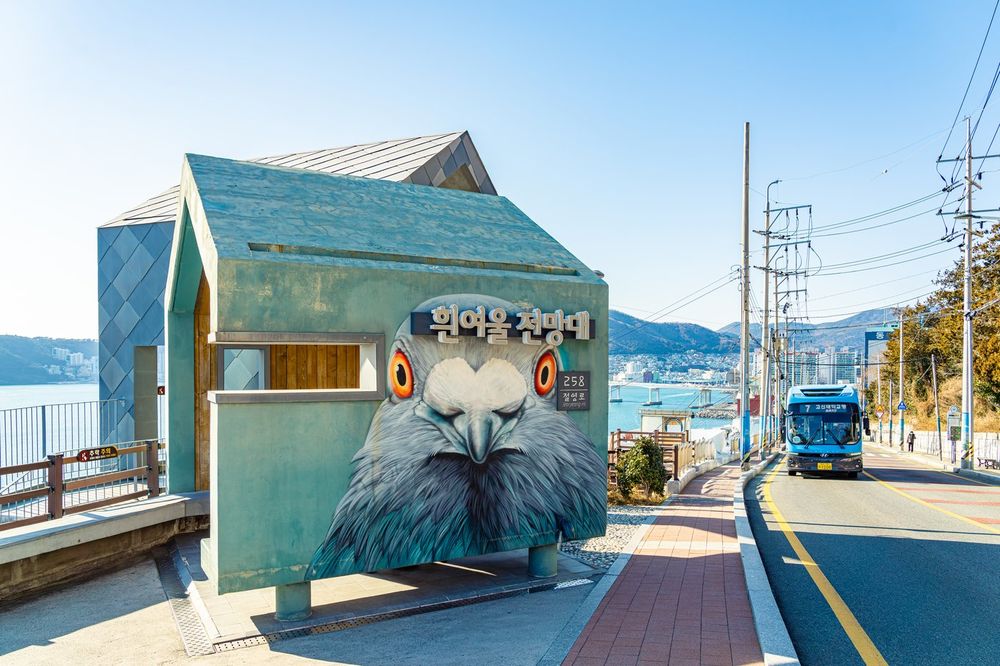 Huinnyeoul Observatory
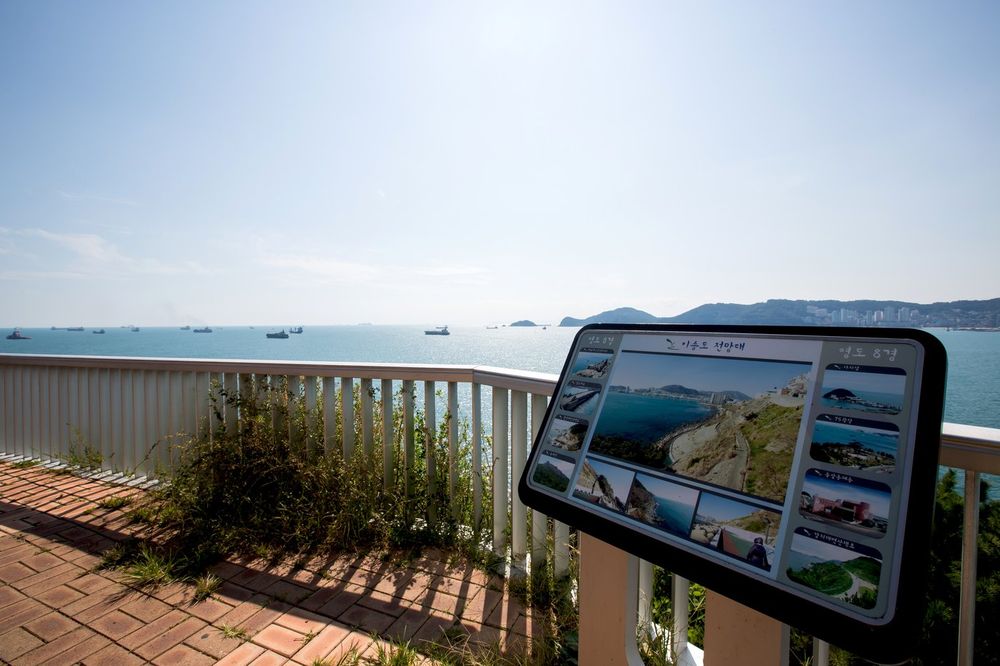 Yisongdo Observatory
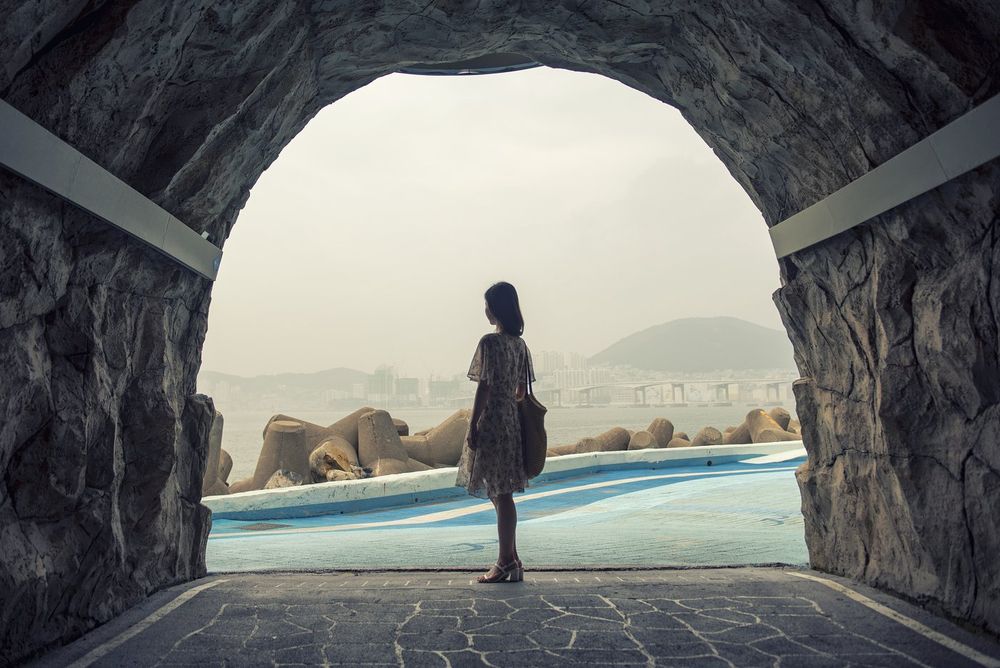 Huinnyeoul Coastal Tunnel
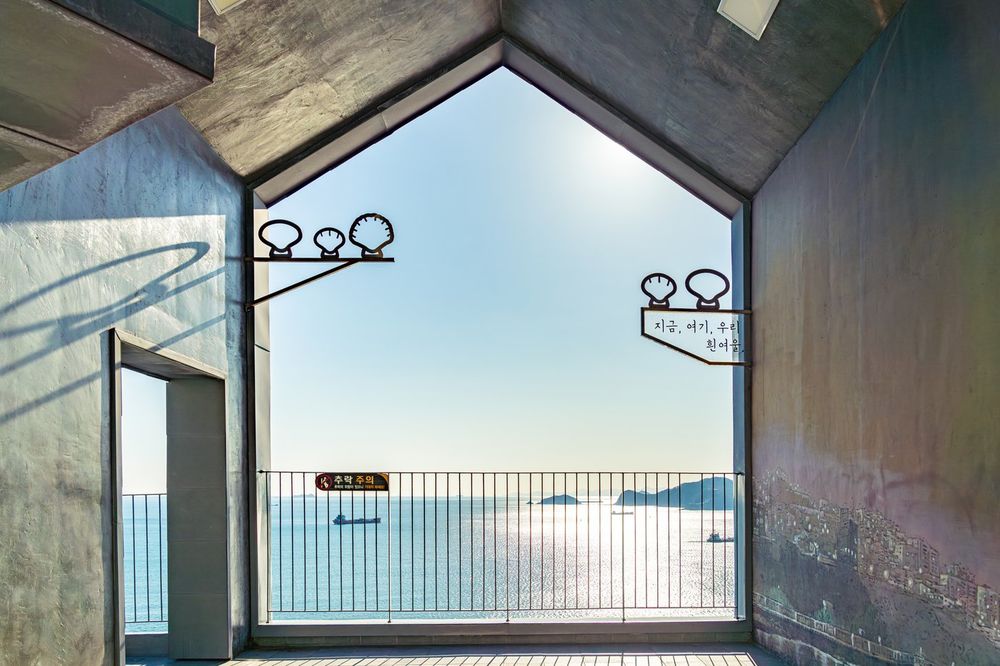 Huinnyeoul Observatory (inside)
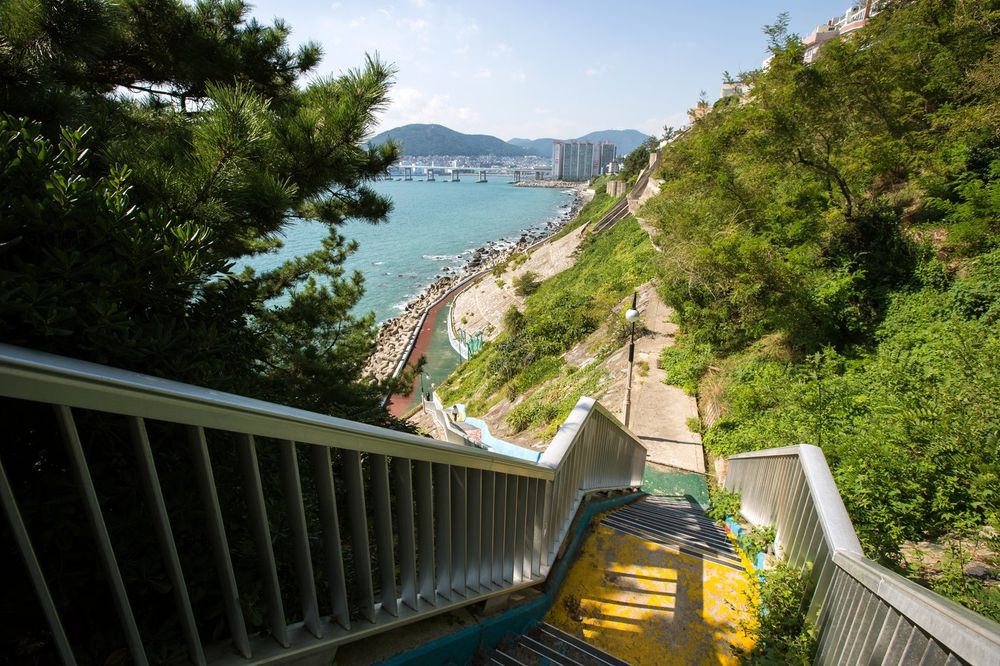 The path to Yisongdo Observatory
Rainbow Stairs is a standout photo spot — the entire staircase is painted in bright rainbow colors. Huinnyeoul Observatory has a distinctive look, with a teal roof and a large bird mural, and its windows frame the sea and islands like a picture. Yisongdo Observatory sits where the sea opens up right at the bottom of a stairway, and many visitors say it's especially photogenic. Huinnyeoul Coastal Tunnel is considered the village's most iconic photo spot.
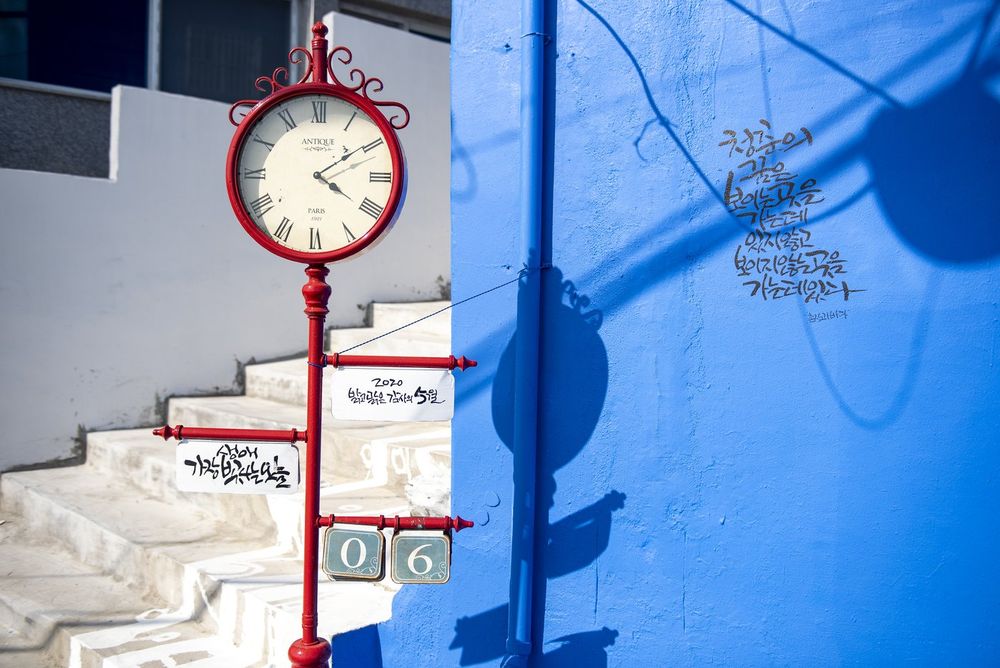
Little photo spots like this are tucked away throughout the village's alleys. Photo: Busan Tourism Organization, KOGL Type 1.
Jeolyeong Coastal Walkway — a seaside path running from the village toward Taejongdae and Mt. Bongnae. A round trip covering just the highlights takes about 20 minutes; budget 1–2 hours if you want to stop for photos and a café too.
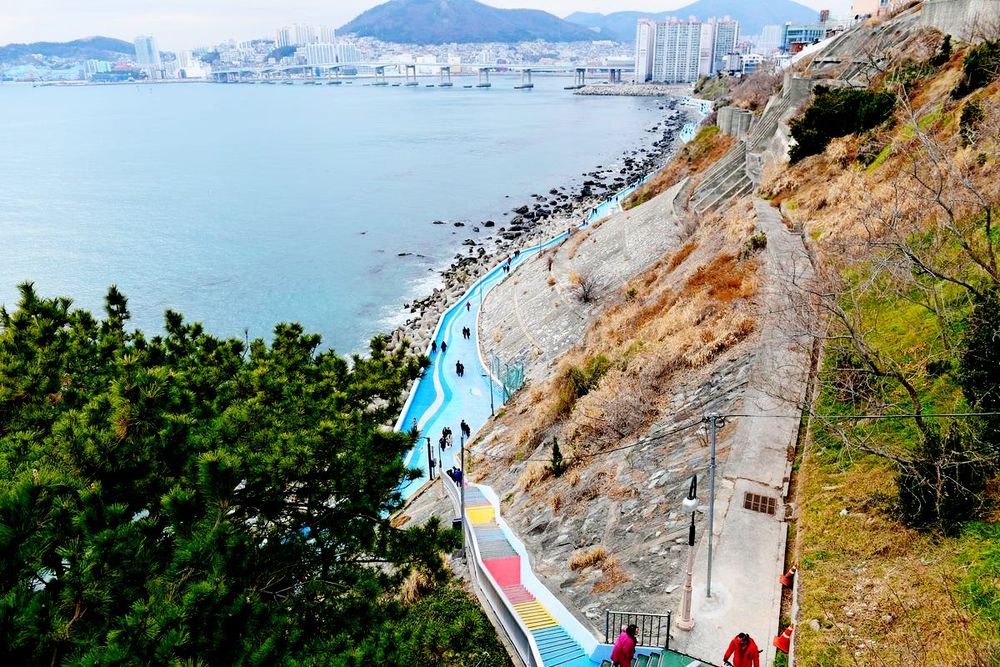
Seen from above, it's easy to tell just how far the walkway stretches along the coast — Rainbow Stairs is visible in the lower left too.
Cross-checked against Yeongdo-gu official materials, official Busan tourism information, and local news coverage, as of September 6, 2026.
"Which café is good?" is half the reason people search for this village, so here are three spots that turned up consistently across multiple sources. Cafés close down or move often, so it's worth doing a quick search to confirm they're still open before you go.
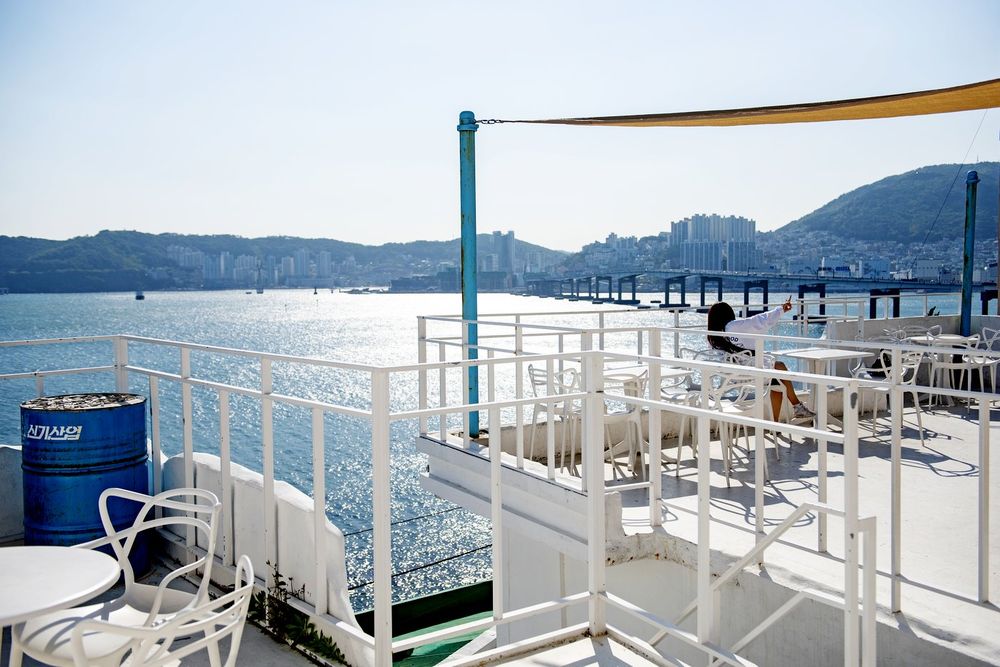
Most cafés in the village have an ocean-view terrace like this one (not a photo of any specific café listed below).
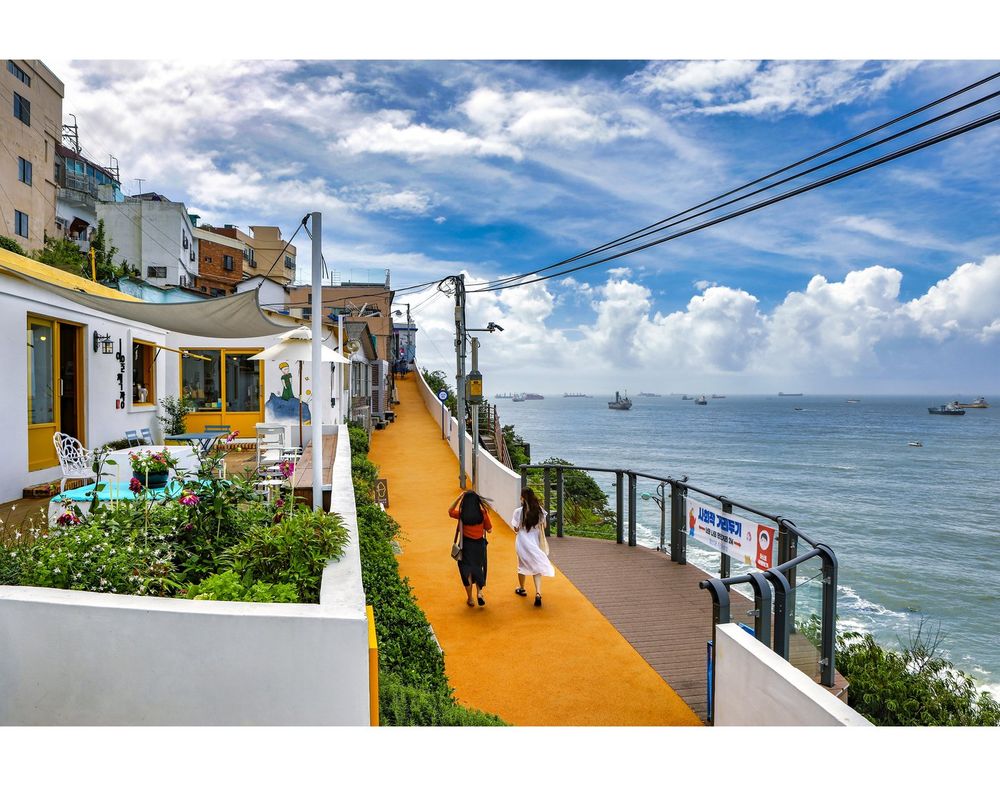
This is the kind of view that keeps unfolding as you walk the café street. Photo: Busan Tourism Organization, KOGL Type 1.
The entire 4-story building has a sea view. From the rooftop, you can also take in Huinnyeoul-gil and the night view of Namhang Bridge.
Jeolyeong-ro 234 (절영로 234)
A renovated hanok space where you can see the sea from any seat. There's a small souvenir shop in the basement.
Yeongseon-dong 4-ga 612 (영선동4가 612)
The closest ocean-view café to the village entrance (about 0.5km) — easy to stop by without going out of your way.
Near Huinnyeoul Culture Village
Cross-checked against multiple visitor reviews and blogs, as of September 6, 2026. Hours, menu, and whether a place is still open can change — worth confirming before you visit.
Parking — Streets inside the village are narrow, making parking difficult. It's best to use the parking lot at the Jeolyeong Coastal Walkway entrance or the Yeongdo-gu Office parking lot and walk in for 5–10 minutes.
Cross-checked against two Busan-area travel information sites, as of September 6, 2026. No admission fee.
Admission free, open 24 hours (cafés and other businesses generally run about 10am–6pm)
Footwear — steep slopes and lots of stairs make comfortable shoes essential; strollers and wheelchairs will have a hard time
Best time to visit — around sunset, when the sea turns gold
Tap a keyword below to jump straight to related content.