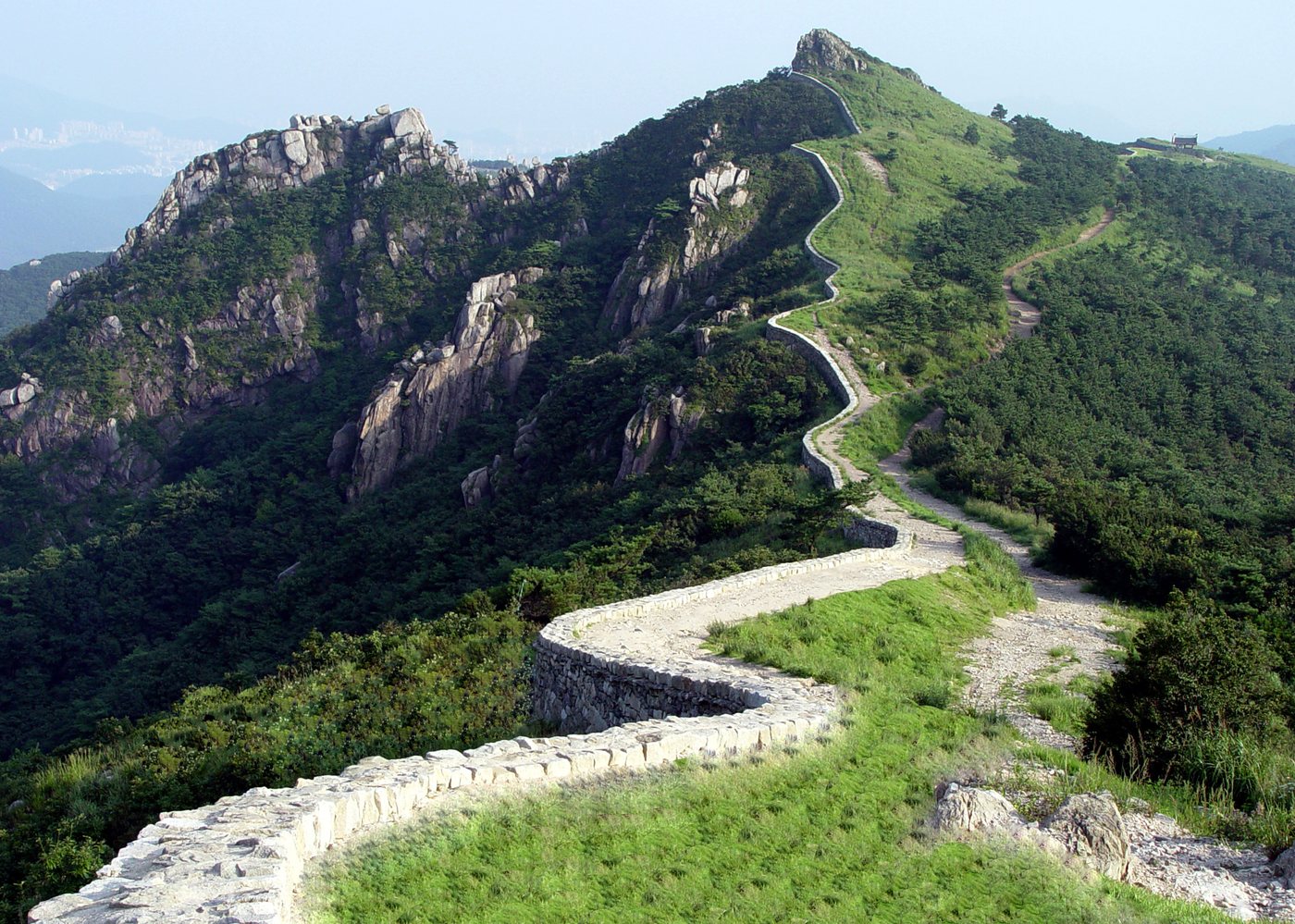
Geumjeong Fortress (금정산성) — Busan Tourism Archive (부산관광아카이브) · KOGL Type 1
Most of Busan's famous sights lie along the sea, but Mt. Geumjeong (Geumjeongsan, 금정산) is a mountain that rises in the north of Busan. Here you look down on Busan from a mountain instead of the sea. You can go up easily by cable car, or walk up from Beomeosa Temple (범어사). Fares, operating hours, how to get there and the Sanseong Village (산성마을) makgeolli are all covered in one place.
As of October 22, 2026 — check operating hours, fares and bus numbers on the official sites again before you visit.
Geumjeong Fortress (금정산성) — Busan Tourism Archive (부산관광아카이브) · KOGL Type 1
| Item | Details |
|---|---|
| Courses | Geumgang Park (금강공원) cable car as the easy course; a walk from Beomeosa Temple (범어사) to Sanseong Village (산성마을) as the hiking course; a climb from Beomeosa Temple to the summit, Godangbong Peak (고당봉) |
| Cost | Entering Mt. Geumjeong and Beomeosa Temple is free. The cable car is 11,000 won round trip (adult). |
| Closing days | The cable car is closed every Monday. The Beomeosa Seongbo Museum (성보박물관) is also closed on Mondays. |
| Nearest stations | Subway Line 1: Myeongnyun Station (명륜역) for the cable car, Beomeosa Station (범어사역) for Beomeosa Temple, Oncheonjang Station (온천장역) for the bus to Sanseong Village |
This guide covers two ways to do it: an easy trip by cable car, and a walk up from Beomeosa Temple. Either way, you can finish by drinking makgeolli at Sanseong Village and heading down. Later sections also cover other sights in Geumjeong-gu (금정구): Hoedong Reservoir, Seodong Miro Market and the Pusan National University Youth Street.
Mt. Geumjeong is a mountain in northern Busan. Unlike the coastal sights by the sea, it wraps around Busan from behind the city. In March 2026 it became Korea's 24th national park, and it is the first national park in Korea located in an urban area. It spans 6 districts of Busan and Yangsan City in South Gyeongsang Province, with an area of 66.859 ㎢.
| Item | Details |
|---|---|
| Highest point | Godangbong Peak (고당봉), 801.5 m above sea level |
| Geumjeong Fortress | The largest mountain fortress in Korea, built along the mountain ridge. It is introduced separately below. |
| Origin of the name | The names Geumjeongsan (金井山) and Beomeosa (梵魚寺) come from a story that a golden fish came down from the sky and played in a well. |
| Admission | Free, open all year |
Geumjeong Fortress
Geumjeong Fortress (금정산성) is a mountain fortress built of stone along the ridge of Mt. Geumjeong. A mountain fortress is a castle built on a mountain, where people went in to fight or take shelter when enemies attacked. Busan is close to Japan across the sea, so people have long worried about Japanese invasions.
In 1592 the Imjin War (임진왜란) broke out, when Japan invaded Joseon. It was a major war that lasted 7 years, and the Japanese army entered by sea and attacked the area of present-day Busan first. In 1636 the Second Manchu invasion (병자호란) took place, when the Qing dynasty of China invaded Joseon. After these two wars, Joseon decided to strengthen its defenses again and built Geumjeong Fortress in 1703. It is thought that it was first built earlier, in the Three Kingdoms period, but the exact date is unknown. It was heavily damaged during the Japanese colonial period; the East, West and South Gates were rebuilt from 1972, and the North Gate in 1989. Restoration work is still going on.
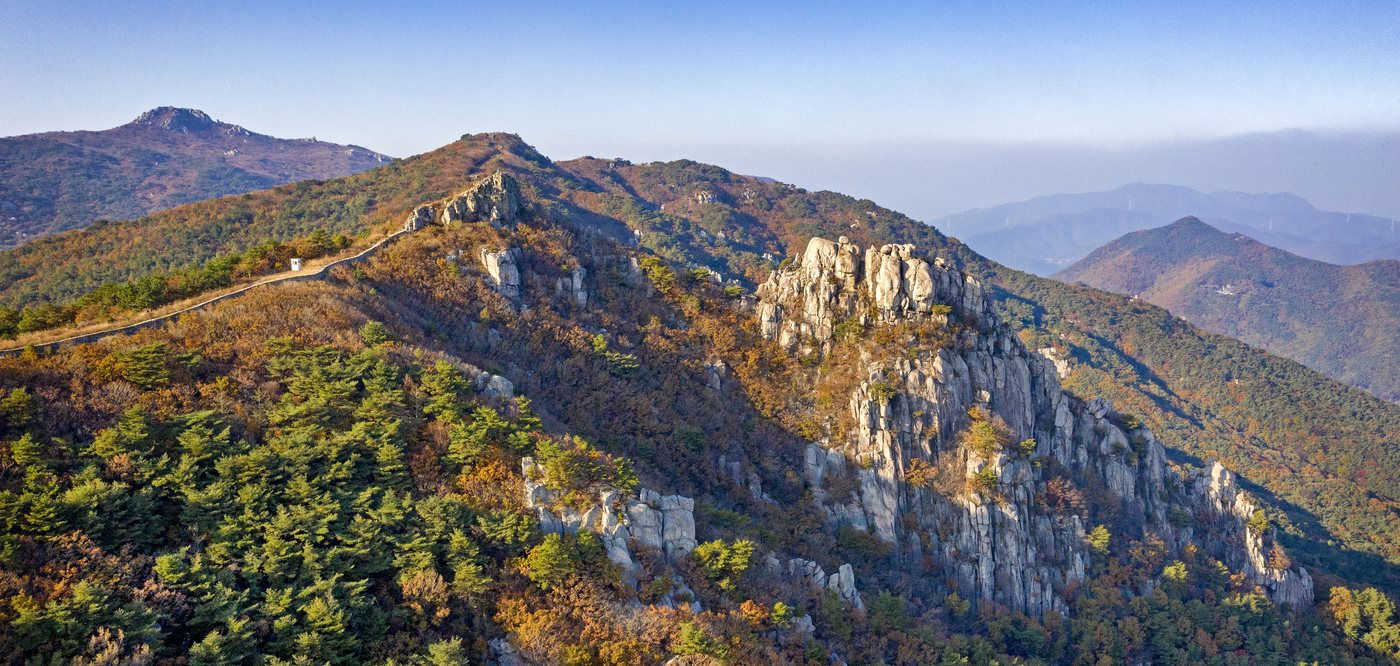
| Item | Details |
|---|---|
| Scale | Historic Site No. 215 (사적 제215호). The wall is 18,845 m long and 1.5–3 m high, making it the largest mountain fortress in Korea. |
| Gates and watchtowers | There are 4 gates (East, West, South and North Gate) and 4 watchtowers. |
| East Gate (동문) | It is at Sanseong Pass (산성고개), about 415 m above sea level. You can reach it by Bus 203 (an express seat bus) from Oncheonjang Station (온천장역), so it is the easiest gate to get to. |
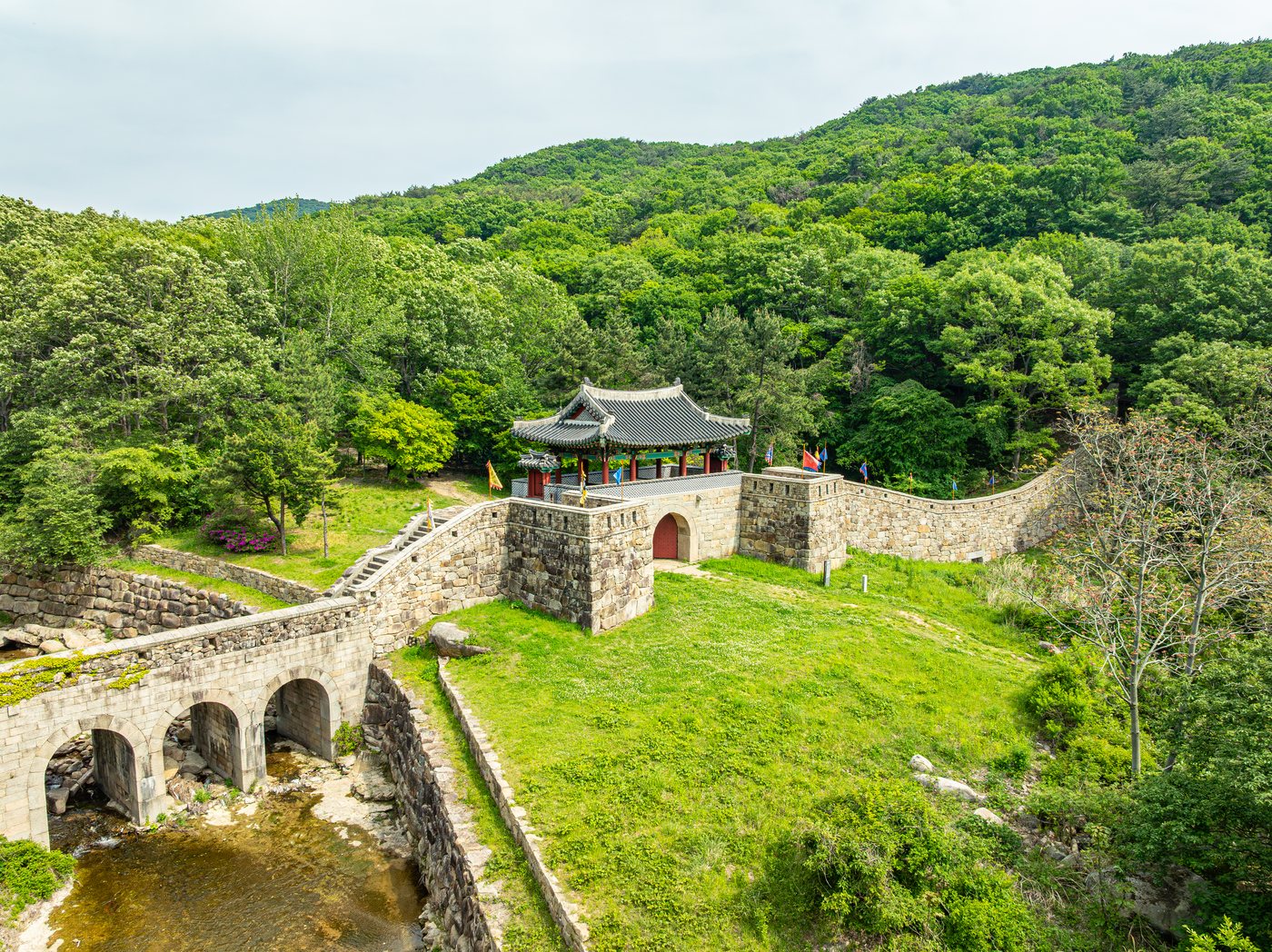
| West Gate (서문) | 299 Sanseong-ro, Buk-gu, Busan (부산 북구 산성로 299). Of the 4 gates, it is the only one next to a valley and stream (Daecheoncheon, 대천천), and it has an arched water gate. A path continues down to Hwamyeong Arboretum (화명수목원) and the Daecheoncheon Nurigil Trail (대천천 누리길). |
| South Gate (남문) | It is close to the upper cable car station. |
| North Gate (북문) | You reach it by walking about 1.6 km up the hiking trail from Beomeosa Temple (범어사). It is on the way to Godangbong Peak (고당봉). |
| Watchtower No. 4 (제4망루) | It stands on the ridge running from the East Gate to the North Gate, about 620 m above sea level and 1.5 km south of the North Gate. |
| How to walk | Do not climb onto the fortress wall; follow the walking trail. |
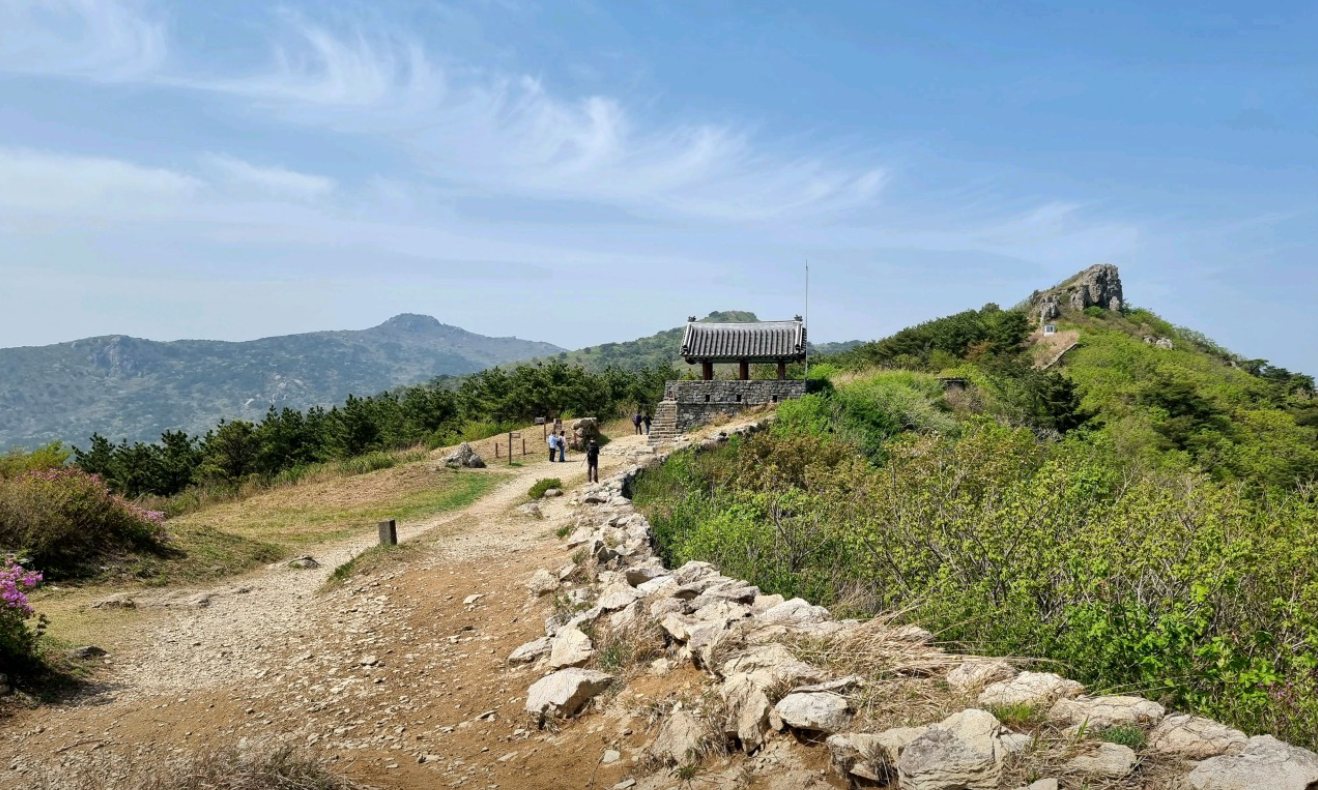
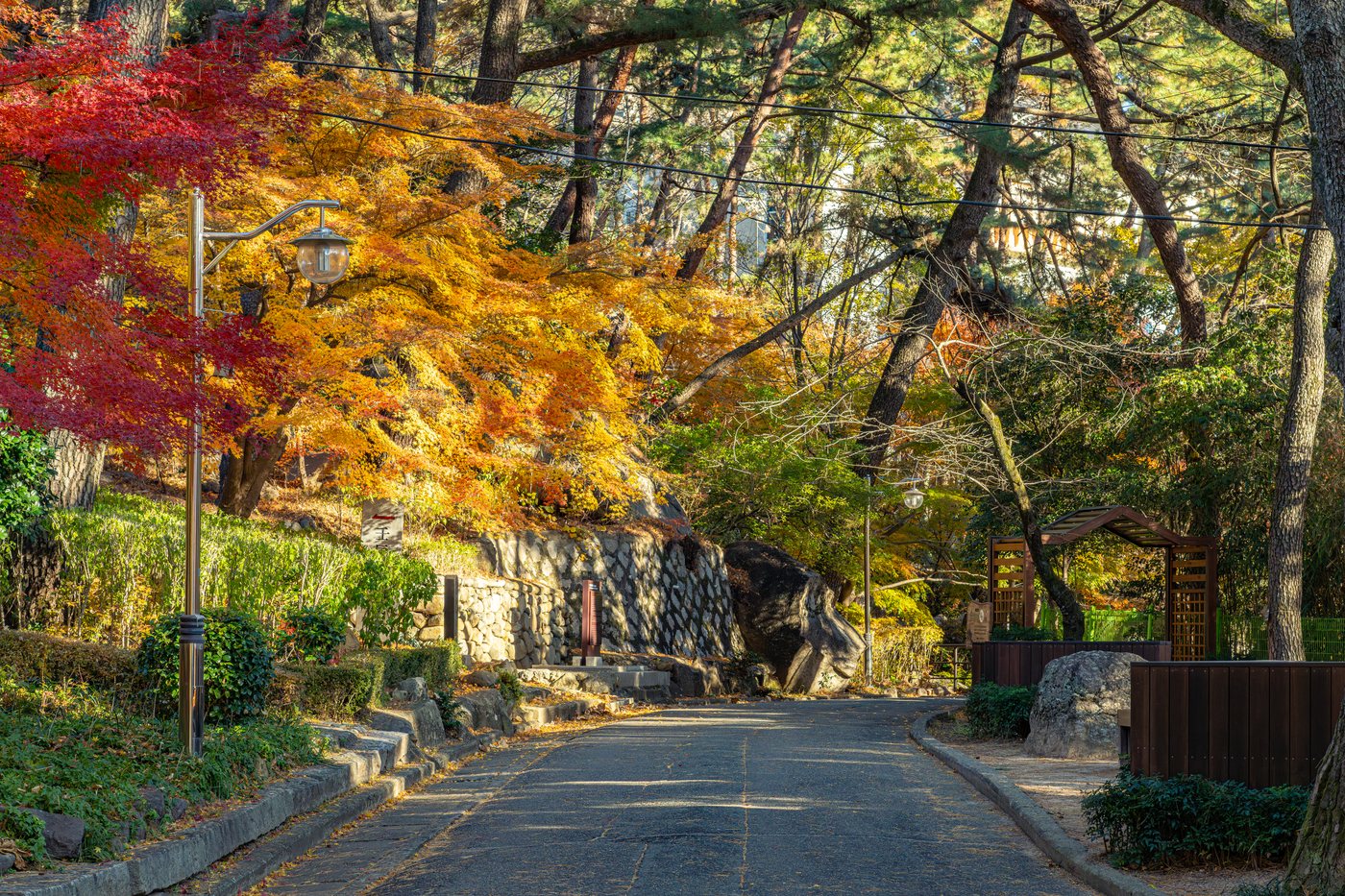
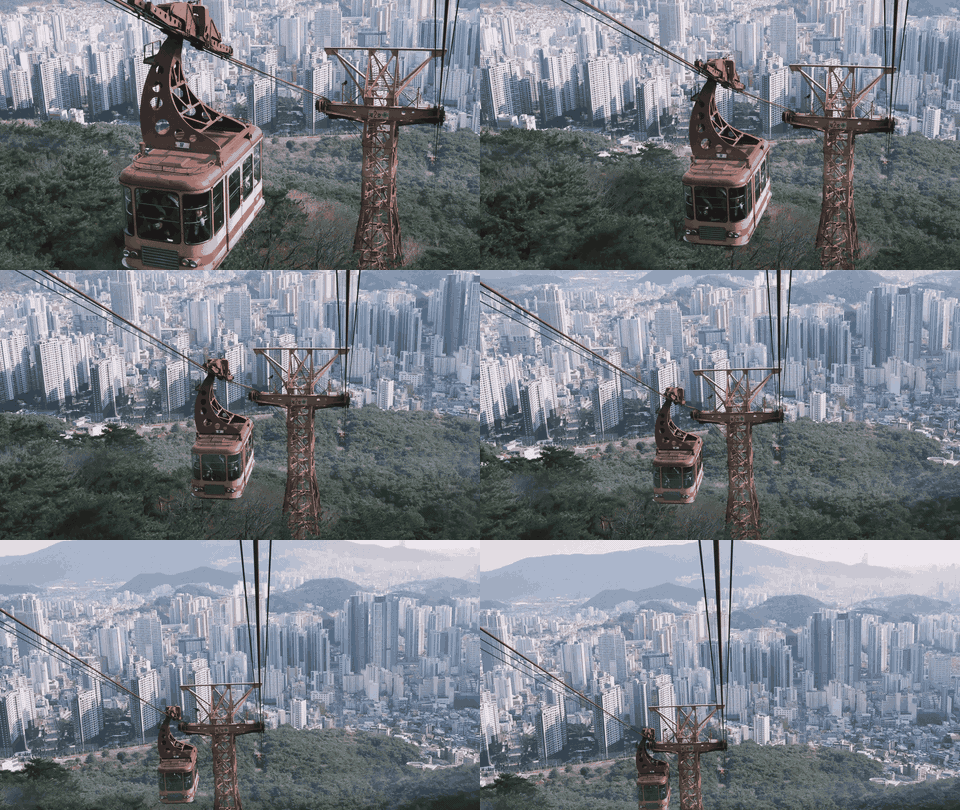
The Geumgang Park (금강공원) cable car is an old cable car that opened in September 1966. It is 1,260 m long, and at the top you get off near the South Gate of Geumjeong Fortress. You see the city and the mountain at the same time, so even people who are not good at hiking can go up easily.
Fares
| Type | Fare |
|---|---|
| One way | Adult 7,000 won / Child 5,000 won / Senior 6,000 won |
| Round trip | Adult 11,000 won / Child 8,000 won / Senior 9,000 won |
| Age categories | Adult includes teenagers. Child covers ages 4 through elementary school. |
Operating hours
| Day | Hours |
|---|---|
| Tuesday–Friday | 10:00~17:00 |
| Saturday, Sunday | Summer season 09:30–17:00, winter season 09:30–17:30 |
| Monday | Regular closing day (if Monday is a public holiday, closed the next day) |
If you plan to ride the cable car down as well, you need to reach the boarding station before closing time. Service may stop on days with rain or strong wind.
| Item | Details |
|---|---|
| Ticket office address | 155-26 Ujangchun-ro, Dongnae-gu, Busan (부산 동래구 우장춘로 155-26) |
| On foot from Myeongnyun Station | About 24 min (1.2 km). You pass 6 crosswalks and 1 underpass. |
| Village bus from Myeongnyun Station | Take Dongnae-gu Bus 1-1 (동래구1-1번) from the Lotte Department Store stop (롯데백화점) and get off at Geumgang Park (금강공원). It takes about 11 min. |
| Directions map | You can see the route from Myeongnyun Station (명륜역) to the ticket office on the map. |
At the top you can walk toward the South Gate and stroll along the fortress wall. A trip that goes up by cable car, walks the wall and comes back down takes only half a day.
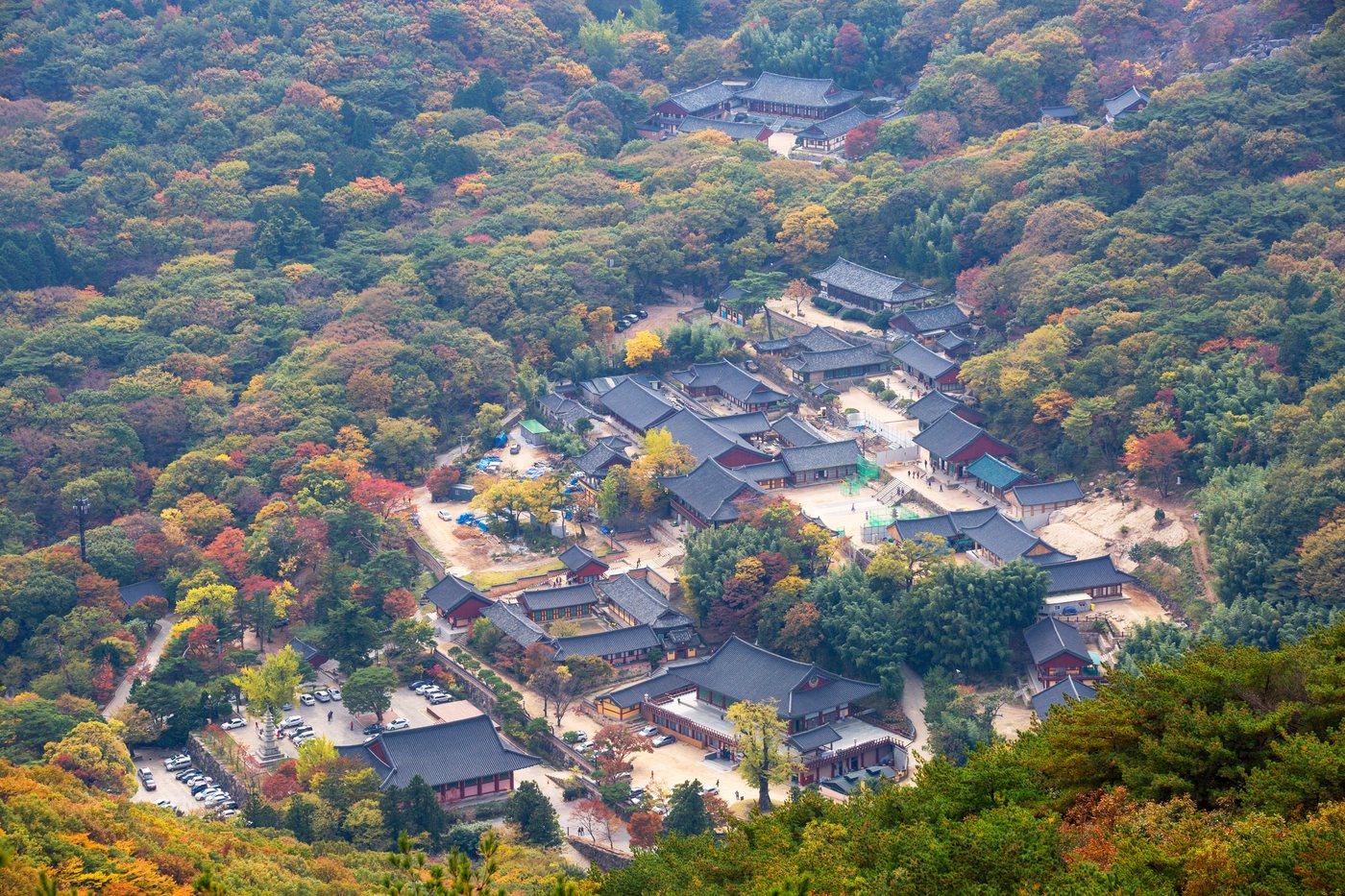
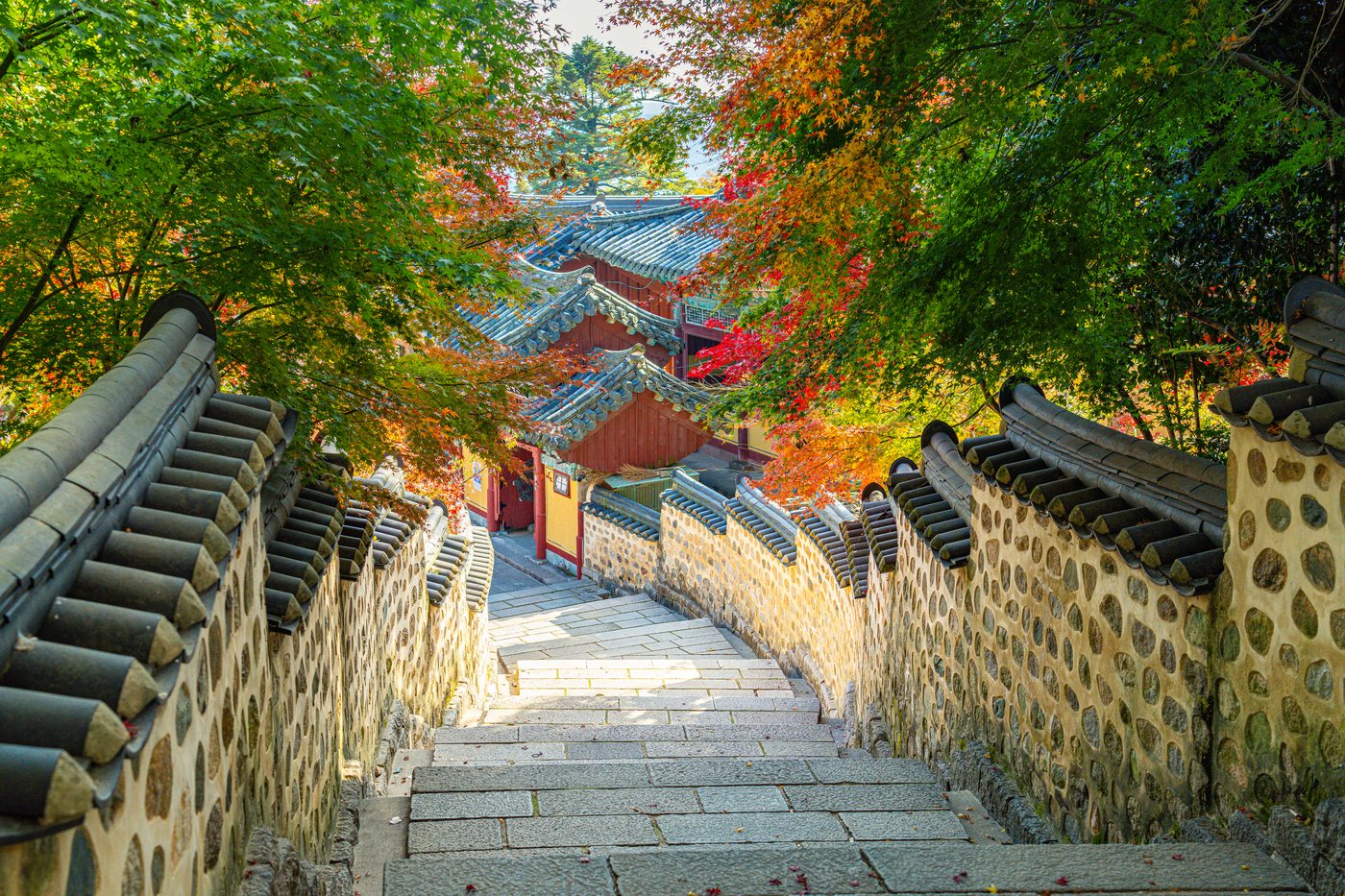
The temple was founded by the monk Master Uisang (의상대사) in 678. Together with Haeinsa Temple in Hapcheon and Tongdosa Temple in Yangsan, it is called one of the three great temples of Yeongnam (영남, southeastern Korea). It is still a temple where monks practice, so before it is a tourist attraction, it is a place where people live.
| Item | Details |
|---|---|
| Admission | Free |
| Hours | 08:00–17:00, open every day (check once more before you visit) |
| What to see | The Jogyemun Gate (조계문) at the entrance, the Main Hall (대웅전) and the three-story stone pagoda (삼층석탑) are all Treasures (보물). The Main Hall is a building that was rebuilt in the Joseon period. |
| Seongbo Museum (성보박물관) | A museum that collects the Buddhist cultural heritage of Beomeosa. It is free and open from 9:30 a.m. to 5:00 p.m. (last admission 4:30 p.m.). It is closed every Monday. The museum keeps the Samguk Yusa (삼국유사, volumes 4–5), a National Treasure (국보). Notices of temporary closures may be posted, so check the museum's website. |
| Templestay | Templestay is a Korean Buddhist cultural program in which you stay at a temple for one night or more and experience the monks' daily life. You can join the dawn ceremony, meditate and try temple food. Temple food contains no meat, because of the Buddhist spirit of valuing every living being. Beomeosa also runs a Templestay for foreigners, with a hands-on Seon (Zen) meditation program on weekends. You apply on the official Templestay site (English supported). |
| Address | 250 Beomeosa-ro, Geumjeong-gu, Busan (부산 금정구 범어사로 250) |
| How to get there | Details |
|---|---|
| By subway | Leave Beomeosa Station (범어사역) Line 1 by Exit 7, turn around and turn right at the corner. After about 200 m there is a Bus 90 stop. Bus 90 takes about 20 min and costs about 1,600 won. Get off at the Beomeosa Parking Lot stop (범어사주차장). |
| Distance | It is 3.43 km from Beomeosa Station to Beomeosa Temple, which is too far to walk. |
| Directions map | You can see the route from Beomeosa Station (범어사역) to Beomeosa Temple on the map. |
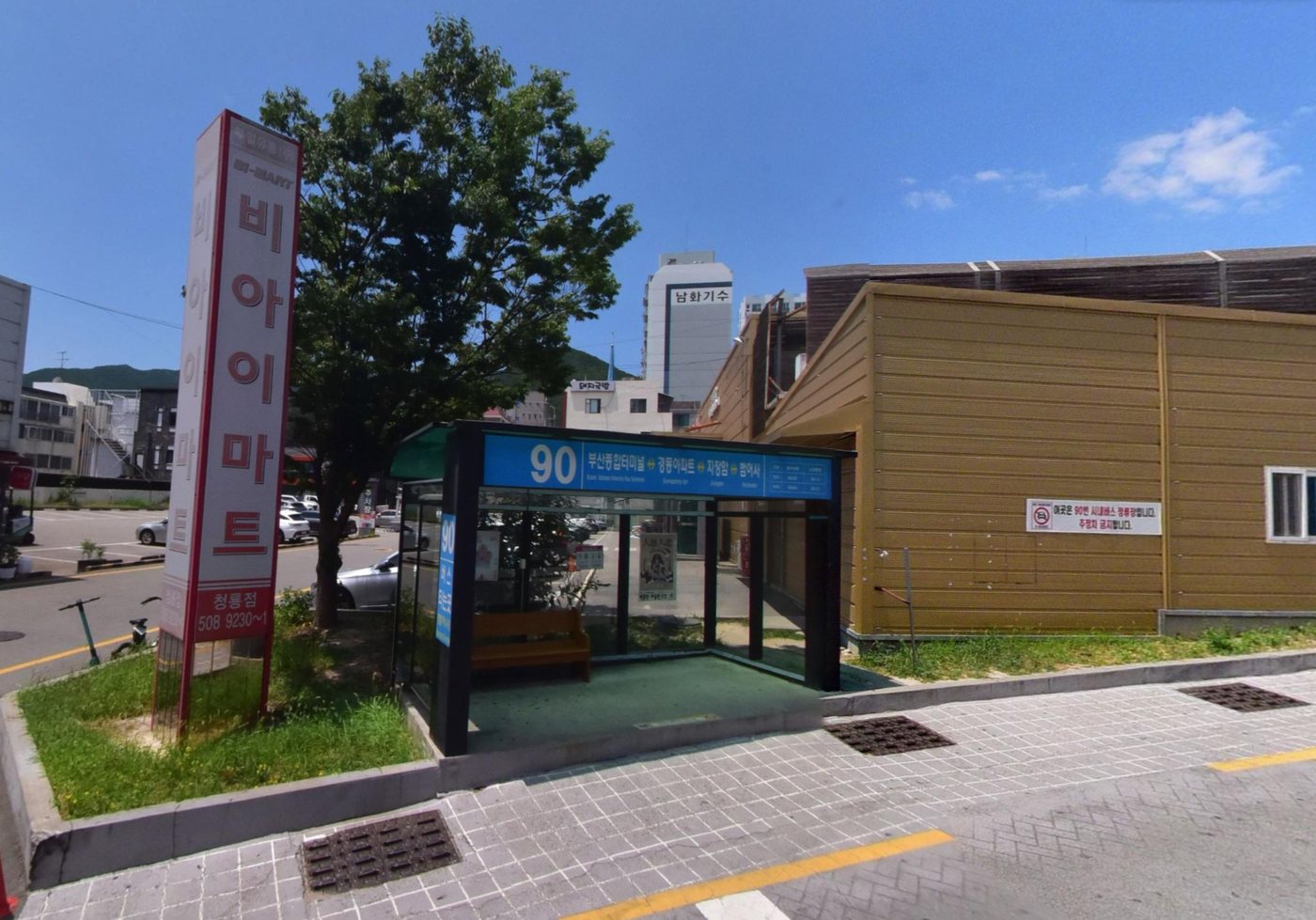
This is a temple where monks practice, so take off your shoes and keep quiet when you enter a hall.
Mt. Geumjeong has more than 200 hiking trails. This guide picks only the courses that foreign travelers can reach and leave easily by public transport. Most can be started from subway Line 1 and a bus.
| Course | Distance and time | Difficulty |
|---|---|---|
| Beomeosa (범어사) to North Gate (북문) | About 1.6 km one way | Easy |
| Beomeosa to Godangbong Peak (고당봉), round trip | Around 3 hours round trip (4 hours with rests) | Moderate |
| East Gate (동문) to Beomeosa | About 9 km, around 5 hours | Moderate |
| Cable car up, then to Beomeosa | 5 hours or more | Moderate |
| Beomeosa to Sanseong Village (산성마을) | 9 km, about 2 hours 40 min | Moderate |
| Traverse of all 4 gates | About 18 km, 8–9 hours | Hard |
Beomeosa to North Gate Wooden steps and stone steps alternate, but the slope is not steep. It is enough to take photos of the gate at the North Gate and come back.
Beomeosa to Godangbong Peak, round trip This is the course with the most walking. You go from Beomeosa past the North Gate to the summit, Godangbong Peak (801.5 m), and come back down the same way. After the North Gate there are rocky slopes and iron stairs, so it takes more effort. From the summit you can see Busan city and the mouth of the Nakdong River.
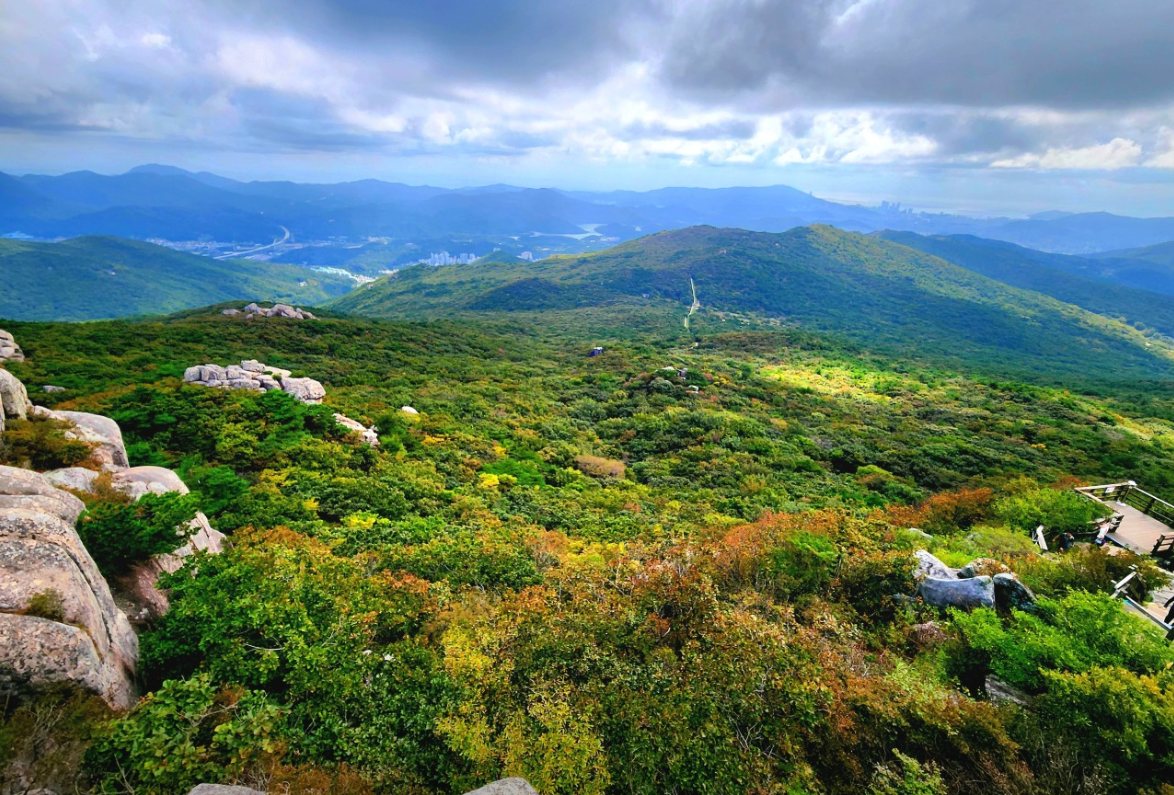
East Gate to Beomeosa Take Bus 203 (express seat bus) from in front of Oncheonjang Station (온천장역) Exit 7 and get off at the East Gate entrance (동문 입구). Follow the wall past Watchtower No. 4, Wonhyobong Peak (원효봉), the North Gate and Godangbong Peak, and come down to Beomeosa. Afterward, take Bus 90 from the Beomeosa stop (범어사) to Beomeosa Station (범어사역). The place where you go up and the place where you come down are different, so it works well by bus.
Cable car up, then to Beomeosa Take the cable car up to the South Gate, pass the East Gate, North Gate and Godangbong Peak, and come down to Beomeosa. Going up by cable car reduces the uphill in the first section.
Beomeosa to Sanseong Village From the Beomeosa parking lot (범어사 주차장), go through Naewonam Hermitage (내원암), the North Gate and Jeongsuam Hermitage (정수암) and come down to Sanseong Village. You can drink makgeolli in Sanseong Village and take a bus down.
Traverse of all 4 gates A course that links the South Gate, East Gate, North Gate and West Gate in one day. It suits people who are used to mountains.
The section past the North Gate has many stones, so wear shoes with non-slip soles. After rain the rock steps are even more slippery. Walk only on the designated trails, and do not take shortcuts or side paths onto the rocks.
Sanseong Village is a village in a basin about 400 m above sea level, inside Geumjeong Fortress. It is 2–3 degrees cooler than the flatlands and is famous for traditional Korean makgeolli. Makgeolli (막걸리) is a cloudy traditional Korean rice wine made from rice.
Many Koreans like to have a cup of makgeolli with pajeon (scallion pancake) after hiking. Sanseong Village has many restaurants, and most of them sell Geumjeong Fortress makgeolli. After a hike or a walk, sit down in a restaurant and try it with pajeon.
| Item | Details |
|---|---|
| What kind of drink is it | Geumjeong Fortress makgeolli was the first makgeolli in Korea to be designated "Folk Liquor No. 1" (민속주 1호). Even now, people make the nuruk (누룩, fermentation starter) by treading it with their feet. The basic makgeolli is 8% alcohol and fairly sour, so opinions are divided. There are milder types too, such as the 6% "Sun" (순) and the 5% "Cheongtak" (청탁). |
| Where to drink it | You drink it in the restaurants of Sanseong Village. There are about 150 restaurants in the village serving black goat bulgogi, duck bulgogi, duck baeksuk (boiled duck) and similar dishes. Black goat bulgogi is a food designated by Busan City. Opening hours differ by restaurant. |
| Brewery | Geumjeongsanseong Tosanju (금정산성토산주). You can buy makgeolli here. Please do not take makgeolli bought at the brewery to drink in another restaurant. |
| Brewery experience | There is an experience where you try the makgeolli-making process yourself. Book by phone, more than 2 weeks in advance. The website is only in Korean, so it may be hard for foreigners to book on their own. Get help from someone who speaks Korean. |
| How to get there | Details |
|---|---|
| From Oncheonjang Station | Take Bus 203 (express seat bus) from in front of Oncheonjang Station (온천장역) Exit 7. It takes about 25 min and costs 2,100 won. Get off at the Sanseonggonghae Village stop (산성공해마을), which is the entrance to Sanseong Village. |
| Coming back | Check the bus times at the Sanseong Village stop in the Naver Map app. |
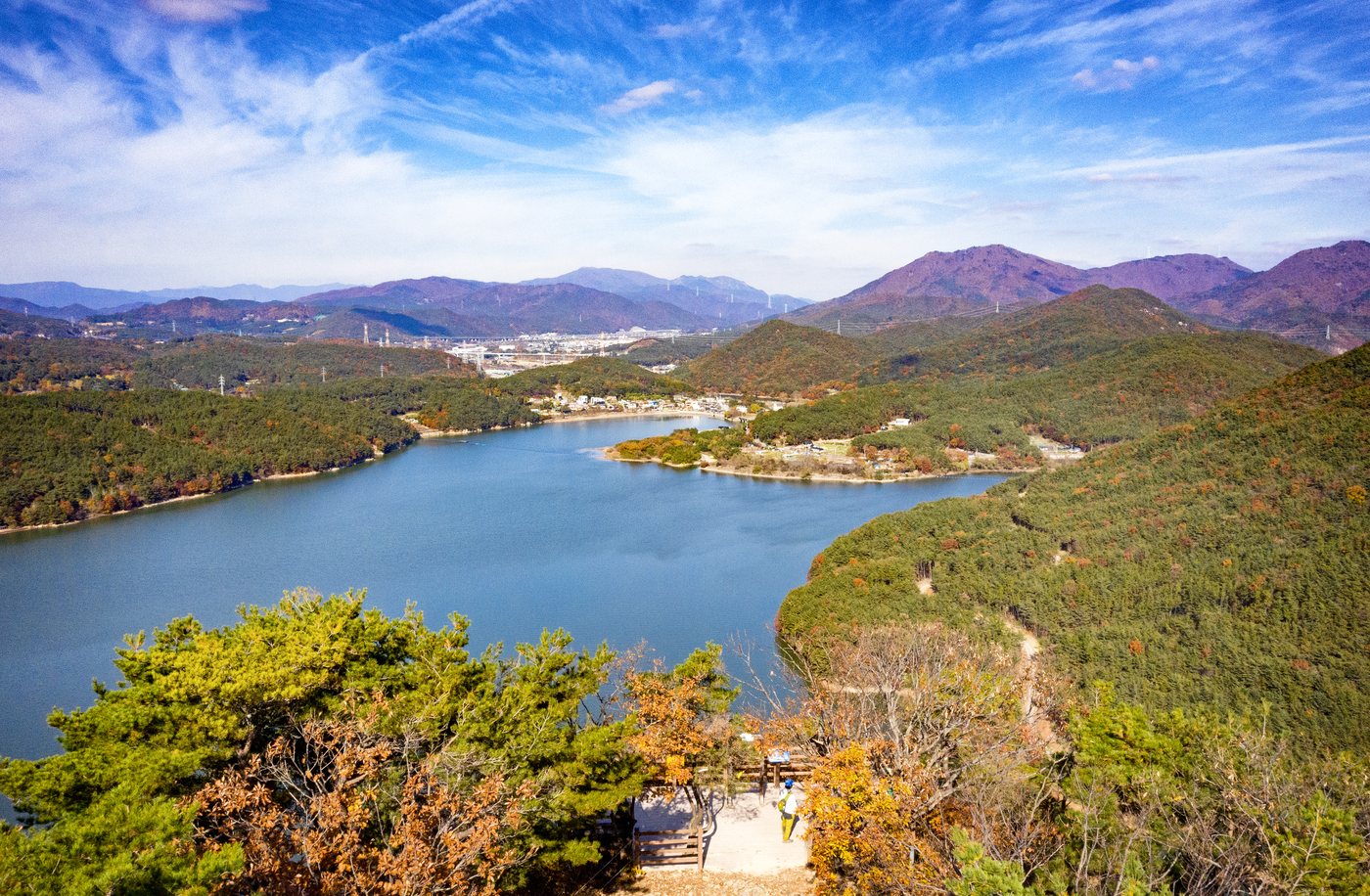
Hoedong Reservoir is a large lake in the east of Geumjeong-gu. It stores drinking water for the people of Busan, so the public was not allowed in from 1964. After 45 years, a walking path opened in January 2010. In the old days the scenery of this area was called "Oryundae".
| Item | Details |
|---|---|
| Is there a loop trail? | Yes, a loop trail runs along the lake. A full lap is around 20 km, and the path is flat, so anyone can walk it. Most people do not walk the whole lap but pick the sections they like. It is open all year and free. If you search "회동수원지" on Naver Map, all the loop trail routes appear. There is a button under "View map" below. |
| Oryundae Observatory | It is on the summit of Mt. Bueongsan (부엉산, 175 m). You climb for about 20 min on foot from Oryun Saenae Village (오륜새내마을). You can see the lake and the ridge of Mt. Ttangmoesan (땅뫼산) at a glance, and on a clear day you can see as far as Haeundae and Mt. Jangsan (장산). |
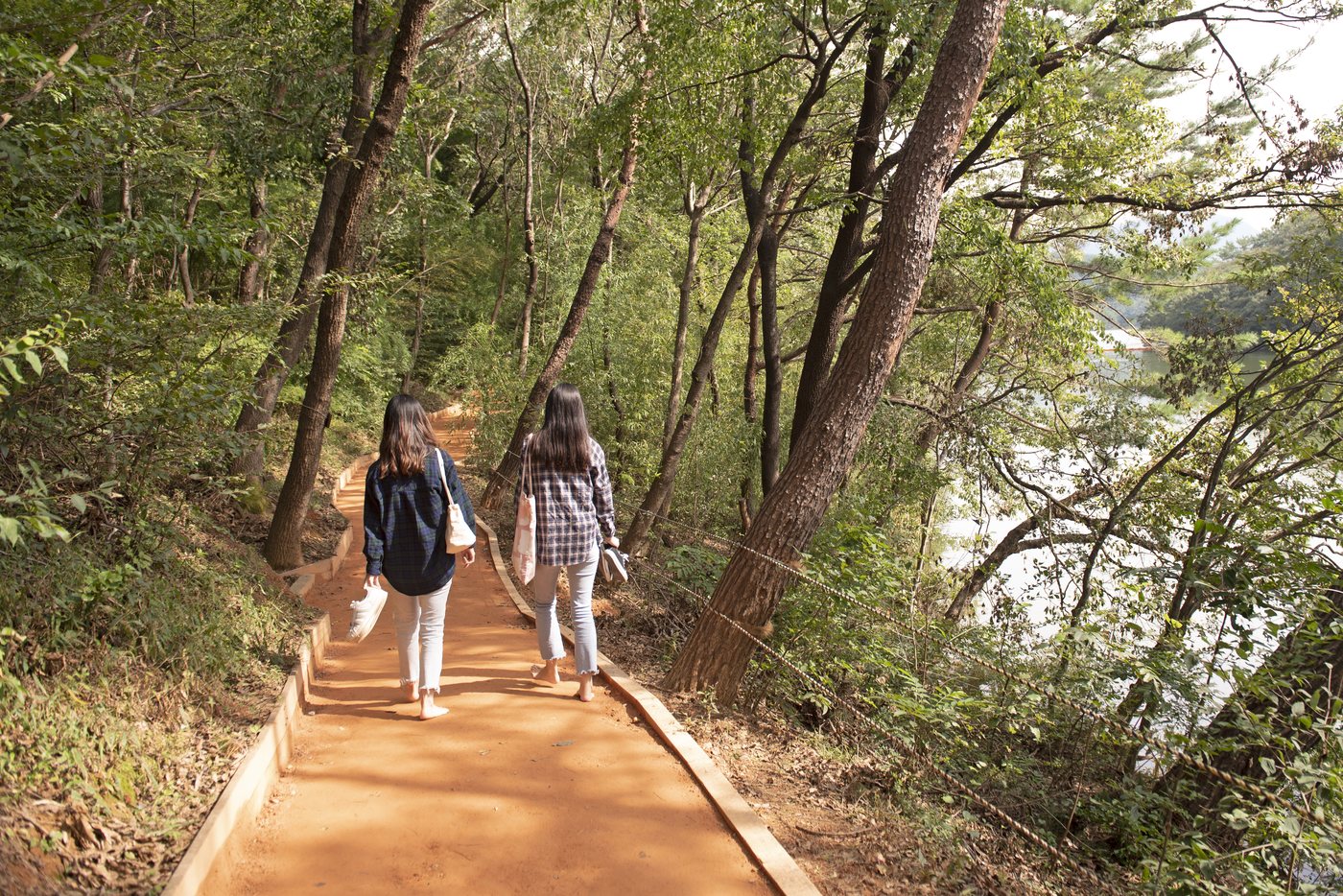
| Ttangmoesan Hwangto Forest Path (땅뫼산 황토숲길) | A red clay path where you walk barefoot. A hinoki cypress forest continues along the path. There are benches here and there, so it is a good place to rest while looking at the lake. |
| After the walk | Oryun-dong (오륜동) and Seon-dong (선동) have many restaurants serving chicken baeksuk (boiled chicken) and duck baeksuk. Many people walk by the lakeside after the meal to help digest. |
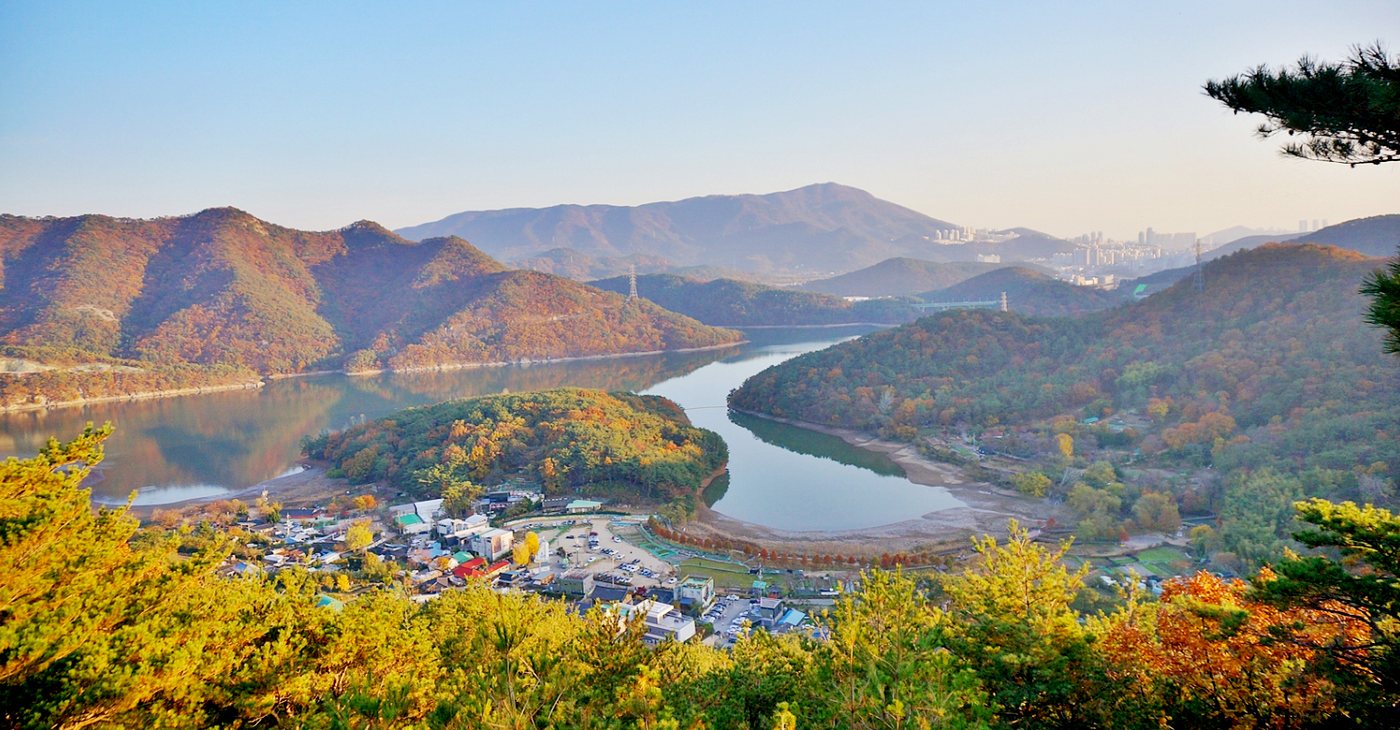
The order of the "Hoedong Reservoir Tour" introduced by the Geumjeong-gu Office (금정구청) is as follows. It starts at Hoedongho Nuri Bridge (회동호 누리교) and passes Sanghyeon Village (상현마을), the Oryundae Observatory, the Bamboo Forest Path (대숲길, ecological trail), the Ttangmoesan Hwangto Forest Path and the Ttangmoesan waterside deck, and ends at Dongdae Bridge (동대교).
| Before you go | Details |
|---|---|
| Rules | It is a water source protection area, so cooking, camping and fishing are not allowed. Do not leave trash or food. You can ask the Culture and Tourism Division (문화관광과) of the Geumjeong-gu Office whether any areas are closed. |
| Getting to Sanghyeon Village | From Guseo Station (구서역) Line 1 Exit 2, take Geumjeong-gu Village Bus 3-1 (금정구3-1번) and get off at Sanghyeon Village (상현마을). |
| Getting to the Hwangto Forest Path | Leave Jangjeon Station (장전역) Line 1 by Exit 4, cross the road, and take Village Bus 5 (마을버스 5번) from the stop on the left. Get off at Oryunbondong (오륜본동). From Oryunbondong you can go to the Ttangmoesan Hwangto Forest Path and the Oryundae Observatory. |
| Reservoir loop trail | If you search "회동수원지" on Naver Map, you can see the loop trail routes. |
Seodong Miro Market is a traditional market in Geumjeong-gu. Three markets, Seodong Market (서동시장), Seodong Hyangto Market (서동향토시장) and Seodong Traditional Alley Market (서동전통골목시장), are connected, and the alleys are tangled like a maze (miro), which is how it got its name. The Geumjeong-gu Office says the market was chosen as a "cultural tourism market" in 2014. Inside the market is the Seodong Art Creation Space (서동예술창작공간), with an exhibition room, studios, a small library and an outdoor performance stage.
| Item | Details |
|---|---|
| Location | 16 Seodong-ro 141beon-gil, Geumjeong-gu, Busan (부산 금정구 서동로141번길 16) |
| Hours | 10:00–22:00. Closing days differ by shop. |
| How to get there | This is the route from Oncheonjang Station (온천장역) on Line 1 to Seodong Miro Market. Check the public transport route on the map. |
The market is in the neighborhood where BTS's Jimin grew up, so many fans visit. Busan's official tourism portal introduces the snack shop "Manna Bunsik" (맛나분식) in the market as a place Jimin liked to eat at. It is a 39-year-old shop and the egg mandu (dumplings) is its signature dish. Photos sent by fans are on the shop's wall.
| Shop | Details |
|---|---|
| Manna Bunsik (맛나분식) | 42-4 Seodongsijang-gil, Geumjeong-gu, Busan (부산 금정구 서동시장길 42-4). Daily 11:00–20:00. |
| What to eat | Bunsik (분식, Korean snack food) such as egg mandu, tteokbokki and gimbap. |
| The elementary school Jimin attended | The site of the former Hoedong Elementary School (회동초등학교) is now an experience space called "Hoedongmaru" (회동마루). It is at 217 Geumsa-ro, Geumjeong-gu (금정구 금사로 217). |
Pusan National University Youth Street (부산대 젊음의 거리) runs from the front of Pusan National University (부산대학교) to Pusan National University Station (부산대역) on subway Line 1. The Geumjeong-gu Office introduces it as the center of youth culture. There are many shops that university students visit, so it is busy with shopping and cafes by day and with restaurants and bars in the evening.
| What to see | Details |
|---|---|
| Street browsing | Clothing, accessory, cosmetics and shoe shops line the street without a break. There are also movie theaters, bookstores and photo studios, and cafes in every alley. |
| Culture Sharing Place (문화나눔터) | A plaza in front of Pusan National University Station Exit 1. Street performances (busking), indie band shows and flea markets are often held here. |
| Oncheoncheon Eoullimadang (온천천 어울마당) | An outdoor stage beside the Oncheoncheon Stream, close to Pusan National University Station. It is 222 ㎡ in size. |
| How to get there | Get off at Pusan National University Station (부산대역) on subway Line 1. If you search "부산대학로" on the map, the location of the street appears. |
In national parks, smoking outside designated places brings a fine of up to 2,000,000 won. There are also places where drinking alcohol is not allowed, and violations bring a fine of 50,000 won for the first offense and 100,000 won from the second. It is safer to drink makgeolli in the restaurants of Sanseong Village.
| Easy to mix up | Summary |
|---|---|
| Cable car | Closed on Mondays. Reach the boarding station before closing time. |
| Beomeosa Seongbo Museum | Closed on Mondays. |
| Weather | The cable car may stop in rain or strong wind. Rock steps are slippery after rain. |
| Closure information | On the website of the Korea National Park Service (국립공원공단), you can check whether trails on Mt. Geumjeong are closed. |