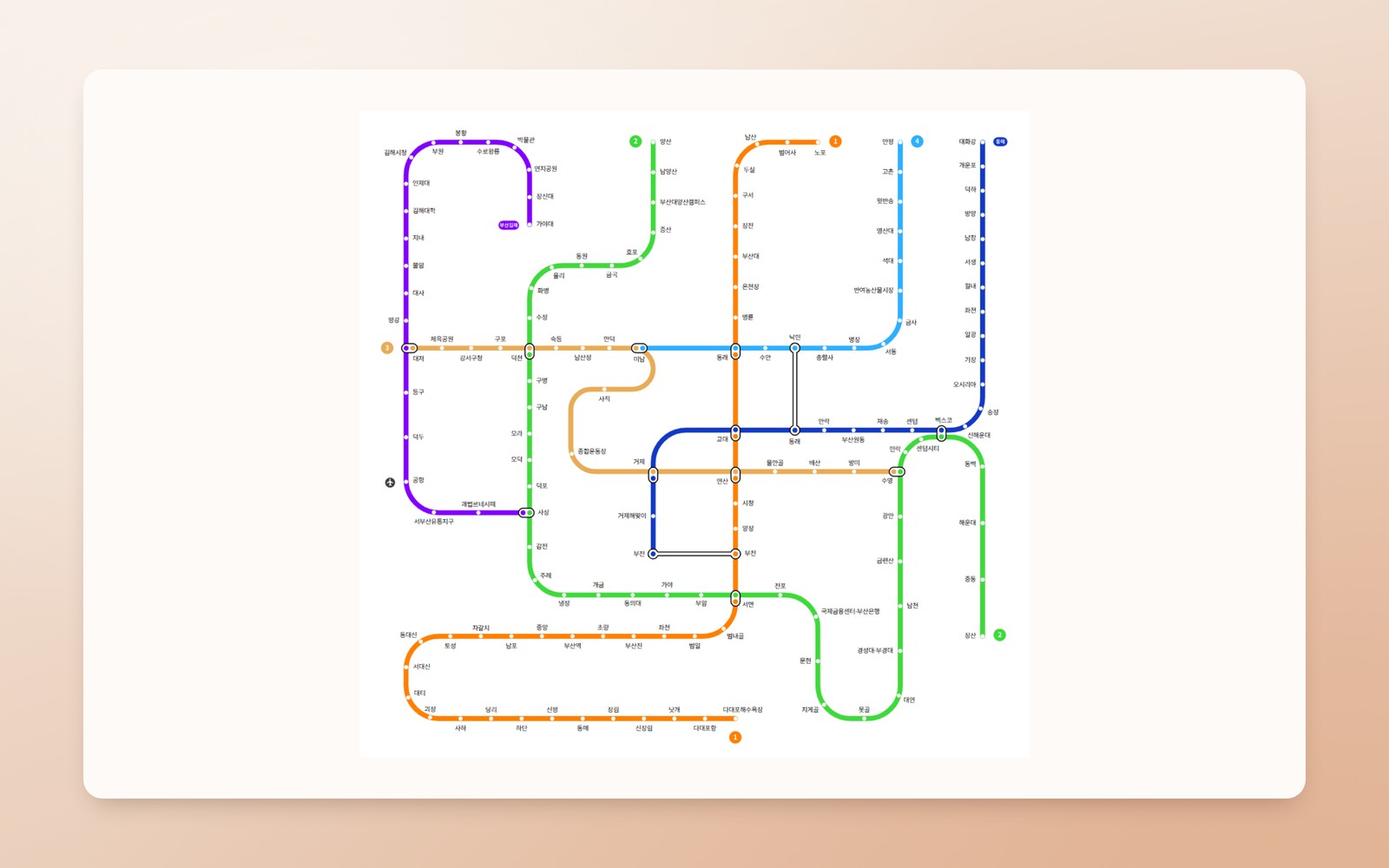
The full Busan Metro map — each line has its own color.
Direction, transfers, exits — learn to read the signs ahead of time and you'll rarely get caught off guard on the subway.
Last checked September 11, 2026 — station signage design can change with renovations.
The full Busan Metro map — each line has its own color.
Foreign travelers tend to run into four main difficulties on the Busan subway.
First, figuring out which direction to go.
Second, not knowing where to transfer.
Third, not being able to find the right exit.
Fourth, not knowing where the restrooms or elevators are.
This guide covers all four.
The Kakao Subway app comes up throughout this guide, so it's worth installing ahead of time. Installation and language settings are covered in our map & subway app setup guide.
Korean subway stations come in two platform layouts.
In an island platform, the platform sits in the middle and trains stop on both sides. Watch the direction carefully before boarding.
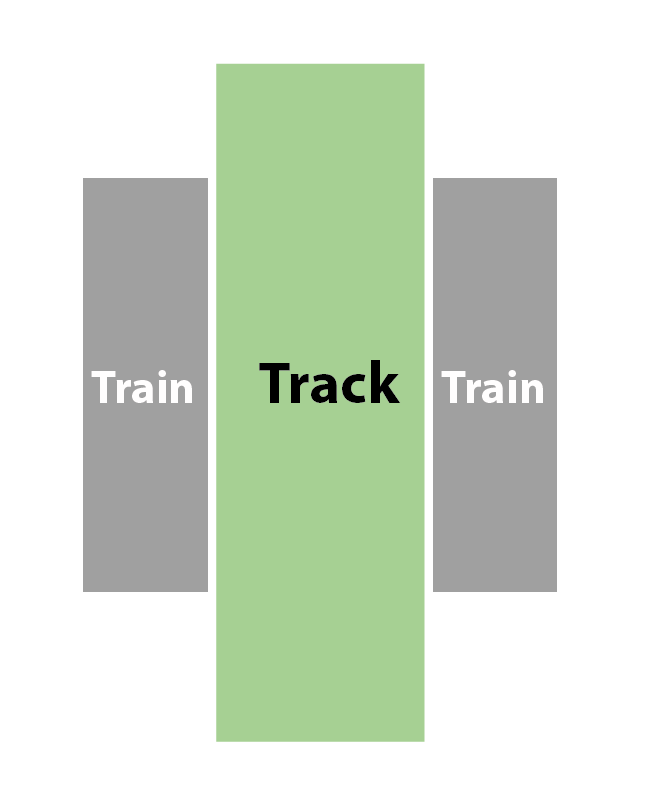
The other is a side platform, where the tracks run down the middle and the platforms face opposite directions. Check carefully when you tap in at the gate.
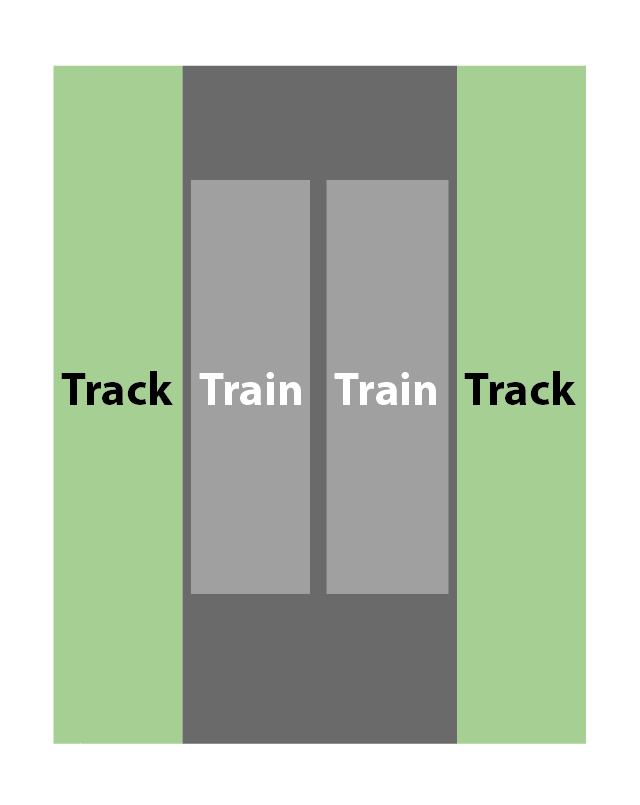
Knowing which layout you're dealing with means no surprises once you're down on the platform.
Every Korean subway line has its own color. In Busan, Line 1 is orange and Line 2 is green.
Switch Kakao Subway's settings to English and the Busan Metro map shows both Korean and English spellings together.
Keep that in mind when searching on a map app, so not knowing the spelling doesn't leave you stuck.
To figure out subway direction, check the following in Kakao Subway — both the English spelling and the Korean shape:
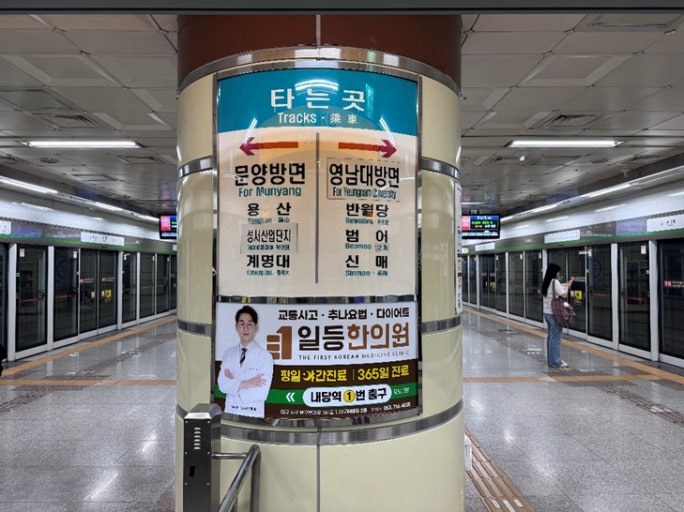
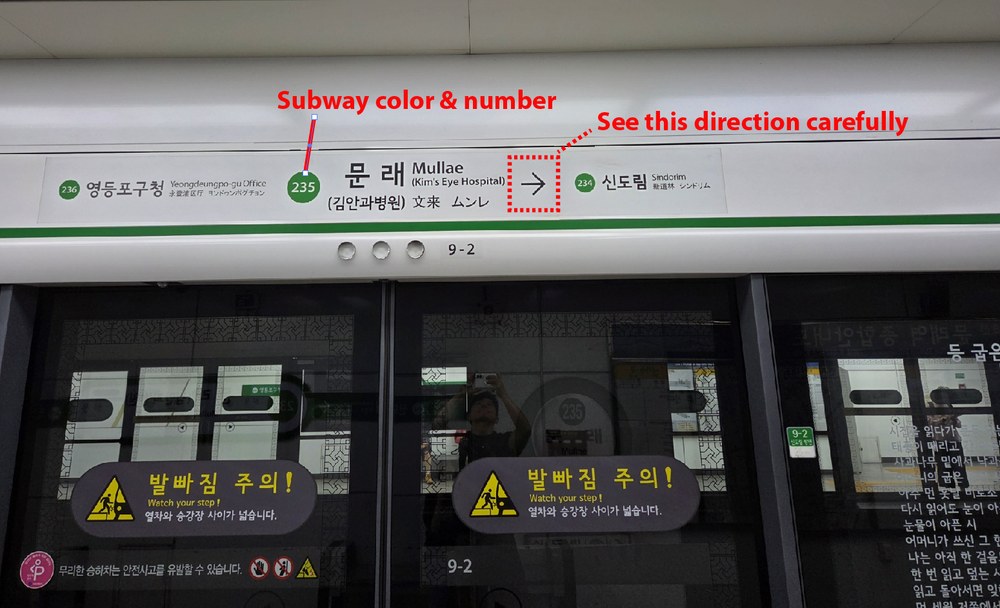
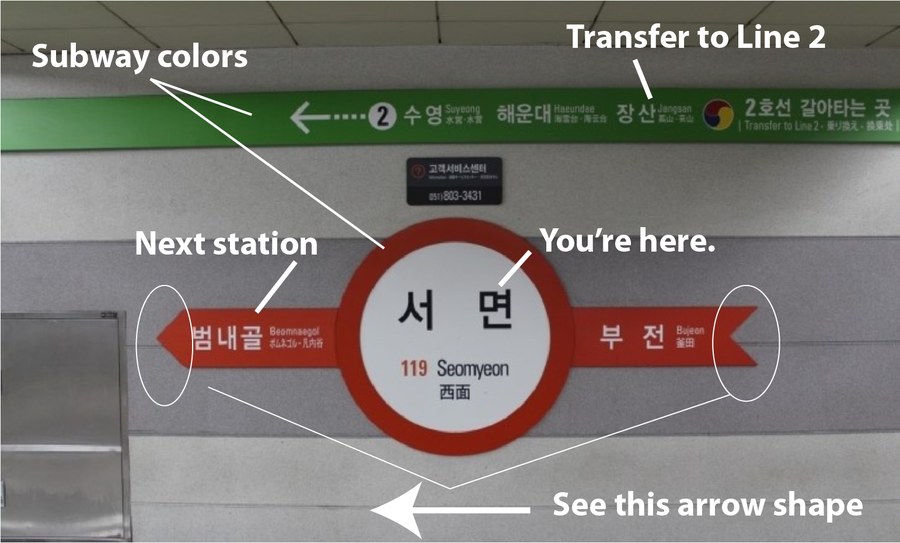
You'll see the Hangul "OO행" or "OO방면" on station signage ("-haeng" means "bound for"; "-bangmyeon" means "toward").
That's not the next station — it's attached after the name of that line's very last station.
It marks the train's direction of travel. When you see these characters, just match them against the last-station name you already checked in Kakao Subway.
The display above the doors shows the current station, the next station, and the line color.
Double-check the direction before you get on.
Exit numbers are marked right after you pass through the gate.
Busan uses yellow-and-green "Way Out" signs (Seoul uses "Exit").
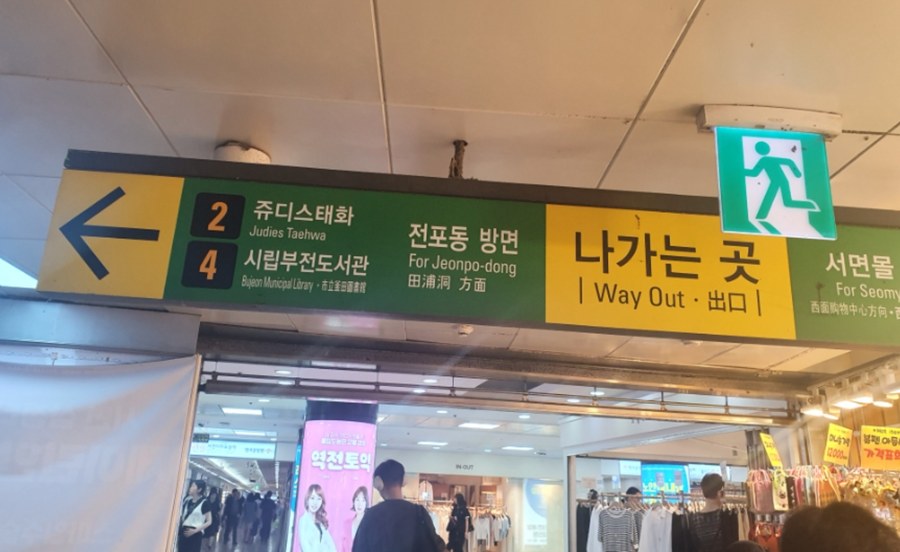
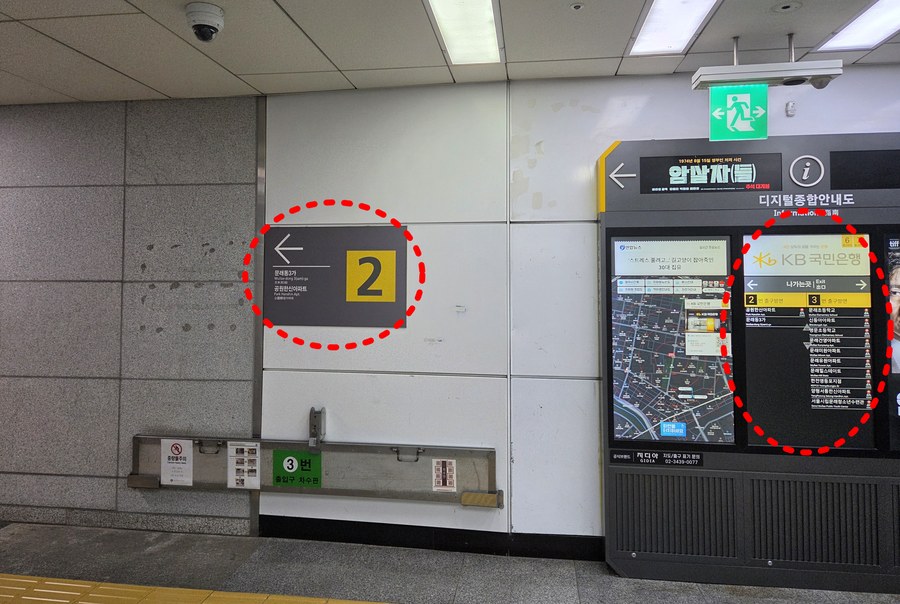
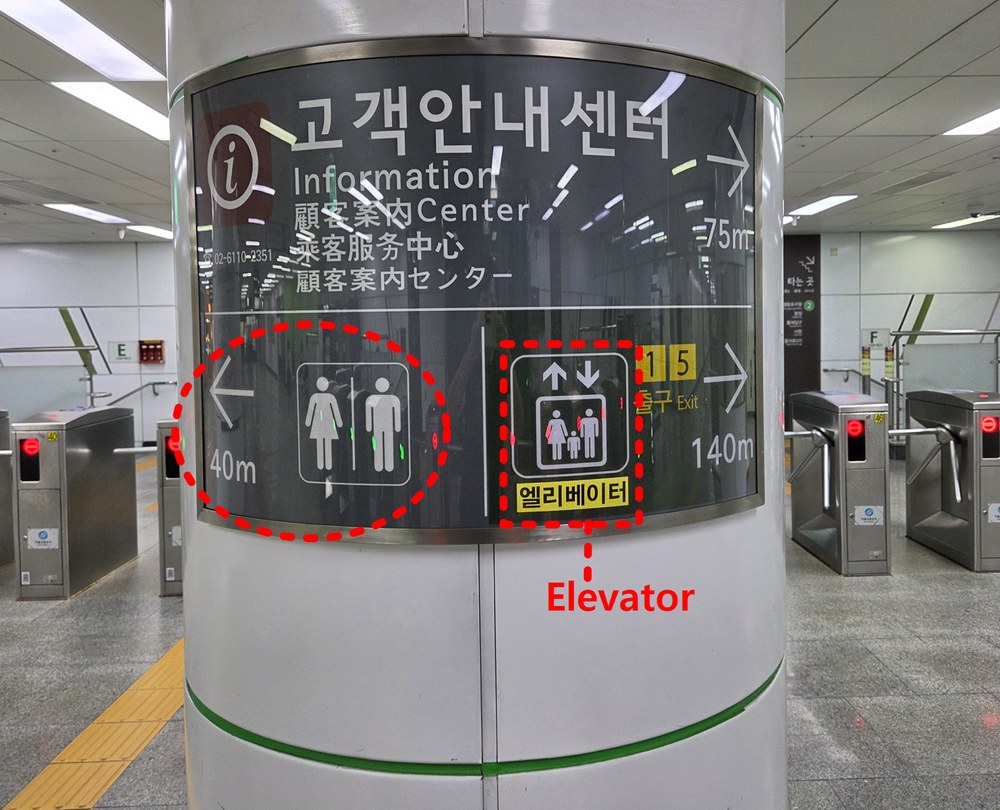
Restroom signs are posted alongside the exit signs too.
If you're hauling a heavy suitcase, look for the elevator instead of the stairs.
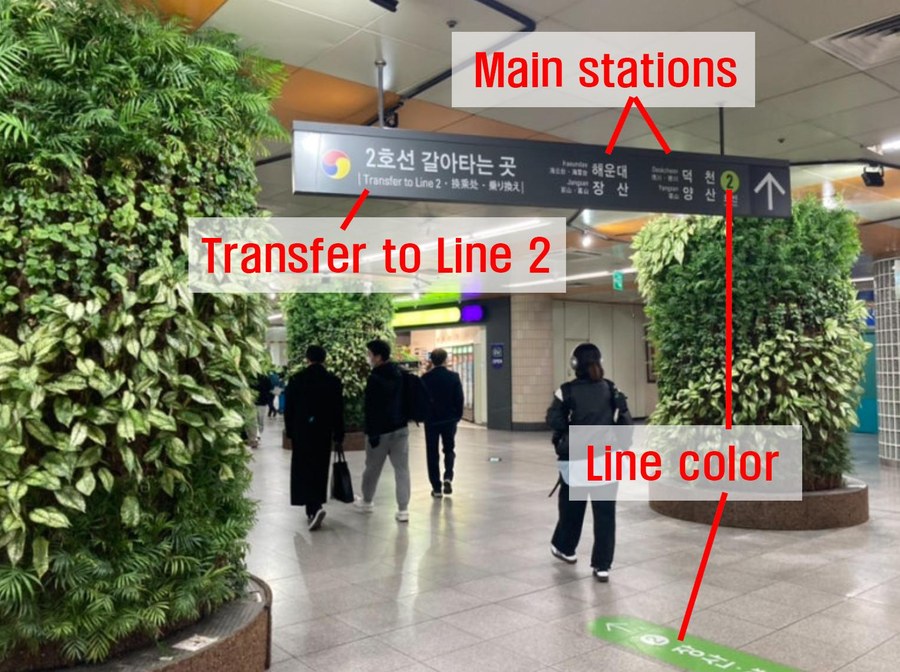
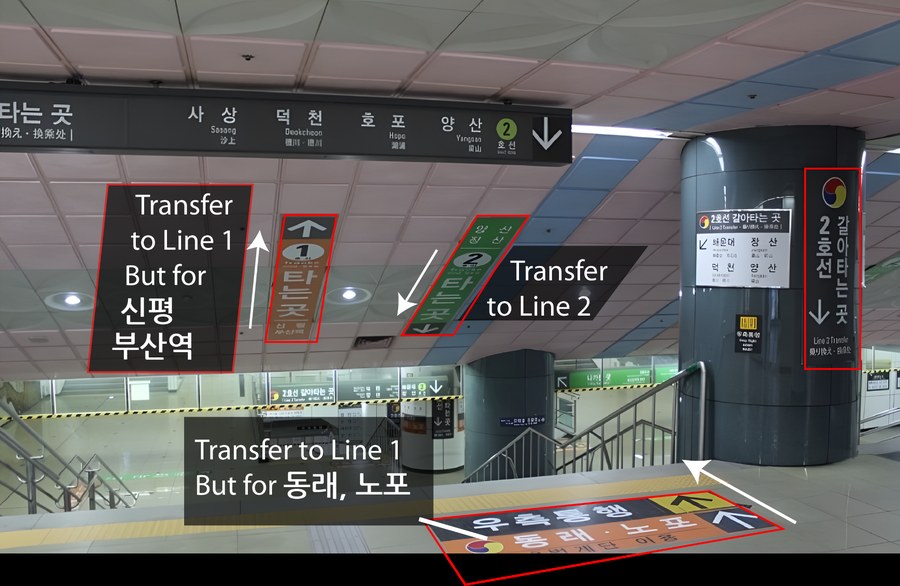
Transferring is fairly easy if you follow the line colors. When you get off at a transfer station, there's usually a colored band directly ahead marking the line you're switching to.
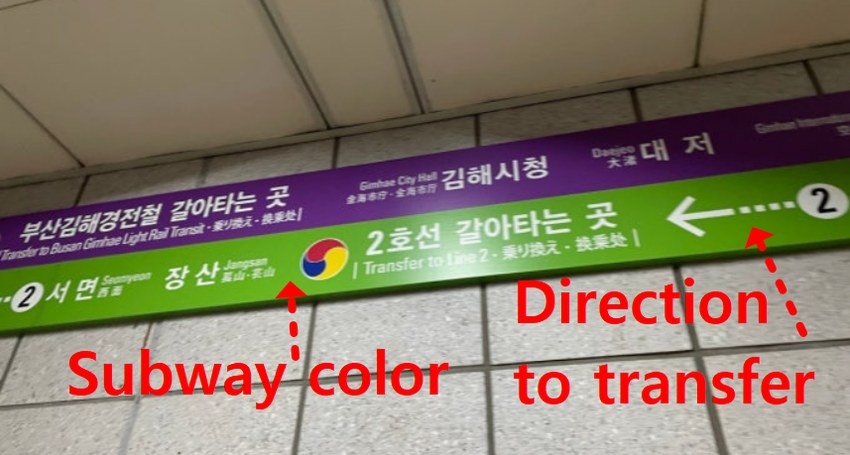
Seomyeon is the transfer station where Line 1 meets Line 2. Let's check off each of the points above using its actual signage.
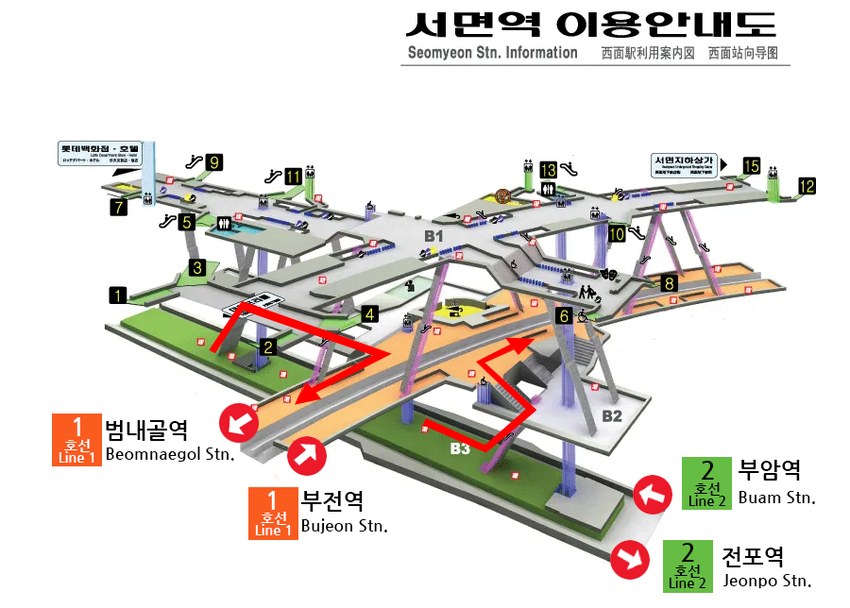
To get the transfer discount, you need to tap back through the gate within 30 minutes of getting off.
See the table below for which combinations connect for free.
| Transfer route | Discount |
|---|---|
| Subway → Bus | Free |
| Bus → Subway | Free |
| Line 1 → Line 2 | Free |
| Bus → another bus | Free |
| Subway → Bus → Subway | Last subway leg isn't free |
| Bus → Subway → Bus | Last bus leg isn't free |
You're only charged extra for the distance you actually travel — not charged twice.
Tap a keyword below to jump straight to related content.