3 Local Busan Foods: How to Order and Eat Bokguk (복국, Pufferfish Soup), Agujjim (아구찜, Spicy Braised Monkfish) and Naengchae Jokbal (냉채족발, Cold Pig's Trotters)
Here are three Busan foods whose names alone do not tell you much: a soup made with pufferfish, agujjim (아구찜), a dish whose name ends in "jjim" but which looks stir-fried, and pig's trotters served cold. We cover what each one is, how to order and eat it, and whether it contains common allergens.
As of October 23, 2026 — Opening days and menus may change. Check before you go.
We answer the questions one by one: can you really eat a dish made with pufferfish, why does a "jjim" dish arrive looking stir-fried, and why are the pig's trotters cold?
Menu
In plain words
Bokguk (복국)
Soup made with pufferfish
Agujjim (아구찜)
Spicy braised dish made with monkfish (the standard Korean spelling is agwijjim, 아귀찜)
Naengchae jokbal (냉채족발)
Pig's trotters eaten cold (with jellyfish, vegetables and mustard sauce)
2. Bokguk (복국): more than just soup, pufferfish comes in many dishes
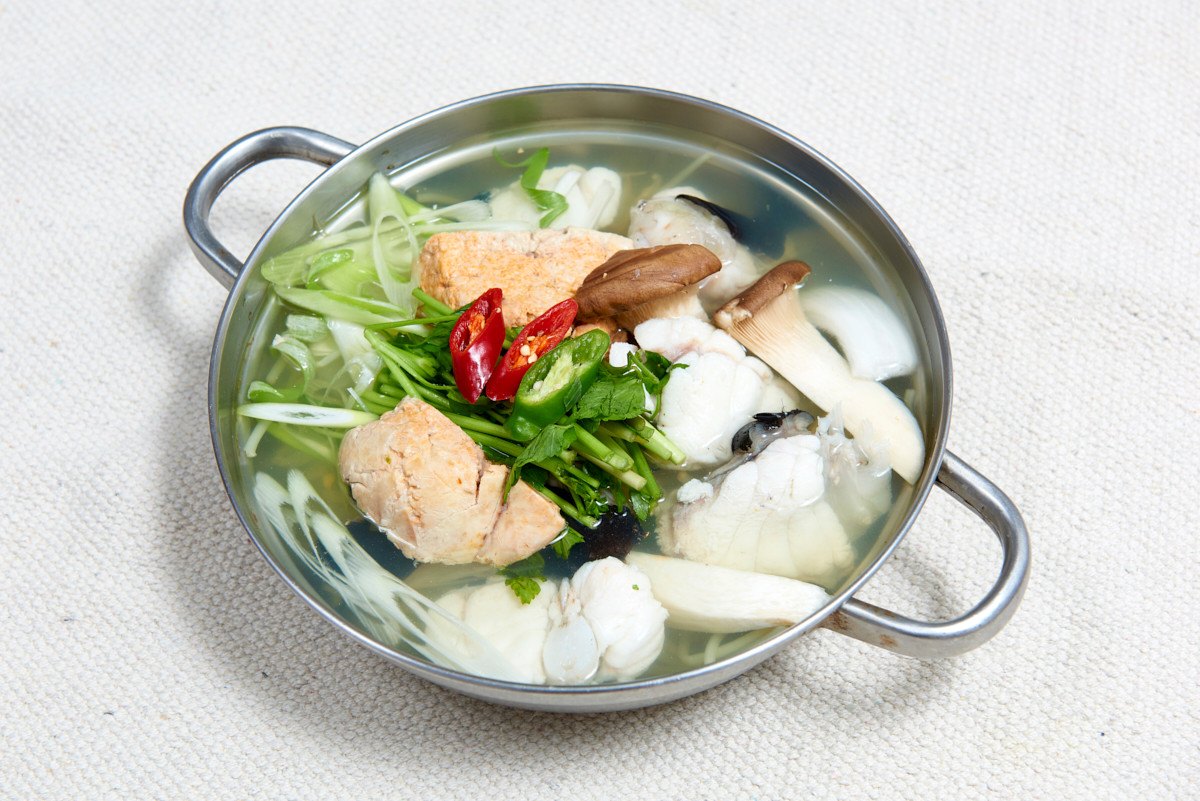
Bokguk (복국) is a soup made with pufferfish. It is a local dish that began in Busan, where fresh pufferfish is easy to get, and then spread across the country. Busan has more pufferfish restaurants than other cities.
Isn't pufferfish poisonous? The organs, liver, roe and blood of pufferfish contain a strong poison. That is why only chefs who hold a pufferfish cooking license (복어조리 자격) may prepare it. Restaurants that specialize in pufferfish have a chef with this license handle the fish.
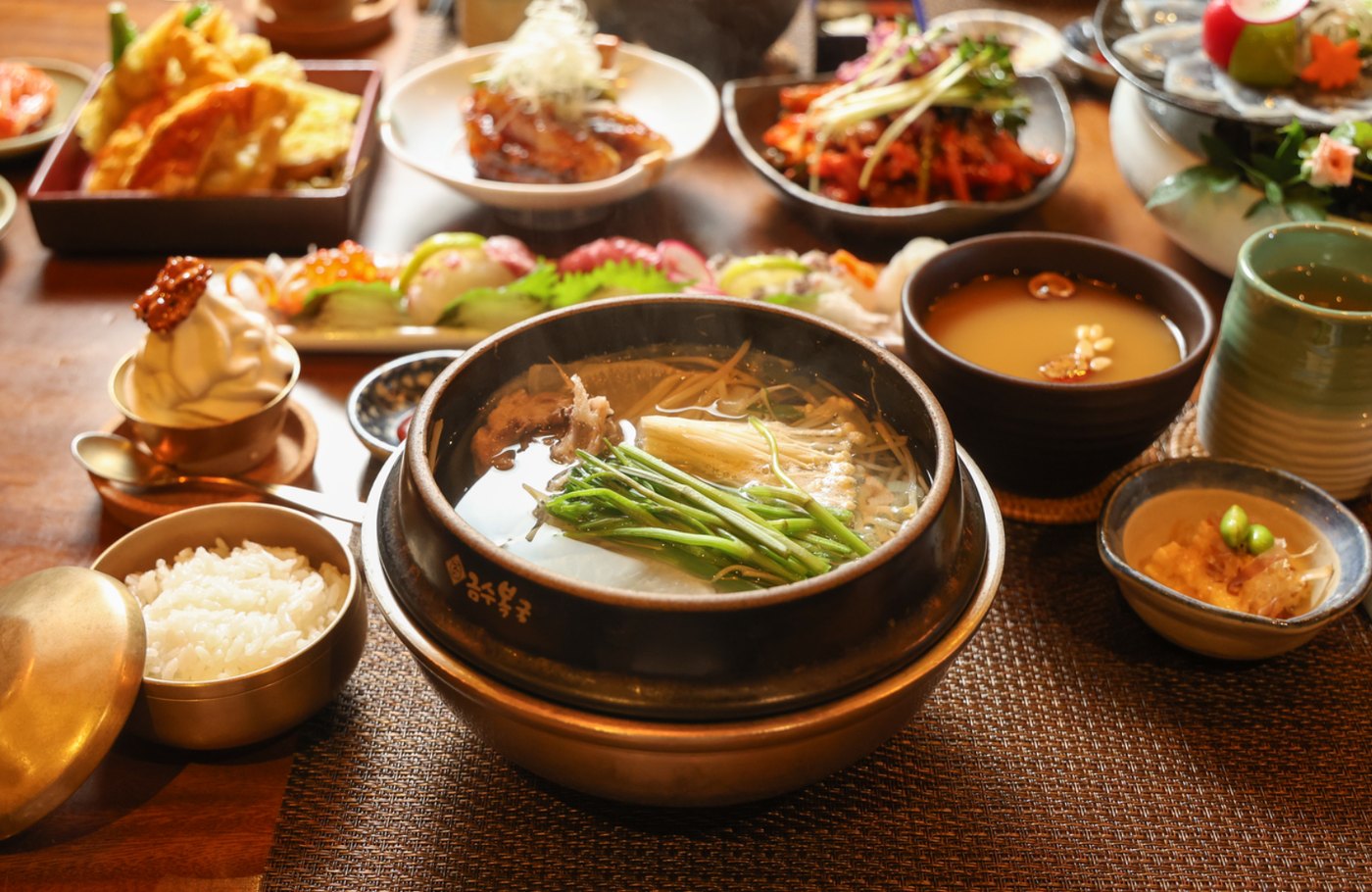
How is it served? Pufferfish, bean sprouts and water dropwort (minari, 미나리) are simmered in a kelp broth and brought out in a hot earthenware pot (ttukbaegi, 뚝배기). The default is a clear soup without chili powder, called jiri (지리). If you like spicy broth, you can also order it as maeuntang (매운탕, spicy stew).
If it is your first time, we suggest starting with the clear soup. It tastes clean, light and refreshing.
Photo: Busan Tourism Archive (부산관광아카이브)
Try adding vinegar. A few drops of vinegar reduce the fishy smell of pufferfish and make the flavor cleaner. Use the vinegar that is already on the table.
Pufferfish skin may come as a side dish. Depending on the restaurant, you may get a seasoned pufferfish skin salad (복어 껍질 무침) or pufferfish skin jelly (muk, 복 껍질 묵) as a side dish. It has a chewy texture.
At restaurants that serve rice in a large bowl, you can also put the bean sprouts and water dropwort from the soup into the rice and mix it.
The menu is split by type of pufferfish. Menus list bokguk by pufferfish type, such as eunbok (은복), milbok (밀복), kkachibok (까치복) and chambok (참복). The flavor and texture differ a little by type. If you cannot decide, say that it is your first time and ask for a recommendation.
When do people eat it? It is a popular hangover soup (haejang, 해장) that settles the stomach. Many people also eat it after a hot spring bath, and it is said that there are many bokguk restaurants in the hot spring areas of Haeundae (해운대) and Dongnae (동래).
Other pufferfish dishes besides bokguk. Pufferfish is often eaten as soup or porridge, but it is also sliced raw or deep-fried. These are the names you will see on the menu of a pufferfish restaurant.
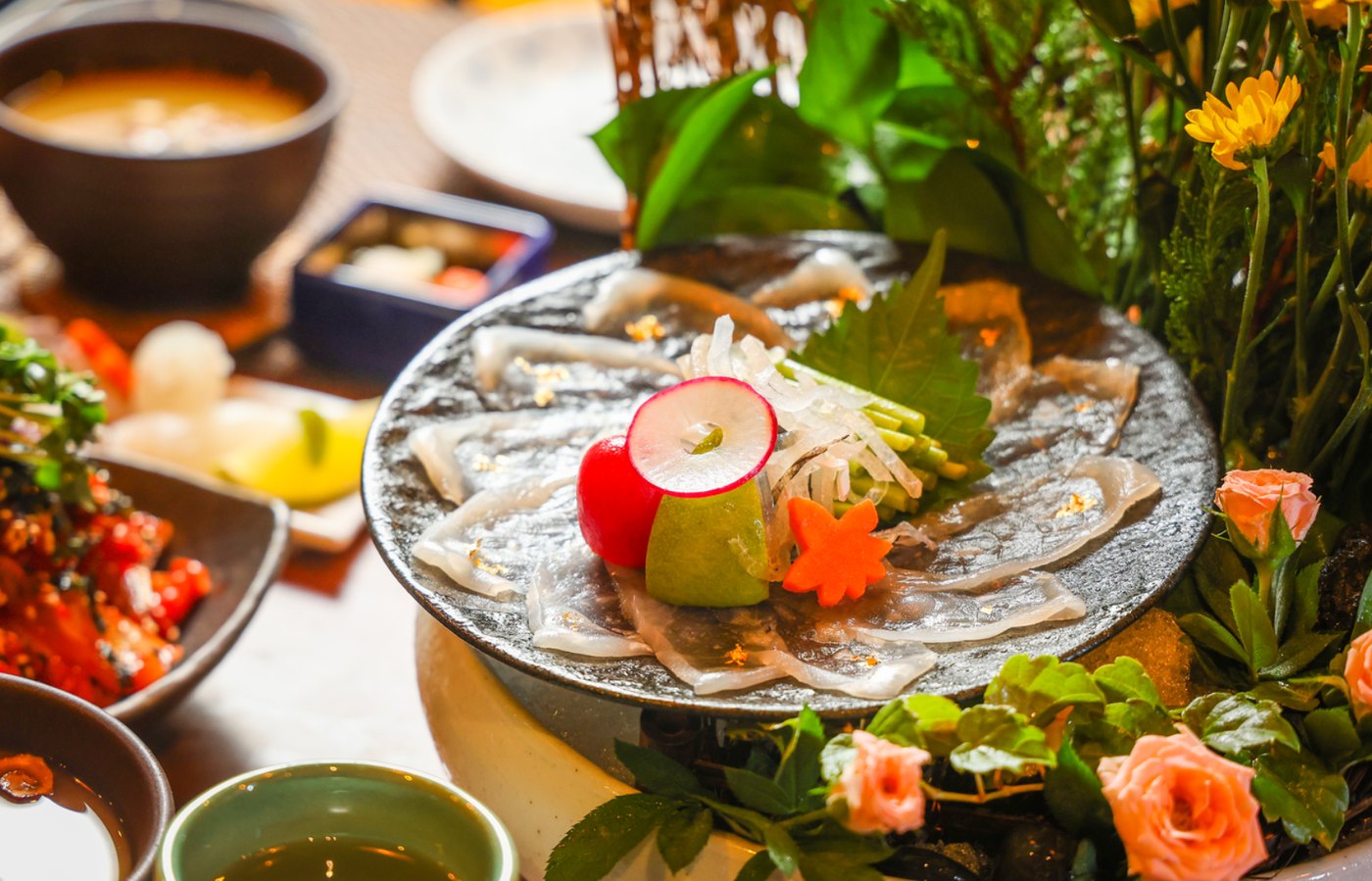
Bokhoe (복회, also called bok sashimi, 복사시미): Pufferfish sliced very thin as raw fish. It is cut so thin that the pattern of the plate shows through, and you dip it in soy sauce mixed with wasabi. It is regarded as a premium dish for enjoying the distinct taste and mild sweetness of pufferfish. Some restaurants also serve it with pufferfish skin and shabu-shabu.
Photo: Busan Tourism Archive (부산관광아카이브)
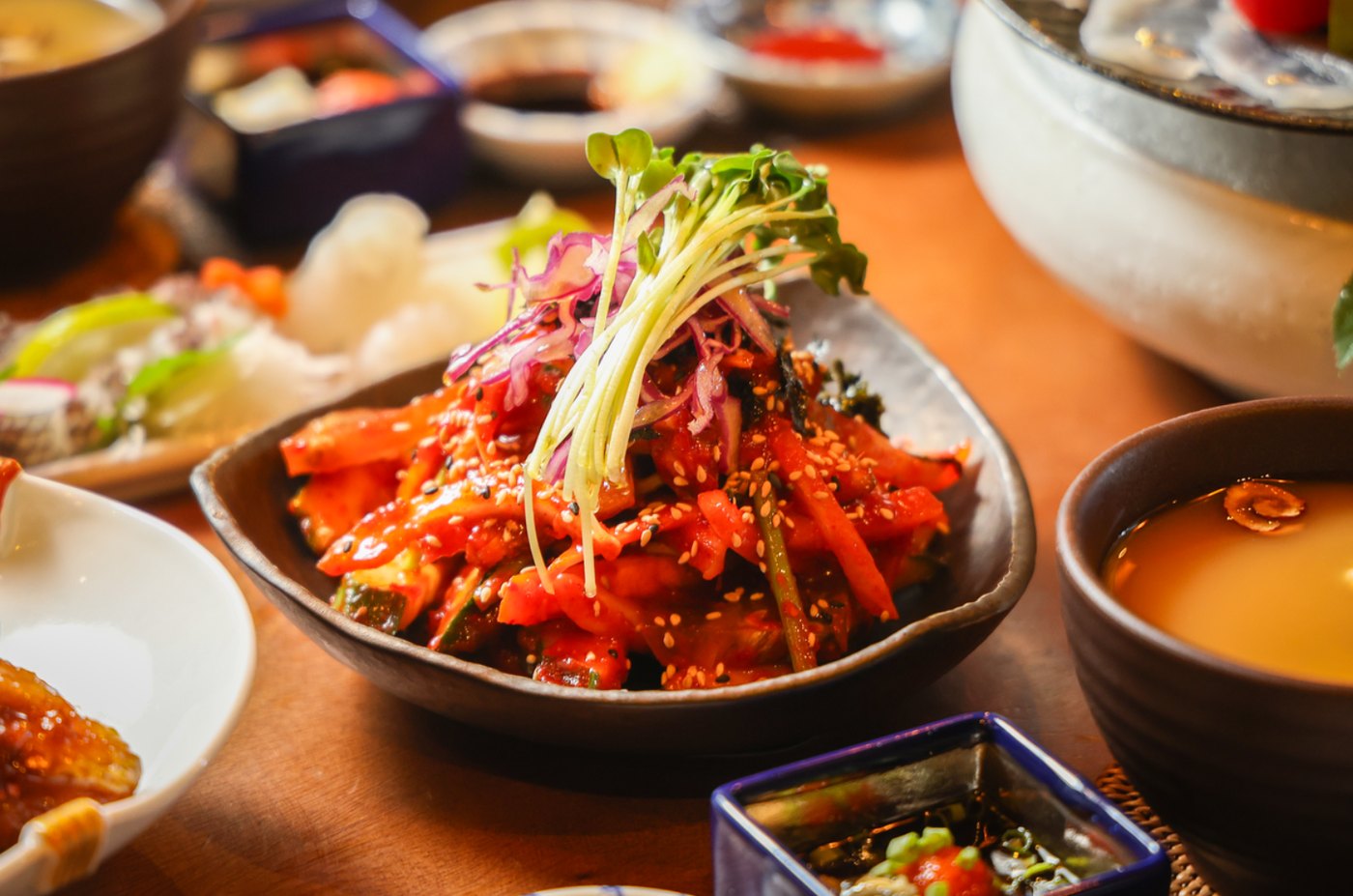
Bokhoemuchim (복회무침): Raw pufferfish tossed with vegetables in a sweet and sour sauce. It is on the menu at Geumsu Bokguk (금수복국).
Photo: Busan Tourism Archive (부산관광아카이브)
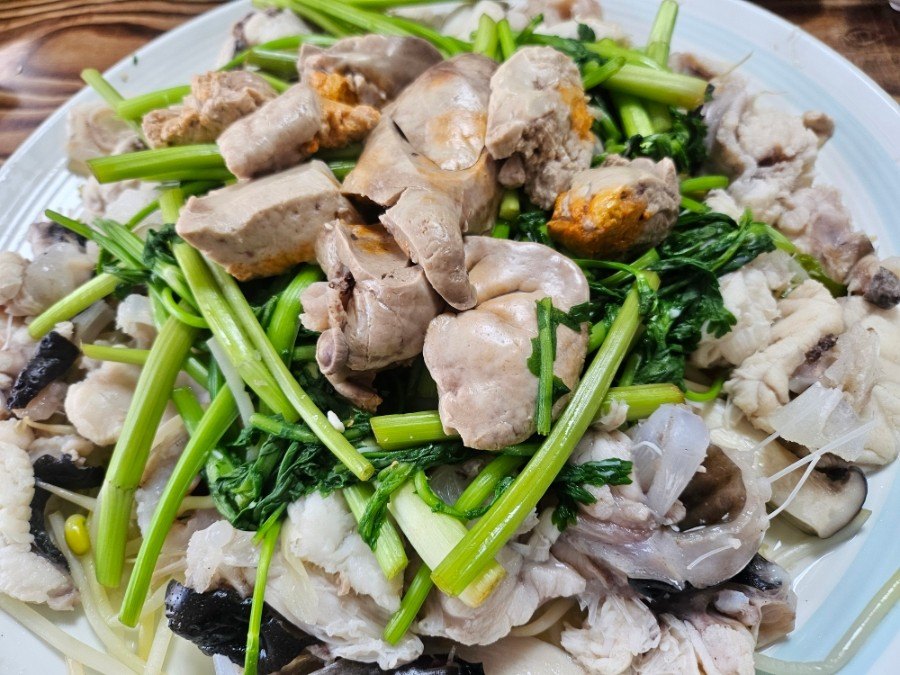
Boksuyuk (복수육): Cleaned pufferfish is cut into large pieces, briefly blanched in boiling water, then cooled and served. It comes with vegetables such as bean sprouts or garlic chives, and you dip it in vinegar soy sauce or mustard soy sauce. The meat is firm and mild, and the skin is chewy.
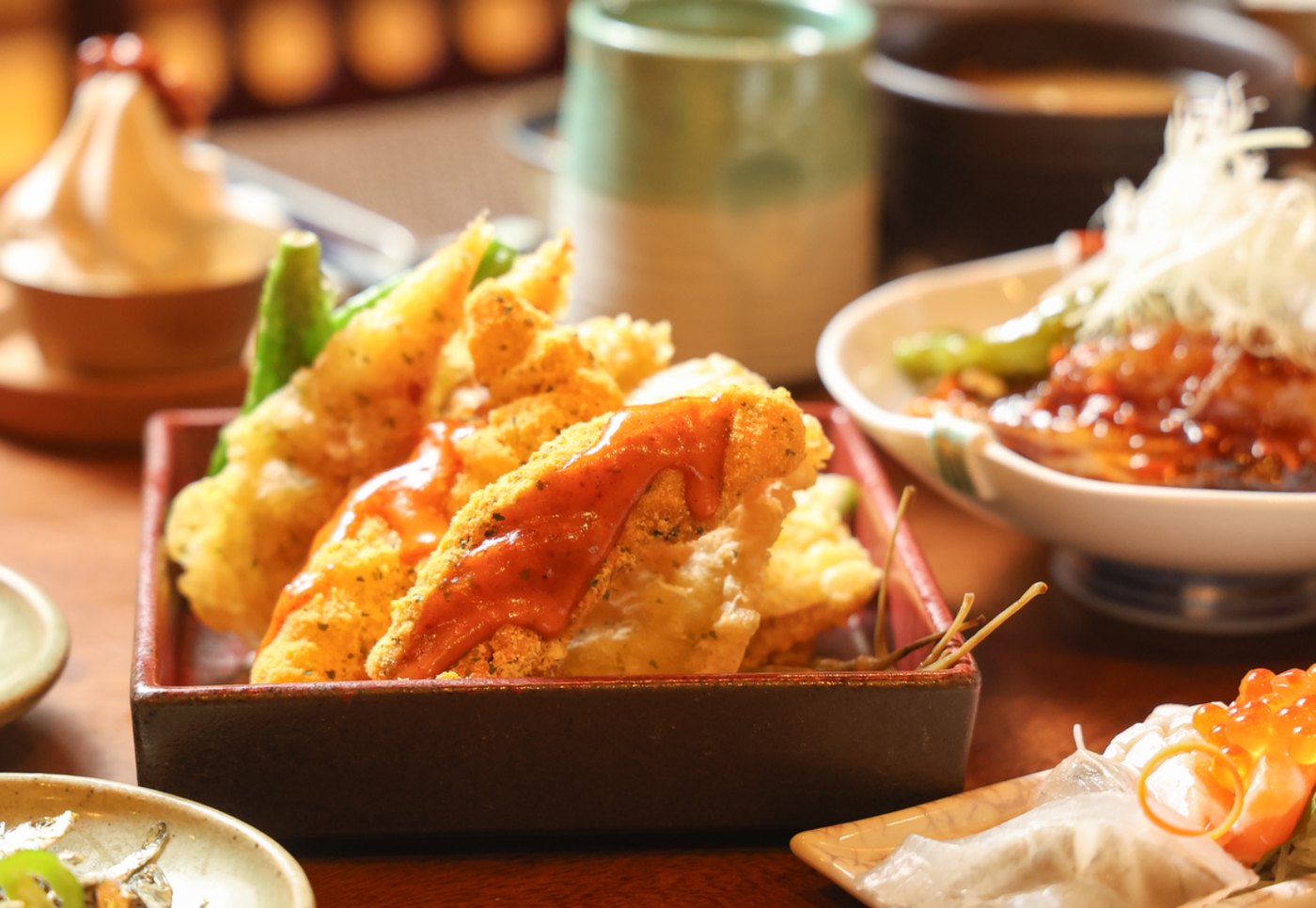
Boktwigim (복튀김): Fried pufferfish meat. Some restaurants, such as Chowon Bokguk (초원복국), serve it together with bokguk.
Photo: Busan Tourism Archive (부산관광아카이브)
Bokbulgogi (복불고기): Seasoned pufferfish grilled on an iron plate.
Bokjorim and bokjjim (복조림, 복찜): Pufferfish simmered down in a seasoning sauce.
Bokjuk (복죽): Porridge made with pufferfish.
Menus differ from restaurant to restaurant. Some places sell only bokguk, and others sell several dishes. Look for the pufferfish dish names on the menu.
Allergies and diet: Pufferfish is a fish, so if you have a fish allergy you cannot eat it.
Where can I eat it? Here are two places. Geumsu Bokguk Haeundae Main Branch (금수복국 해운대본점) in Haeundae opened in 1970, so it has been serving bokguk for more than 50 years. It was selected as a Selected Restaurant in the 2024 Michelin Guide Seoul & Busan, and its menu is available in Korean, English, Japanese and Chinese. Besides bokguk, it has dishes such as a bok sashimi set meal (복사시미 정식) and iron-plate pufferfish bulgogi (철판복불고기). The address is Jungdong 1-ro 43beon-gil 23 (중동1로43번길 23), Haeundae-gu (해운대구).
Chowon Bokguk (초원복국) in Daeyeon-dong (대연동) opened in 1983 in Yeonsan-dong (연산동), moved through Yeongdo (영도), and settled in its current location in 1991. It is introduced as run by the first chef in Busan to earn a pufferfish cooking license, and the business has been passed down in the family. Along with bokguk, it serves boksuyuk (복수육), bokjjim (복찜), bokbulgogi (복불고기), bok shabu-shabu (복샤브샤브) and boktwigim (복튀김). The address is Hwangnyeong-daero 492beon-gil 30 (황령대로492번길 30), Nam-gu (남구).
Opening hours and menus may change, so check before you go.
3. Agujjim (아구찜): the Busan style is made with fresh monkfish
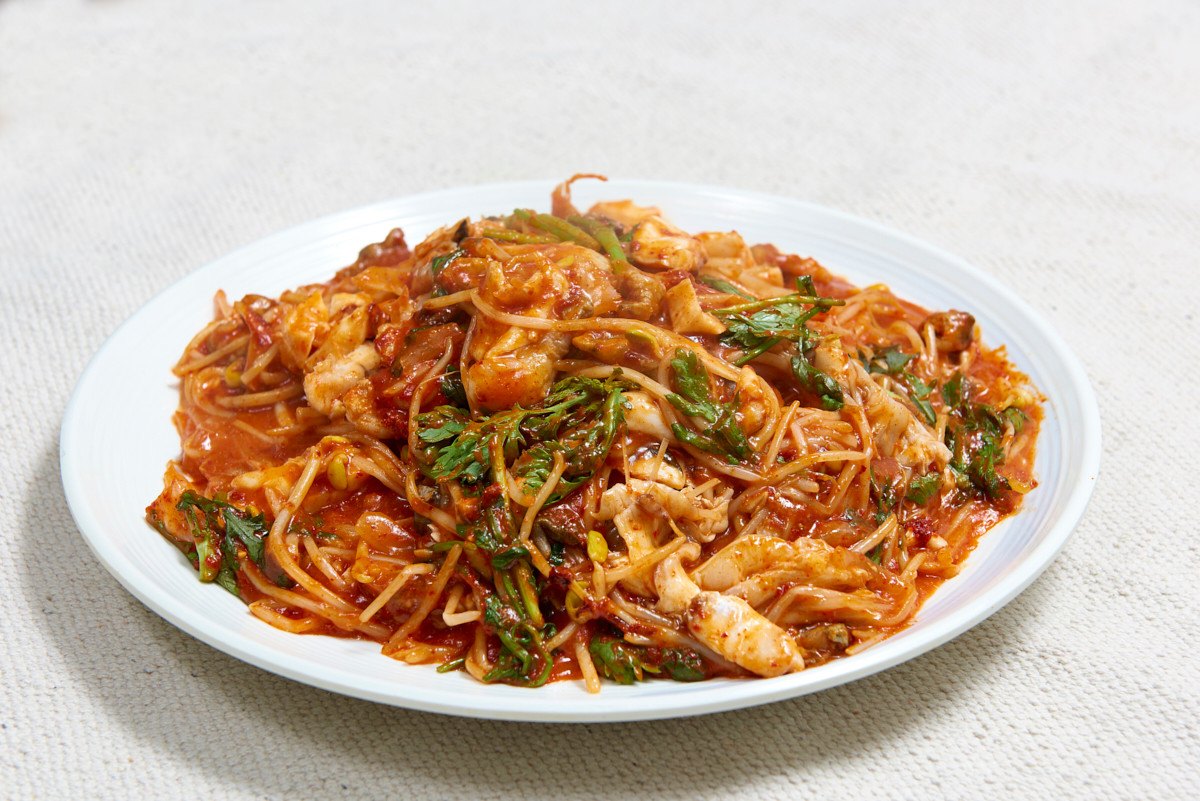
Agujjim (아구찜) is a spicy braised dish made with monkfish. The standard Korean word for monkfish is agwi (아귀), but in Busan and the rest of Gyeongsang-do (경상도) people call it agu (아구), so many menus write agujjim. It is the same dish as agwijjim (아귀찜).
Monkfish has a very big mouth and a rough look. But its flesh is light and sweet, and it is used in many dishes.
How is it different from Masan? Masan (마산) in Gyeongnam (경남), today part of Masanhappo-gu (마산합포구), Changwon (창원시), is regarded as the birthplace of agujjim. The Masan style is known for using dried monkfish. The Busan style uses fresh monkfish that has not been dried, so it is soft and moist.
The Busan style of fresh monkfish agujjim is said to have become popular by word of mouth from the 1970s. This was because fresh seafood was cheap and easy to get at large fish markets such as the Busan Cooperative Fish Market (부산공동어시장) and Jagalchi Market (자갈치시장).
How is it served? Monkfish meat, bean sprouts, water dropwort (minari, 미나리) and mideodeok (미더덕) are mixed with a spicy sauce. Some restaurants add more seafood, such as shrimp or blue crab. Mideodeok (미더덕) is a small seafood that is crunchy to chew.
The sauce is mixed with starch, so it is thick. It is sharply spicy and the portions are generous. People in Busan are said to eat it when they are angry or feeling pent-up and frustrated, because the heat is supposed to relieve that tight, stuffy feeling.
Photo: Busan Tourism Archive (부산관광아카이브)
It is called "jjim" but looks stir-fried. Busan agujjim is boiled with stock and seasoning, then cooked down in a frying pan. In Korean, jjim (찜) is a cooking method where the dish is cooked down until only a little liquid is left. So even if it looks stir-fried, it is agujjim.
You may find bangah leaves on top. In Busan, bangah (방아) leaves are sometimes sprinkled on top of agujjim. Bangah is a leafy herb that adds aroma, like perilla leaf (kkaennip, 깻잎). It smells similar to mint and is stronger than perilla leaf. In English it is called Korean mint. People's opinions are split the first time they try it, so if the aroma is too strong for you, ask them to leave it out.
How do I eat it? It comes on a large plate, so it is good for sharing with several people. Put monkfish and bean sprouts on your small plate, or put the sauce on your rice. When you finish, add sari (사리, extra noodles or other add-ins) to the remaining sauce, or mix in rice.
Whether a restaurant sells a single portion depends on the place, so ask before you order.
Other monkfish dishes besides agujjim. Like pufferfish, monkfish is eaten in several ways. Monkfish is said to taste especially good in winter, when the cold wind blows.
Agwitang (아귀탕, also called agutang, 아구탕): Think of it as similar to bokguk. It is a soup made with monkfish, radish, bean sprouts and water dropwort, so it feels similar to eat. You can have it with a clear broth, or add chili powder if you want it spicy. If agujjim sounds too spicy, this is an easier choice.
Photo: Busan Tourism Archive (부산관광아카이브)
Agwisuyuk (아귀수육): Monkfish steamed without seasoning. Unlike agujjim, it is not covered in sauce, so you taste the light, mildly sweet flavor of the monkfish as it is. Some restaurants also serve organs such as the liver and stomach with it.
Photo: Busan Tourism Archive (부산관광아카이브)
Aguaetang (아구애탕): A soup made with monkfish liver. Monkfish liver is rich in nutrients and is regarded as a delicacy comparable to foie gras, the goose liver dish.
Agwihoe (아귀회): It is also eaten as raw fish.
Menus differ from restaurant to restaurant. Some places sell only agujjim, and others also sell suyuk or soup, so check the menu.
Allergies and diet: Monkfish is a fish, so if you have a fish allergy you cannot eat it. Many restaurants also use crustaceans such as shrimp and blue crab, and mideodeok (미더덕), so if you have a shellfish allergy, be sure to ask before you order.
Where can I eat it? Here is one of Busan's long-established agujjim restaurants. Okmi Agujjim (옥미아구찜) in Mangmi-dong (망미동), Suyeong-gu (수영구) opened in 1984. It was chosen as a Baeknyeon Gage (백년가게, "100-year shop"), a title the government gives to shops that have operated for more than 30 years, and it is said to have used fresh monkfish, not frozen or semi-dried, since it opened. You can also choose the spice level, which is another feature of this restaurant. It is near Mangmi Station (망미역) on subway Line 3, and besides agujjim it sells agutang (아구탕) and agusuyuk (아구수육).
The main monkfish catching areas in Busan are Gijang (기장) and Dadaepo (다대포). Gijang has many restaurants that specialize in agujjim, and Dadaepo is said to be famous for aguaetang (아구애탕), made with monkfish liver.
Opening hours and menus may change, so check before you go.
4. Naengchae jokbal (냉채족발): the Busan way to eat jokbal cold
Jokbal (족발) is pig's trotters boiled for a long time in a seasoned broth. It is usually eaten warm, dipped in salted shrimp (saeujeot, 새우젓) or wrapped in lettuce.
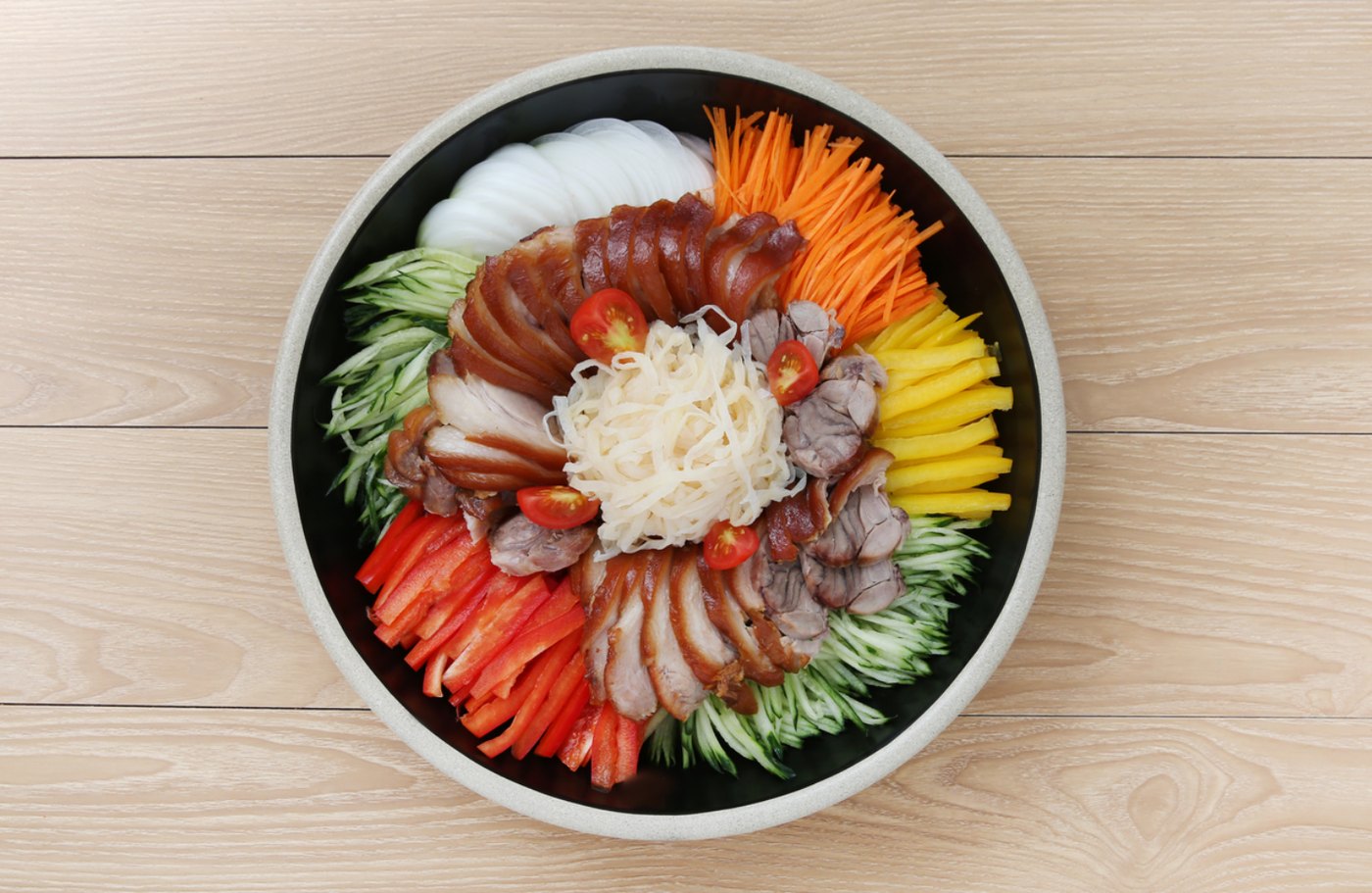
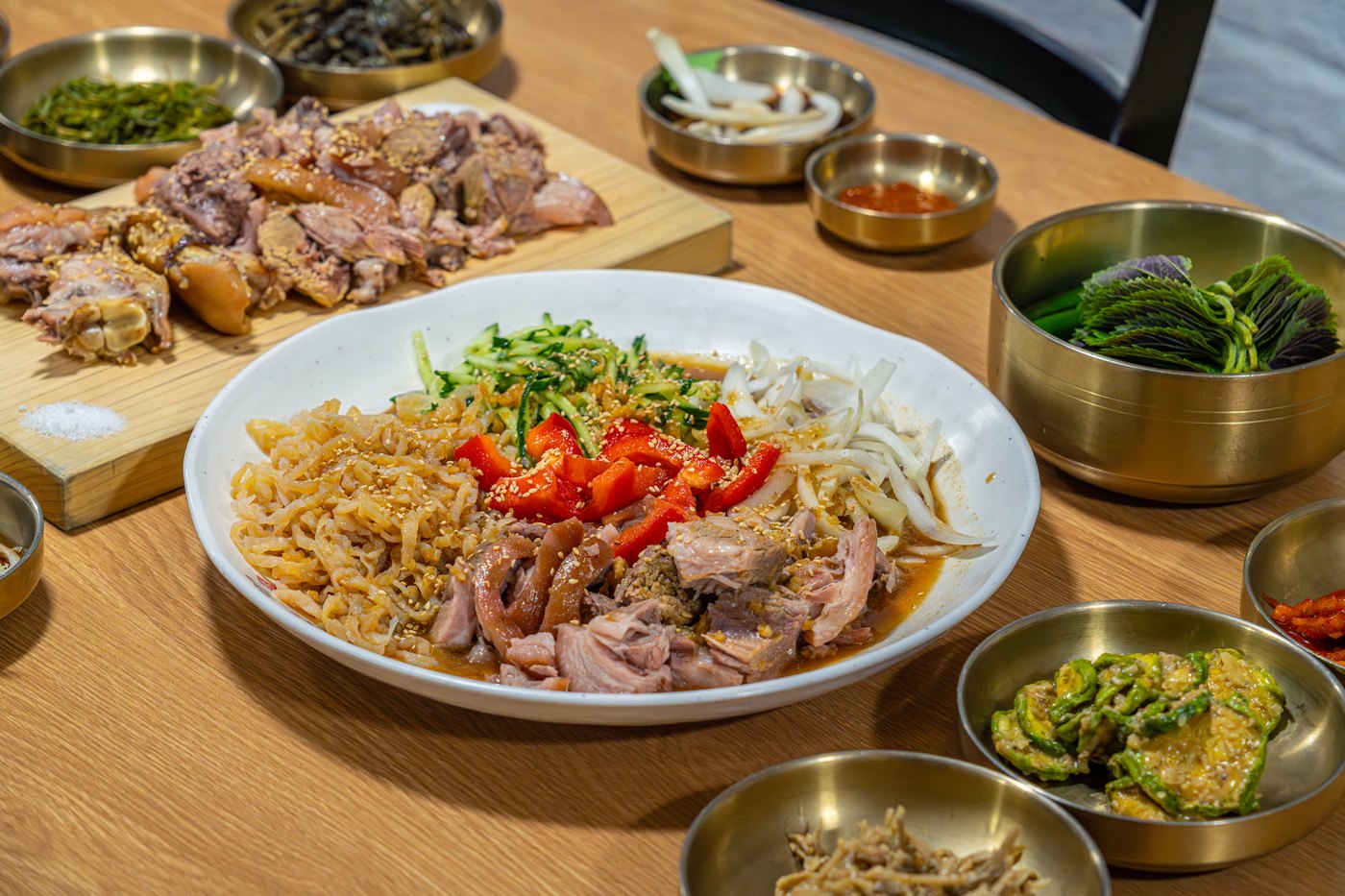
Naengchae jokbal (냉채족발) is jokbal eaten cold. Thin slices of jokbal are topped with jellyfish and vegetables such as cucumber, carrot and onion, and mustard sauce is poured over it. The name combines jokbal and naengchae (냉채, a cold dish that is tossed and chilled).
Photo: Busan Tourism Archive (부산관광아카이브)
What does it taste like? It is sour, spicy and sweet. The mustard sauce cuts the richness of the jokbal, so it does not feel greasy.
It contains jellyfish. The jellyfish is salted and then soaked to remove the salt. It adds a chewy texture. The mustard also has a sharp kick, so try it little by little the first time.
Where did it start? It is said to have started in the early 1980s in the jokbal alley (족발골목) of Bupyeong-dong (부평동), Jung-gu (중구), Busan. At that time the Bupyeong-dong and Nampo-dong (남포동) area was Busan's downtown, where Jagalchi Market (자갈치시장), Gukje Market (국제시장) and Bupyeong Market (부평시장) came together.
Another explanation says it comes from the food of people displaced from North Korea who settled in Busan after the Korean War. Today many restaurants across the country sell it, but its beginning is introduced as Busan.
How do I eat it? The jokbal, jellyfish and vegetables are served separately. Before eating, mix them well with the sauce. The ingredients have different textures, so mixing them lets the sauce coat everything evenly and the flavors come together.
Photo: Busan Tourism Archive (부산관광아카이브)
You can also wrap it in lettuce or perilla leaves (kkaennip, 깻잎). Depending on the restaurant, a tangy noodle dish may be served first.
Allergies and diet: It contains pork, so if you do not eat pork you cannot eat it. Many restaurants put cucumber in it, so if you have a cucumber allergy, tell them before you order. Some restaurants use oyster sauce in the mustard sauce, so if you have a shellfish allergy, ask.
Where can I eat it? Busan Jokbal (부산족발) in the Bupyeong-dong jokbal alley is a jokbal restaurant introduced by Visit Busan (비짓부산), the official tourism portal of the city of Busan. Its signature dishes are jokbal and naengchae jokbal, and it is said to be open all year round. The address is Gwangbok-ro 13-1 (광복로 13-1), Jung-gu (중구).