Busan Crab Guide: Ganjang-gejang, Yangnyeom-gejang and Crab Soup Explained
Ganjang-gejang (간장게장), yangnyeom-gejang (양념게장) and kkotgetang (꽃게탕) sound alike, but some are raw and some are cooked. Here is how they differ and how to eat them.
As of October 26, 2026 — Opening days and menus may change. Check before you go.
1. Gejang (게장) - Raw crab marinated in sauce, served as a side dish
Gejang (게장) is raw crab marinated in soy sauce or a spicy sauce. It is salty and rich, so a bowl of rice disappears quickly when you eat it together. That is why Koreans sometimes call it "bap-dodug (밥도둑)", which literally means "rice thief".
On menus, ganjang-gejang (간장게장), yangnyeom-gejang (양념게장) and kkotgetang (꽃게탕) often appear together. The first two are raw, while kkotgetang is boiled and cooked.
2. Crab Dishes at a Glance
Dish
How it is eaten
Cooked or raw
Ganjang-gejang (간장게장)
Raw crab marinated in a soy-based sauce and eaten cold. Salty, not spicy
Raw
Yangnyeom-gejang (양념게장)
Raw crab tossed in a sauce made with red pepper powder, garlic, ginger and more. Spicy and sweet
Raw
Kkotgetang (꽃게탕)
A soup of kkotge (꽃게, blue swimming crab) boiled and seasoned with soybean paste (doenjang 된장) and red pepper powder
Cooked
Kkotge-jjim (꽃게찜)
Steamed kkotge. There is also kkotge yangnyeom-jjim (꽃게 양념찜), steamed with a seasoning on top
Cooked
Kkotge-jorim (꽃게조림)
A side dish of kkotge braised in seasoning
Cooked
Kkotge-twigim (꽃게튀김)
Fried kkotge
Cooked
Daege-jjim (대게찜)
Steamed daege (대게, snow crab) caught in the East Sea
Cooked
Genak-jjim (게낙찜)
A steamed dish with crab and nakji (낙지, octopus) together
Cooked
Even for the same dish, the taste and spiciness differ a little from shop to shop.
3. Types and Origins of Crab - Gejang Mostly Uses Kkotge (꽃게)
Sea
Types of crab
East Sea (동해)
Daege (대게), hong-ge (홍게), teol-ge (털게)
West Sea (서해) and South Sea (남해)
Kkotge (꽃게), min-kkotge (민꽃게, also called bakhaji 박하지 or dolge 돌게), wang-bamsongi-ge (왕밤송이게)
Gejang and kkotgetang mostly use kkotge (꽃게), the blue swimming crab. It is the most commonly caught and eaten crab in Korea.
So many are caught along the whole West Sea coast that it is treated as a local specialty. The main areas are Incheon (인천) and, in South Chungcheong Province (충청남도), Dangjin (당진), Seosan (서산), Taean (태안) and Anmyeondo (안면도). Among them, the Yeonpyeong fishing ground (연평어장) near Yeonpyeongdo (연평도) in Incheon is known as the largest kkotge fishing ground in Korea.
Some gejang shops advertise where their crab comes from, such as Yeonpyeongdo.
Kkotge is in season from April to June and from October to November. In spring, females full of roe are said to taste best, and in autumn, males with plump meat.
4. Ganjang-gejang (간장게장) - Gejang marinated in soy sauce
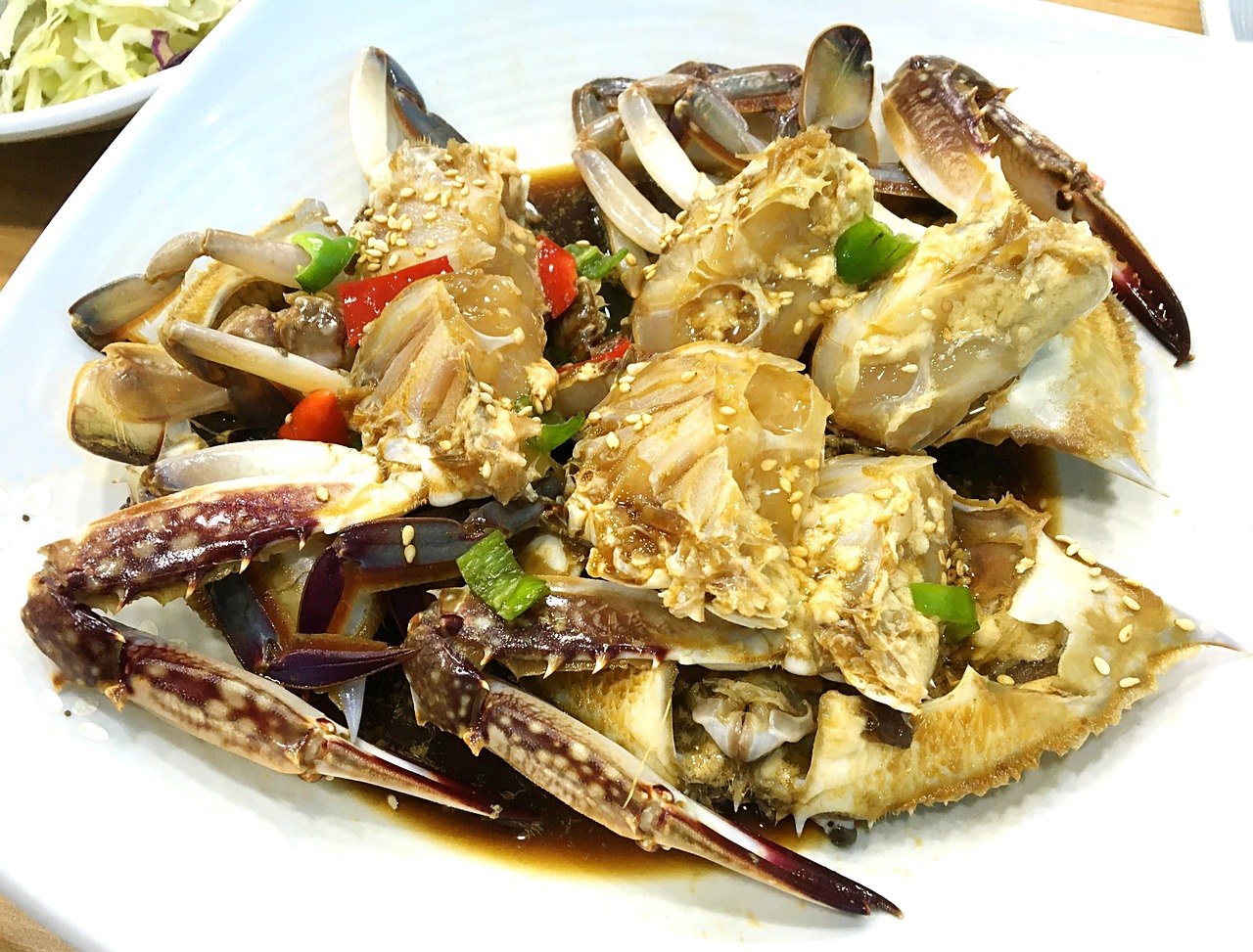
Ganjang-gejang is made by pouring a seasoned soy sauce over crab and letting it age. Plain soy sauce is not poured on as it is. It is boiled with ingredients such as green onion, garlic, ginger, chili pepper and sesame oil to make the sauce.
The sauce is cooled and poured over the crab. After a few days, only the sauce is poured off, boiled again and poured back, and this is repeated several times. It is eaten cold.
It tastes salty and nutty. It is not spicy, so it is an easy choice for people who find spicy food hard.
However, you can taste the seafood smell of raw crab as it is, so it may be a bit hard if you are sensitive to a fishy taste.
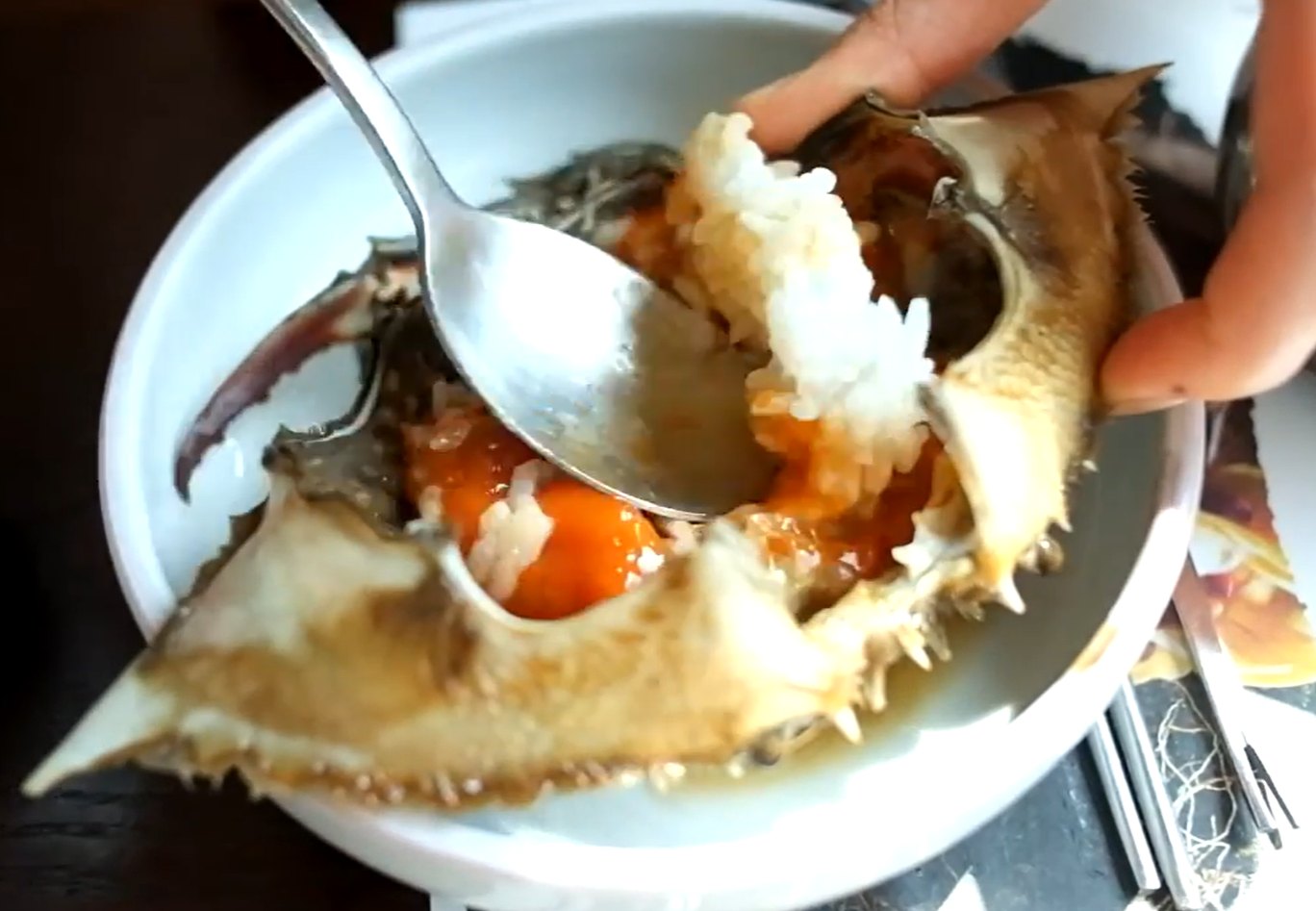
Usually a whole crab is served in its shell. A well-known way to eat it is to put warm rice into the gedttakji (게딱지, the crab's top shell) and mix it with what is inside.
The photo below shows ganjang-gejang.
5. Yangnyeom-gejang (양념게장) - Gejang tossed in a spicy sauce
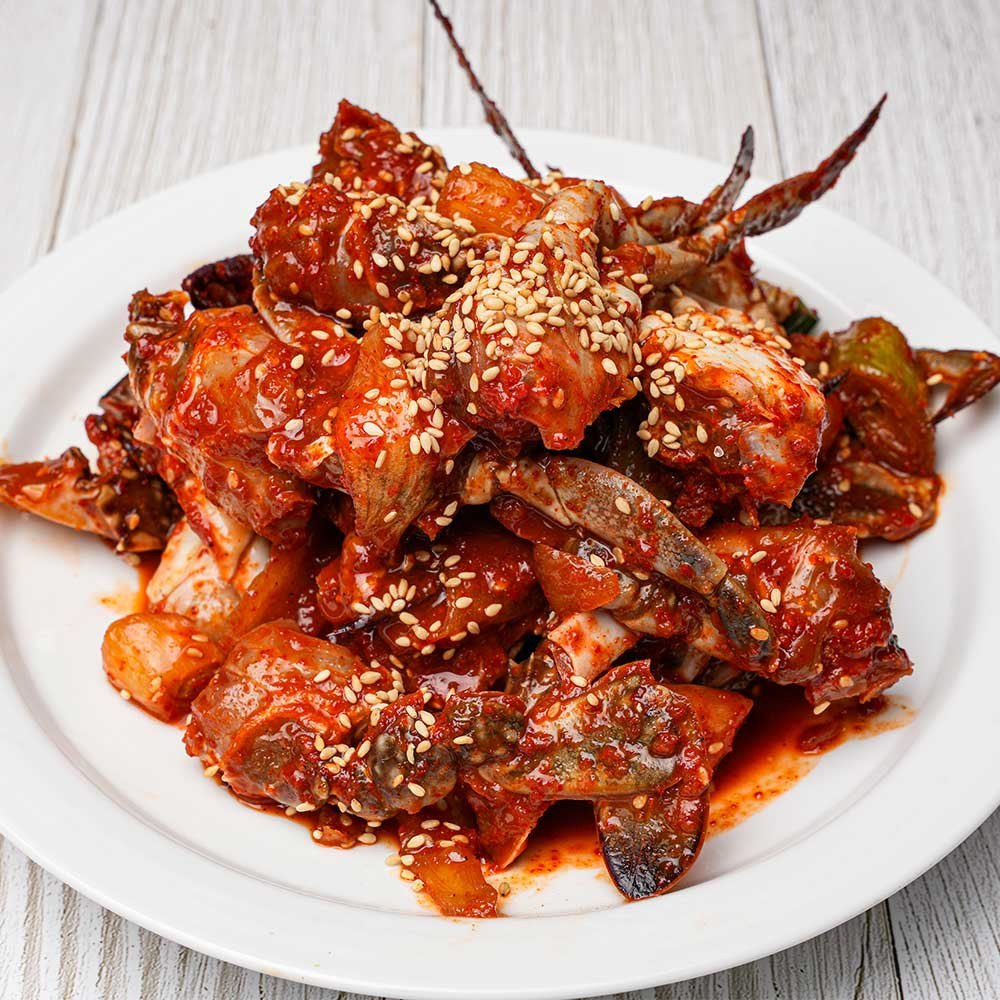
Yangnyeom-gejang is raw crab tossed in a sauce made with ingredients such as red pepper powder, pear, onion and garlic. It is red, spicy and sweet.
It tends to be quite spicy, so if you cannot eat spicy food well, ask how spicy it is before you order.
The sauce covers the seafood smell, so it is less fishy than ganjang-gejang. If ganjang-gejang worries you, try yangnyeom-gejang first.
The photo below shows yangnyeom-gejang.
6. Kkotgetang (꽃게탕) - A soup boiled with crab
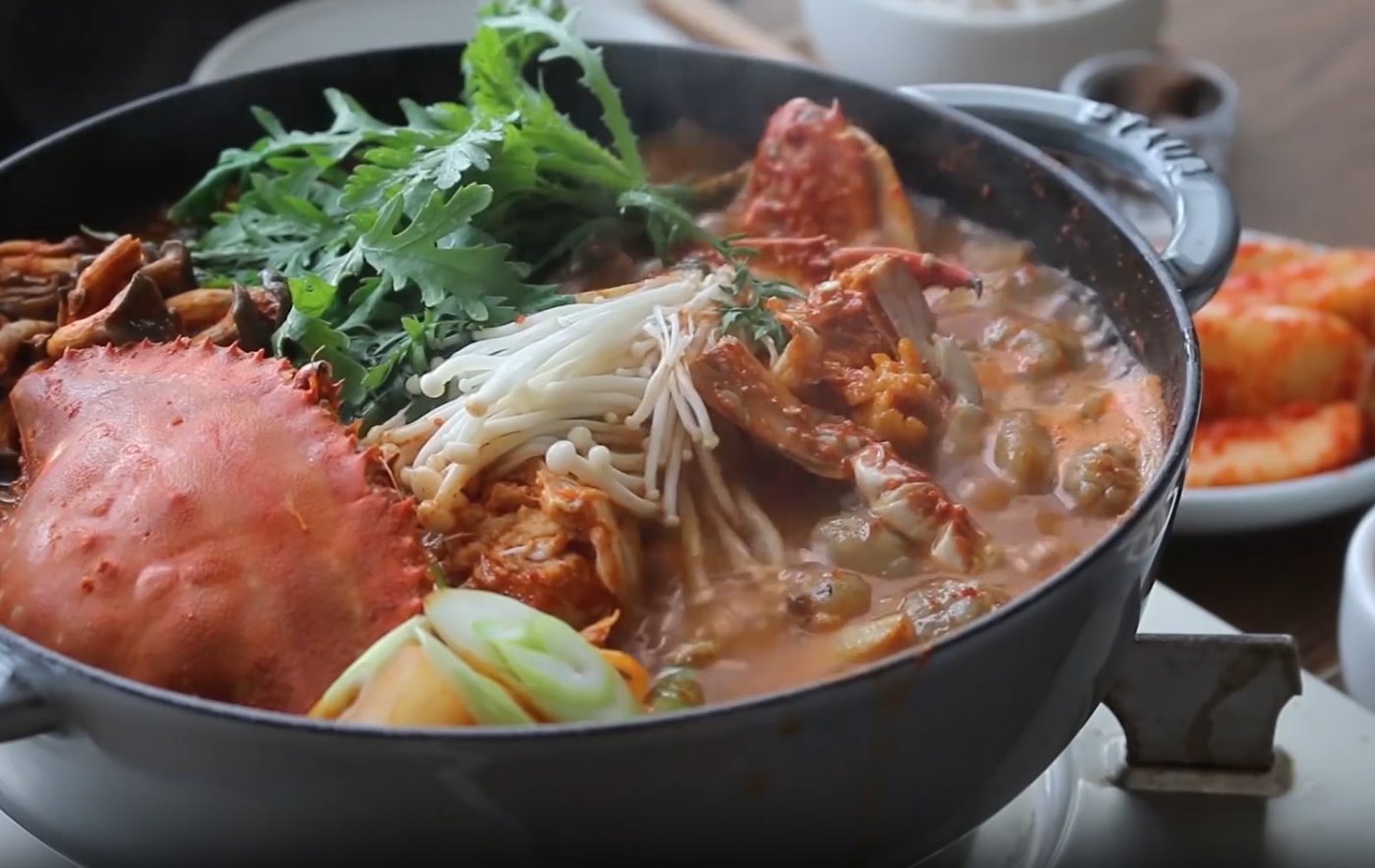
Kkotgetang is a soup boiled with kkotge, either whole or cut in half. Unlike gejang, it is served cooked, so it is easier for people who are uneasy about raw food.
Soybean paste (doenjang 된장) is often dissolved in the broth, and red pepper powder or gochujang (고추장, red pepper paste) adds spiciness. Vegetables such as radish, onion, green onion, green chili pepper and crown daisy (쑥갓, ssukgat) go in with it.
Some shops add clams or perilla seeds for a nuttier taste.
Besides gejang and soup, kkotge is also made into steamed, braised and fried dishes. All the dishes below are served cooked.
Dish
How it is eaten
Kkotge-jjim (꽃게찜)
Steamed kkotge. There is also kkotge yangnyeom-jjim (꽃게 양념찜), steamed with a seasoning on top
Kkotge-jorim (꽃게조림)
A side dish of kkotge braised in seasoning
Kkotge-twigim (꽃게튀김)
Fried kkotge. You can see it on the menus of crab specialty restaurants
Daege-jjim (대게찜)
Steamed daege (대게, snow crab) caught in the East Sea
Genak-jjim (게낙찜)
A steamed dish with crab and nakji (낙지, octopus) together
If raw food feels like too much, you can choose one of these cooked dishes. Menus differ from shop to shop, so the dishes on sale may vary.
8. How Do You Eat Crab?
The shell is hard, so crab can look difficult to eat at first. It differs by shop, but some give you plastic gloves or show you how to cut it with scissors.
Legs and claws: Snap the shell or cut it with scissors, then pull out the meat inside.
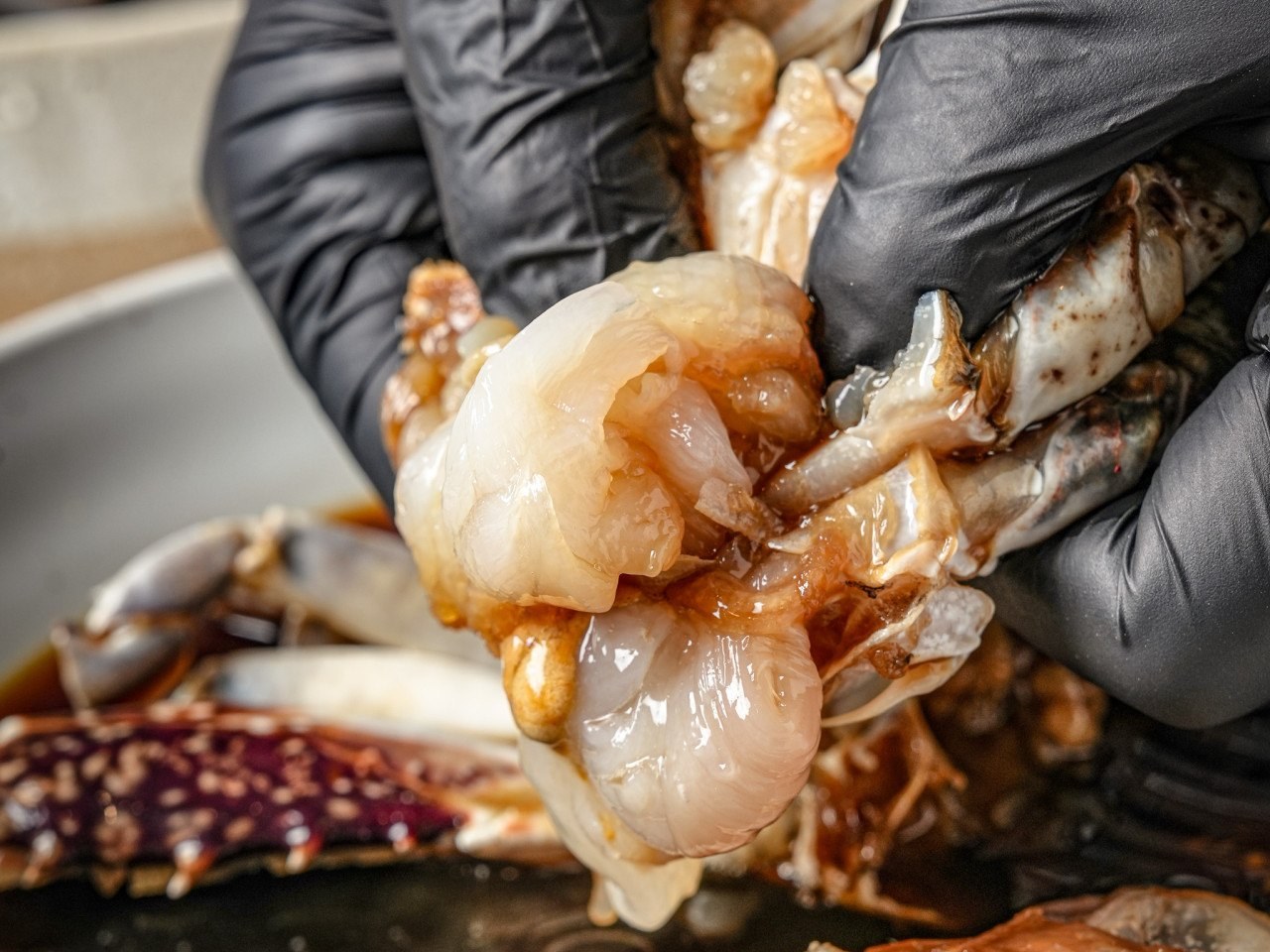
Getting the body meat out: Press the body firmly with your thumb. The meat inside the shell is pushed out. Do it as in the photo below.
Add a little soy sauce to the meat you pulled out and mix it with rice, and it tastes great. The soy sauce is already salty, so use only a little.
Rice in the gedttakji (게딱지): You can also put warm rice into the gedttakji (the crab's top shell) and mix it with what is inside.
Leftover shell: Do not just leave the shell once the meat is out. Chew it bit by bit with your front teeth and suck, and more meat comes out than you would expect.
Do not chew only one spot. Move around and chew a little at a time. Do not swallow the chewed pieces of shell. Spit them out onto a separate plate.
Roe and innards: This is the yellow part inside the gedttakji. People either love it or dislike it, so if it is your first time, taste only a little.
Allergy: Under Korean food labelling rules, crab is an ingredient that must be labelled as an allergen. If you have a shellfish allergy, avoid both gejang (게장) and kkotgetang (꽃게탕).
If raw food feels like too much: Kkotgetang is served boiled. Gejang uses uncooked crab, so keep that in mind when you choose.
9. How Do Foreign Visitors React?
In September 2024, BC Card analyzed spending data for 15 regional signature foods chosen by the Ministry of Culture, Sports and Tourism and the Korea Tourism Organization. By number of card payments made by foreign visitors, ganjang-gejang (간장게장) ranked third, after fried chicken and Chinese food. It was sixth in 2022.
The travel platform Creatrip analyzed its 2023 dining transaction data for foreign visitors. Ganjang-gejang had the second-highest number of transactions, after fried chicken. About 87% of those transactions came from visitors from Taiwan, Hong Kong and other Chinese-speaking regions.
In the same analysis, Japanese visitors often went to Korean restaurants serving kimchi dishes or ganjang-gejang.
On the food-rating site TasteAtlas, ganjang-gejang ranks first among crab dishes in the world, with a user rating of 4.2.
The fact that it is raw is a reason to hesitate, and also a reason to want to try it.
10. Where Can I Eat It? - Gejang Specialty Restaurants with Many Reviews
Gejang and kkotgetang are sold at Korean restaurants, seafood restaurants and crab specialty restaurants. Search the map by the menu name.
Below are gejang specialty restaurants with many reviews on Naver Map. The ranking is based on reviews written by Korean visitors, and the numbers were checked on October 26, 2026, so review counts keep changing.
Menus differ from shop to shop. Some places sell only ganjang-gejang, so if you want yangnyeom-gejang or kkotgetang, check the menu before you go.
Gijang (기장) and Sasang (사상) are far from central Busan, so check the travel time in advance. If you want to eat close to Busan Station (부산역), Gwangalli (광안리) or Haeundae (해운대), the candidates are Golmok Gejang (골목게장), Lee Ha-jeong Ganjang-gejang (이하정간장게장), Sinsa Kkotgedang (신사꽃게당), Deodo Gejang (더도게장), Masan Genak-jjim, Haemakki Ganjang-gejang (마산게낙찜.해마끼 간장게장) and Kkotge-wa Sarang-e Ppajida (꽃게와사랑에빠지다).