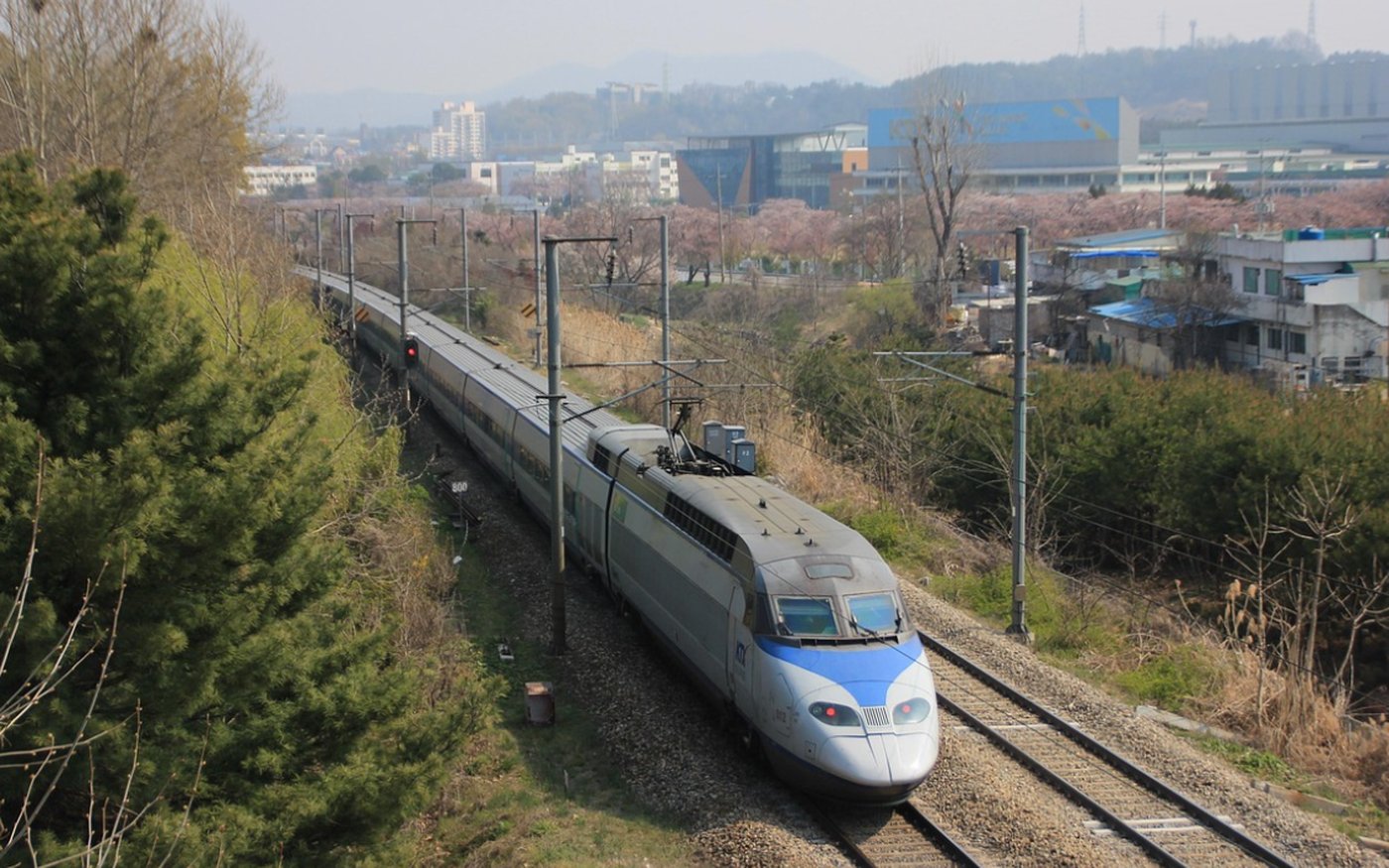
KTX is the main way to travel by train from Seoul to Busan. In September 2026, KTX and SRT merged into one, and the booking process and fares changed. This guide walks foreign visitors through booking on the Korail website with an overseas card, step by step.
As of October 22, 2026 — check fares and operating info on the Korail website again before you pay.
| Item | Details |
|---|---|
| Where to book | Korail website, Korail+ (코레일+) app, station ticket counters and ticket vending machines |
| Payment | You can pay with a credit card issued overseas on both the Korail website and the Korail+ app. |
| Booking opens | 2 months before departure, at 7:00 a.m. |
| Fare | From Seoul Station (서울역) to Busan, standard class (일반실) is around 55,000 won. It varies by train, time, day of the week and discounts. |
| Travel time | Usually about 2 hours 40 minutes. It differs from train to train. |
KTX is short for Korea Train eXpress, Korea's high-speed train that links major cities such as Seoul and Busan quickly. This guide is for foreign travelers who want to take the KTX from Seoul to Busan. Older blog posts explain KTX and SRT separately, but since September 2026 the two have merged into one. We start with what changed, then cover how to book, payment problems, cancellation, the Korail Pass (코레일패스) and what to know when you board.
In the past, you took the KTX from Seoul Station (서울역) and the SRT from Suseo Station (수서역), and each had its own booking site and app. From September 1, 2026, the Korea Railroad Corporation (Korail, 코레일) merged with SR (에스알), the company that ran the SRT, and the two now operate high-speed rail together.
If you came across an old post telling you to install a separate SRT app, you no longer need to follow it.
For foreign visitors, the Korail website is the simplest option. You can pay with a credit card issued overseas on both the Korail website and the Korail+ app. The Korail website supports 8 languages: Korean, English, Japanese, Simplified Chinese, Traditional Chinese, Vietnamese, Thai and Indonesian. The Korail+ app supports 7, everything except Indonesian.
| Where to book | Good to know |
|---|---|
| Korail website (web) | To view your ticket later, you need the email and password you entered when booking. They are case-sensitive, so write them down. |
| Korail+ (코레일+) app | Book on your smartphone and open your mobile ticket right away. For tickets during the major holidays, the app has at times asked for membership registration, so check the notices in the app. |
| Station ticket counter, ticket vending machine | Bring your passport and card. At the counter you can pay with an overseas-issued card. The newer vending machines accept overseas-issued credit cards. They are being added step by step at KTX stations nationwide, so more stations support this over time. A station that still has the old machines may not accept them, so use the counter if the machine does not work. You can buy at the counter until the train departs, and at the vending machine until 10 minutes before departure. You cannot buy tickets at subway stations. |
Online booking opens 2 months before departure, at 7:00 a.m.
Weekend trains: Weekend trains sell out quickly once the departure date is within a week. If you want to travel on a weekend, book at least 10 days ahead.
Avoid the major holiday periods: Korea has two big holidays, Seollal (설날, Lunar New Year) and Chuseok (추석, the autumn harvest holiday). Seollal usually falls between late January and mid-February, and Chuseok usually between mid-September and early October. They follow the lunar calendar, so the dates change every year. The days around each holiday are also days off, and many Koreans travel to their hometowns and families all at once. Train tickets are very hard to get during these periods, so it is best not to plan train travel around them. Before you fix your travel dates, check the Seollal and Chuseok dates for that year. Tickets for these holidays go on sale on a separate schedule and sometimes require membership registration, so check Korail's notices.
Checking the dates: The button below runs a Google search for the Korean calendar. In the results, check the Seollal (Lunar New Year) and Chuseok holiday dates for that year.
Filter for KTX only: Searches also show regular trains such as ITX, Saemaeul (새마을호) and Mugunghwa (무궁화호). On both the Korail website and the Korail+ app, you can choose KTX only in the search options. In the Korail+ app you can also choose direct trains with no transfer or trains that need a transfer. If you do not choose an option, every train is shown, so check the train name too.
Before you pay, look once more to make sure the departure station, time and arrival station are right. Even within Seoul, Seoul Station and Suseo Station are two different stations.
The KTX goes beyond Seoul and Busan and reaches cities all over the country. If you arrive at Incheon Airport, you can also use it to travel from Seoul to other cities. The blue boxes are the departure stations in the Seoul area. Each train stops at different stations, so not every train stops at every station. Within Seoul, some trains can also be boarded at Yongsan Station (용산역) or Yeongdeungpo Station (영등포역) instead of Seoul Station or Suseo Station. However, most trains pass through these two stations without stopping. Trains departing from Suseo Station do not stop at Yeongdeungpo Station.
Toward Busan (Gyeongbu Line, 경부선)
Gwangmyeong Station (광명역) is served only by some trains departing from Seoul Station. Some trains also stop at Gupo Station (구포역). Trains from Suseo Station that run via Gupo are new.
Toward Pohang (Donghae Line, 동해선)
For Gyeongju, get off at Singyeongju Station (신경주역). Some trains to Busan also stop at Gyeongju.
Toward Changwon and Jinju (Gyeongjeon Line, 경전선)
Changwon Jungang Station (창원중앙역) is served only by some trains.
Toward Gwangju and Mokpo (Honam Line, 호남선)
Toward Jeonju and Yeosu (Jeolla Line, 전라선)
Toward Gangneung (Gangneung Line, 강릉선)
Toward Andong (Jungang Line, 중앙선)
Toward Busan's Bujeon Station (부전역) (Jungang Line, 중앙선)
The Jungang Line KTX arrives at Busan's Bujeon Station (부전역), not Busan Station (부산역). Bujeon Station is a different station from Busan Station.
The departure station in the Seoul area depends on the route and the time of day. To find the exact departure station, enter your departure and arrival stations on the Korail website or the Korail+ app.
Since the merger, you can book trains from both Seoul Station and Suseo Station on the same website and app. Choose based on the station closest to your accommodation and the time of day you want.
| Station | How to get there | Good to know |
|---|---|---|
| Seoul Station (서울역) | Subway Line 1, Line 4, AREX (airport railroad) | The main station in central Seoul where the old KTX departed from. |
| Suseo Station (수서역) | Subway Line 3, Suin-Bundang Line | The station in southeast Seoul where the old SRT departed from. |
On the booking screen, choose Seoul or Suseo as the departure station, and Busan (or Gupo, or Bujeon for the Jungang Line) as the arrival station.
Here is how to check the departure station when you book, step by step.
In Busan, most trains arrive at Busan Station (부산역). Be sure to check that the arrival station on the booking screen is Busan. Some trains stop at other Busan stations such as Gupo Station (구포역) or Bujeon Station (부전역). The Jungang Line KTX departing from Cheongnyangni Station (청량리역) arrives at Bujeon Station. Busan Station connects directly to subway Line 1. We cover how to ride the subway in our guide How to Ride the Busan Subway.
| Item | Details |
|---|---|
| Seoul to Busan | From Seoul Station, standard class (일반실) is around 55,000 won. It varies by train, time, day of the week and discounts. |
| Travel time | Usually about 2 hours 40 minutes. It differs from train to train, so check the departure and arrival times on the booking screen for the exact time. |
| First class (특실) | The seats are wider than in standard class and the fare is higher. Check the exact amount on the booking screen. |
| Standing ticket (입석) | When the seats are sold out, there are standing tickets (입석) that let you ride without a seat. The car number is printed on the ticket, but it is fine to enter any car. Standing tickets are checked too. However, the Korean-language screen offers standing tickets and the English screen does not. If you urgently need one, you can ask a Korean friend to buy it for you on the Korean-language screen. Overseas-issued cards may not work on the Korean-language screen, so your friend can pay with their own card and you can pay them back separately. |
| Train names | The booking screen shows names such as KTX, KTX-Sancheon (KTX-산천), KTX-Cheongryong (KTX-청룡) and KTX-Eum (KTX-이음). All of them are high-speed trains. |
The government and Korail plan to keep the fare level that was lowered at the September 2026 merger for 3 years, that is, until around August 2029. After that, fares may have gone up, so treat the amounts in this guide as a reference only.
For fares on trains departing from Suseo Station, check the booking screen. The amount shown on the screen just before payment is the one that counts.
You can cancel until the departure time through the MY TICKET menu on the Korail website or in the Korail+ app. After the departure time, you can get a refund only at a station ticket counter, and after the arrival time no refund is possible.
| When you cancel | Trains Monday to Thursday | Trains Friday to Sunday and public holidays |
|---|---|---|
| Up to 2 days before departure | None | Minimum fee of 400 won |
| 1 day before departure | None | 5% |
| From the day of departure until 3 hours before | None | 10% |
| From 3 hours before departure until the departure time | 5% | 20% |
| Up to 20 minutes after departure | 15% | 30% |
| More than 20 and up to 60 minutes after departure | 40% | 40% |
| More than 60 minutes after departure, before the arrival time | 70% | 70% |
The fee is a percentage deducted from the fare you paid. The minimum fee of 400 won is not charged if you cancel within 7 days of the day you bought the ticket. After departure, you can cancel only at a station ticket counter.
The fee rules may differ during special periods such as the major holidays. Special-offer and discounted tickets can have different conditions, so check the refund information on the Korail website before you cancel.
The Korail Pass (코레일패스) is a pass that lets foreign visitors ride Korean trains for a set period. Korean nationals cannot buy it. You need your passport and a credit card to buy it.
| Type | Adult (age 13 and over) | Child (ages 6 to 12) |
|---|---|---|
| 2-day pass | 131,000 won | 66,000 won |
| 3-day pass | 186,000 won | 93,000 won |
| 4-day pass | 234,000 won | 117,000 won |
| 5-day pass | 275,000 won | 138,000 won |
A single round trip from Seoul to Busan in standard class from Seoul Station is around 55,000 won each way, so about 110,000 won round trip, which is cheaper than the 131,000 won 2-day pass. Compare only if you will be touring several cities over two or more days.
| Item | Details |
|---|---|
| Luggage | You can bring up to 2 pieces that you can carry yourself. They must not take up a seat or block the aisle. |
| Ticket | Keep your ticket screen open in your email, the app or the website so you can show it when the conductor checks tickets. A screenshot of the ticket screen is not accepted. |
| If you lose it | If you lose your ticket, you cannot ride with it, change it or get a refund. A ticket bought by card can be reissued after verification. |
| At Busan Station | If you want to leave your luggage and go sightseeing, see our Busan luggage storage guide. |
Trains run on time: In Korea, both subways and trains largely keep to their departure and arrival times. High-speed trains cover long distances, though, so they sometimes arrive late, mostly within 10 minutes.
Tickets are checked: It can look like nobody checks tickets on the KTX. That is because when you are in your own seat, the conductor checks the seat information on a handheld device and simply walks past. But tickets really are checked. If you are sitting in a seat that is not yours, you will be asked to show your ticket. Standing tickets are checked too. If you are caught riding without a valid ticket, you may have to pay a large penalty on top of the fare, so be sure to sit in your own seat.
| Common confusion | Summary |
|---|---|
| Seoul Station and Suseo Station | They are two different stations. Be sure to check the departure station on the booking screen. |
| SRT and KTX | They merged into one in September 2026, so you book them on the same website and app. |
| When booking opens | 2 months before departure, at 7:00 a.m. |
| Sold out | KTX tickets sell out easily. Book early once your plans are fixed. You cannot buy standing tickets (입석) on the English screen, so book even earlier. |